


Narrow Hallway Carpet Runner
A narrow hallway carpet runner brings length and character to a corridor, providing underfoot warmth through centuries-old Persian, Turkish, and Moroccan designs.
Narrow Hallway Carpet Runner
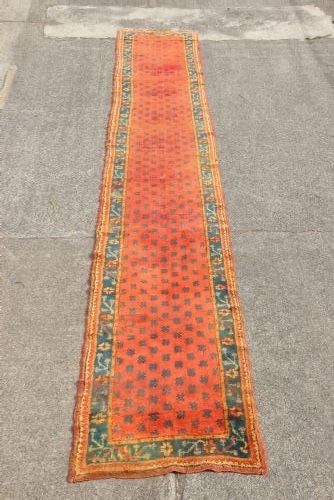
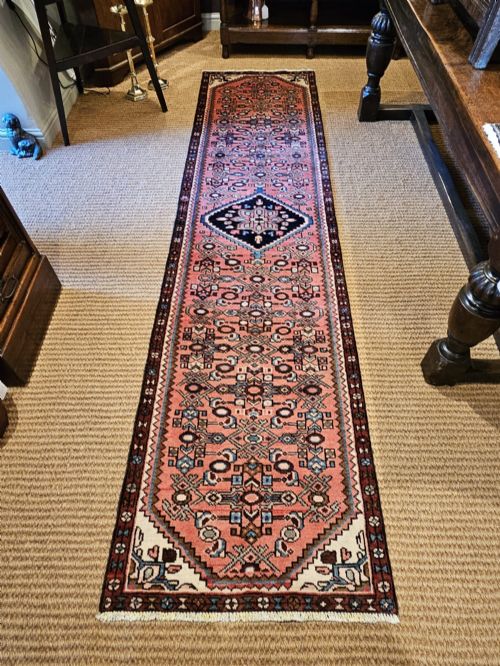
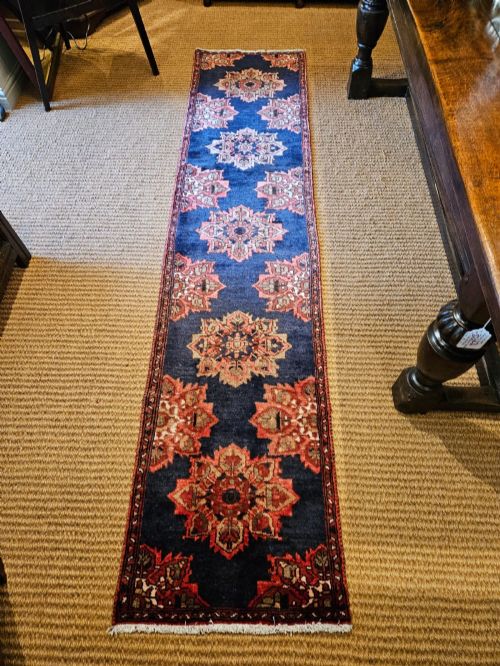
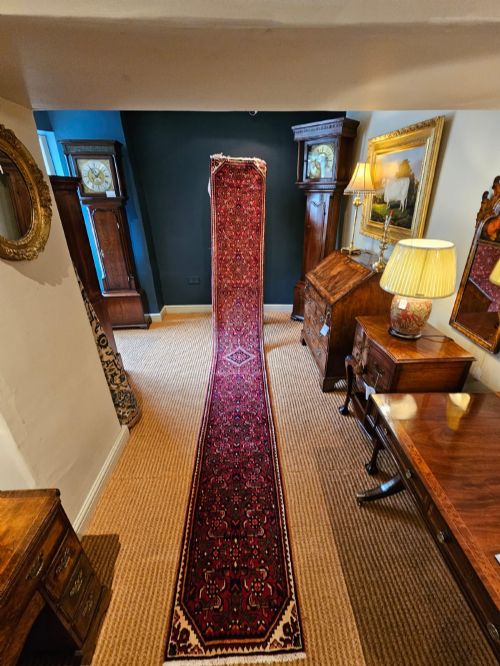
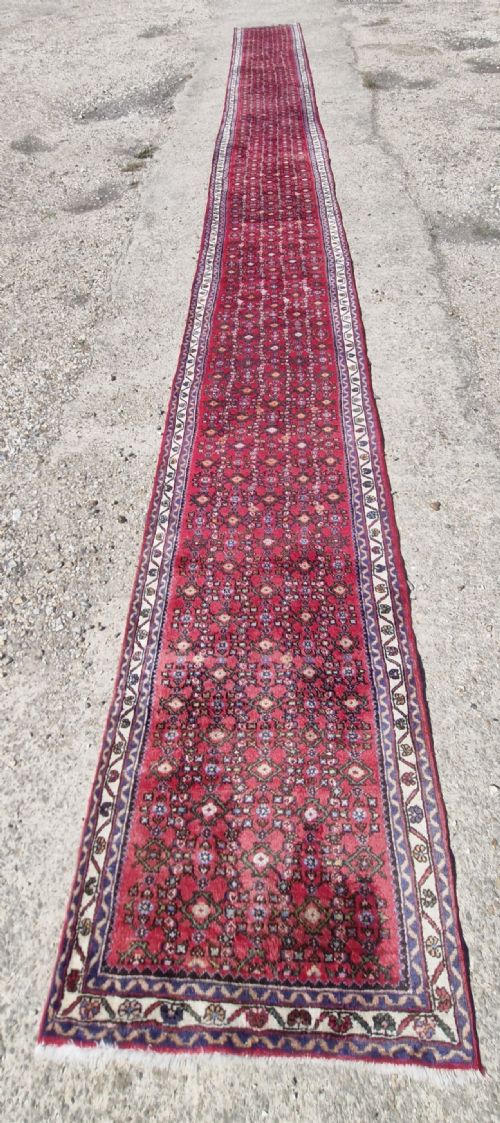
A narrow hallway carpet runner serves to furnish elongated passages and landings, utilising traditional woven formats produced across Persia, Turkey, and Morocco. These textiles arrive in various lengths, occasionally extending past thirty feet for expansive spaces.
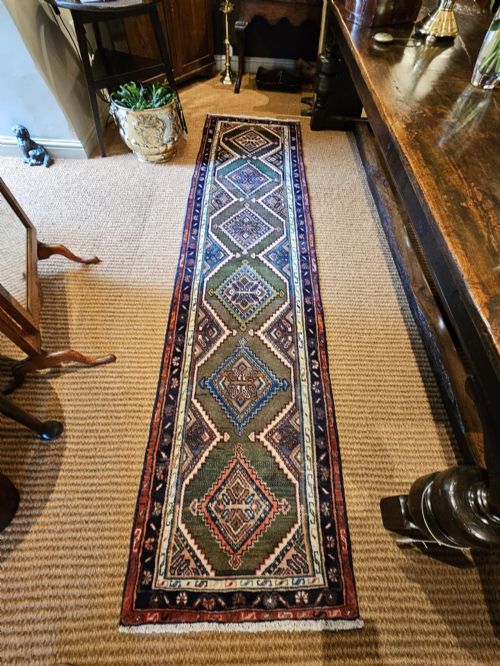
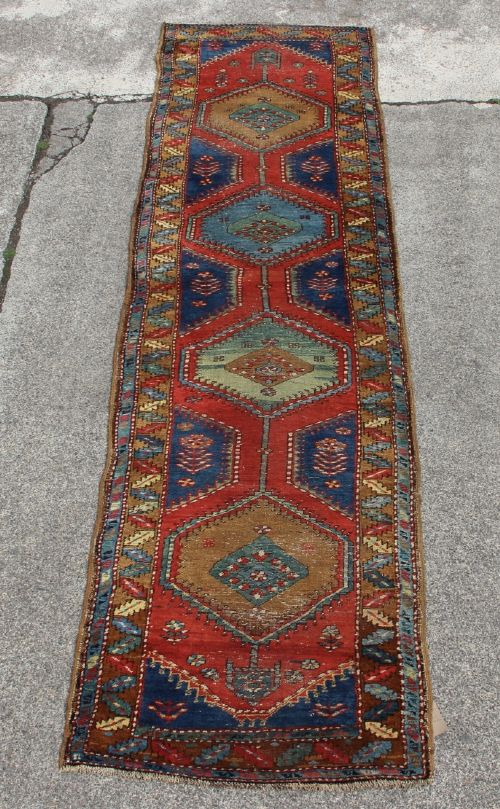
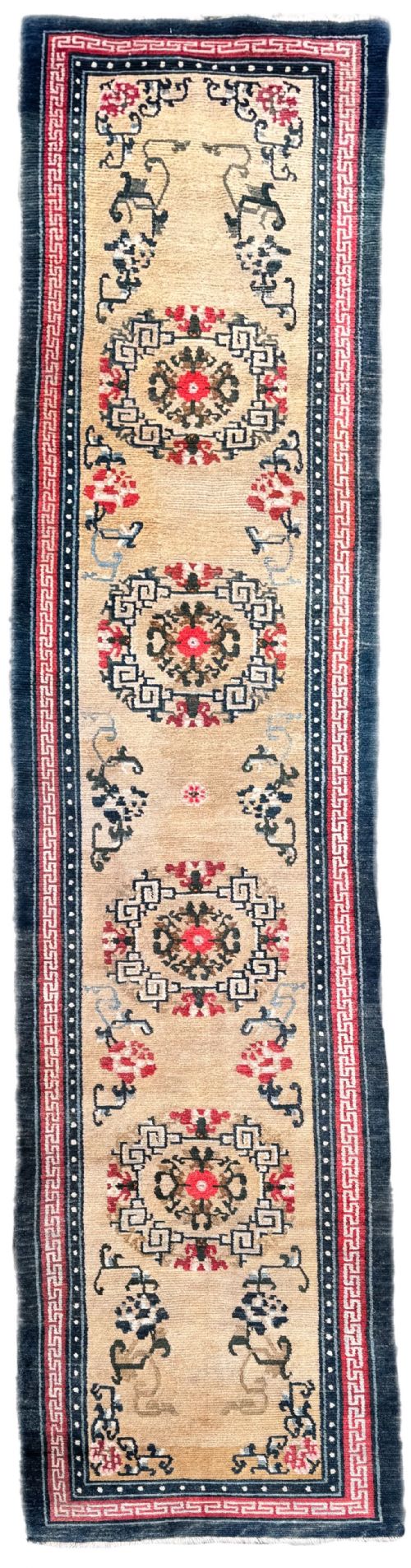
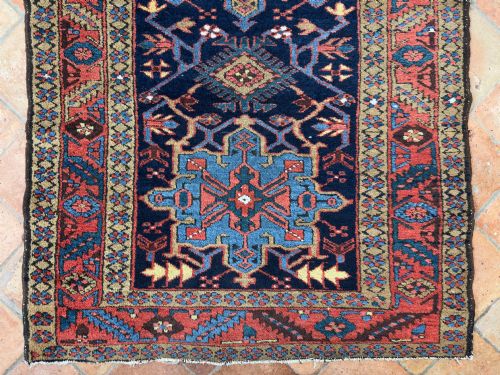
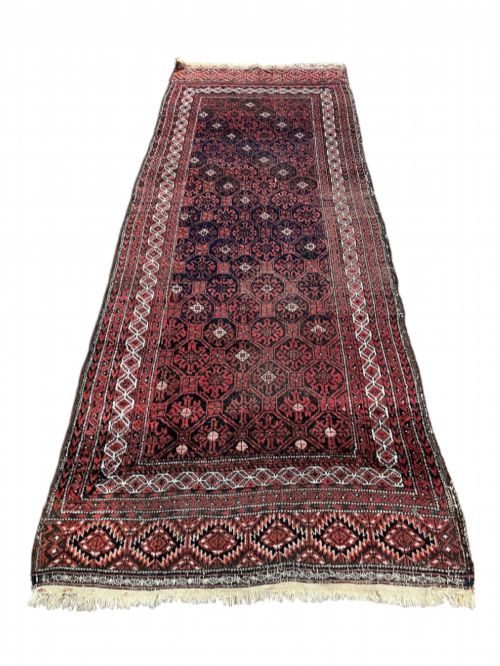
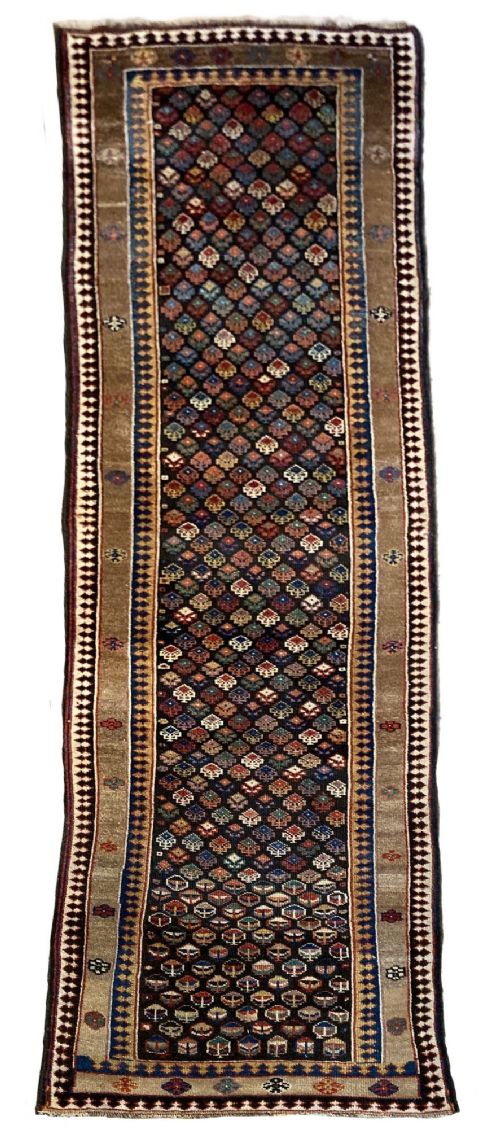
The pieces on this page span from the late nineteenth century through to the 1930s, encompassing tribal and village makings such as Hamadan, Heriz, Karaja, and Kurdish pieces. Buyers encounter both geometric village patterns and intricate floral room-size designs scaled down into linear formats.
Originating from diverse weaving traditions, these runners include flatwoven kilims alongside pile carpets knotted by hand. Each piece reflects the regional aesthetic of its provenance, from North West Persian workshops to Anatolian looms.
Materials and construction methods
Weavers constructed these runners primarily using wool and cotton foundations, incorporating hand-spun wool for durability in heavy-traffic areas. Certain pieces integrate camel hair within the pile or borders to introduce natural colour variation without dyeing.
Village and tribal workshops employed vegetable and natural dyes to colour the wool, yielding rich tones of navy blue, olive green, and deep red that mellow gracefully over decades. Knotting techniques varied by region, producing dense, resilient piles designed to withstand prolonged use in corridors.
Listings feature runners spanning from the late 19th century through the 1930s, utilising wool, cotton, hand-spun wool, and camel hair.
Assessing quality in antique runners
Quality in a narrow hallway carpet runner rests upon the integrity of the foundation and the tightness of the knotting. Finer examples maintain straight parallel edges and consistent width along extended lengths, reflecting superior skill from the weaver.
The depth and clarity of the natural dyes distinguish finer pieces, alongside the precision executed in geometric or medallion motifs. Well-preserved wool pile with minimal restoration retains the original handle intended by the maker.
The Narrow Hallway Carpet Runner Glossary
- Kilim
- A flatwoven carpet or runner produced without a pile, traditionally created using slit-weave techniques across Anatolia and Persia. These textiles offer a flat, durable surface suited to busy corridors.
- Pile
- The vertical or diagonal loops of wool yarn that form the soft upper surface of a knotted carpet. Dense pile provides comfort and protects the structural foundation underneath.
- Warp
- The vertical foundation threads stretched tightly on the loom before knotting begins. Cotton and wool serve commonly as warp materials in these pieces.
- Weft
- The horizontal threads passed alternately over and under the warp threads to bind the knots in place. This grid forms the stable skeleton of the runner.
Narrow Hallway Carpet Runner: Frequently Asked Questions
How do I measure for a narrow hallway carpet runner?
Measure the clear floor space of your corridor, leaving an equal margin of exposed wood or stone around the perimeter of the rug. Ensure doors swing freely over the thickness of the chosen pile.
Take measurements at multiple points along the length, as older handmade runners can vary slightly in width from one end to the other.
Which periods are represented in these runners?
The listings on this page include pieces originating from the late nineteenth century, including the 1870s, 1880s, and 1890s, alongside twentieth-century examples up to the 1930s and 1960s.
Most items date from the transitional decades around nineteen hundred, capturing traditional tribal designs woven during the late Qajar and Ottoman eras.
Are these runners durable enough for daily hallway use?
Hand-knotted wool runners were originally built for domestic utility in busy homes, using sturdy materials like hand-spun wool and cotton foundations designed to endure heavy foot traffic.
Placing a quality underlay beneath the runner prevents slipping and cushions the wool fibres against hard stone or timber flooring.
How do I identify different regional styles?
Heriz and Karaja runners typically display bold geometric medallions and strong corner brackets, whereas Hamadan and Kurdish pieces often feature repeating Herati patterns or tribal motifs in indigo and madder red.
Turkish Oushak and Malatya runners lean toward softer floral arrangements or flatwoven kilim structures with earthy palettes.