
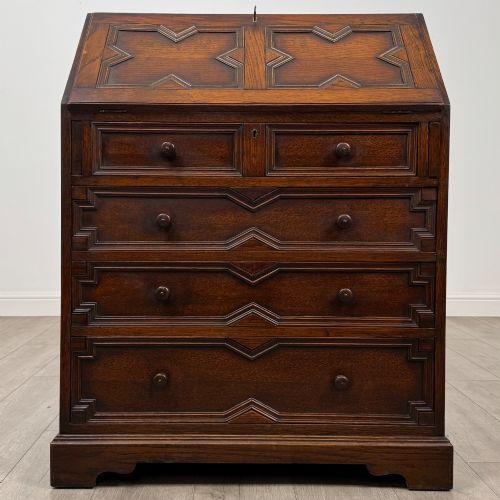
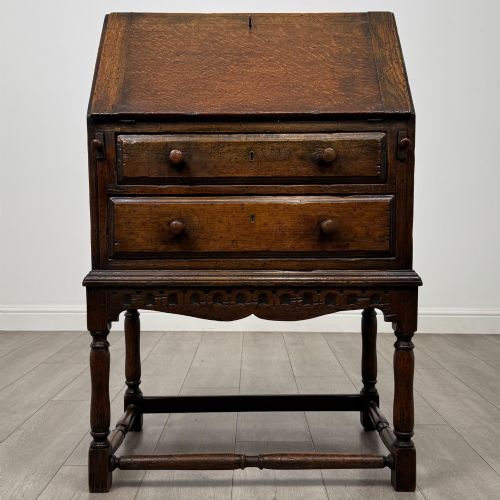
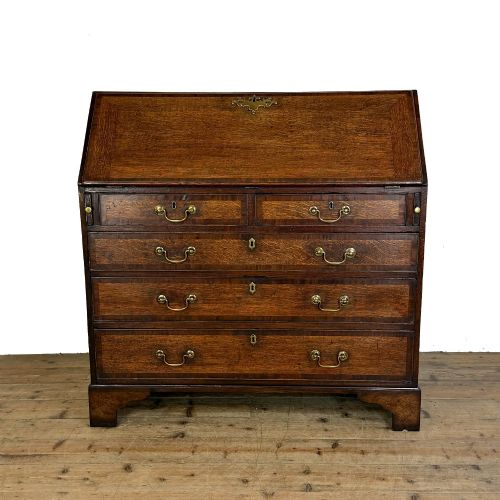


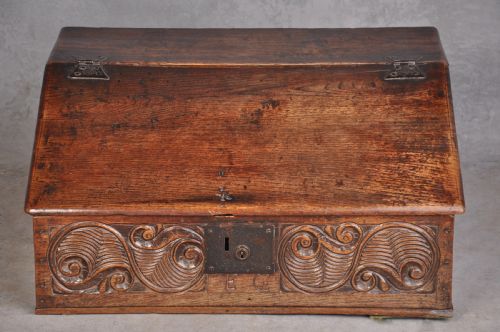

Traditional Oak Writing Slope
A traditional oak writing slope offers a sturdy slant for correspondence, built from dependable timber to last generations.
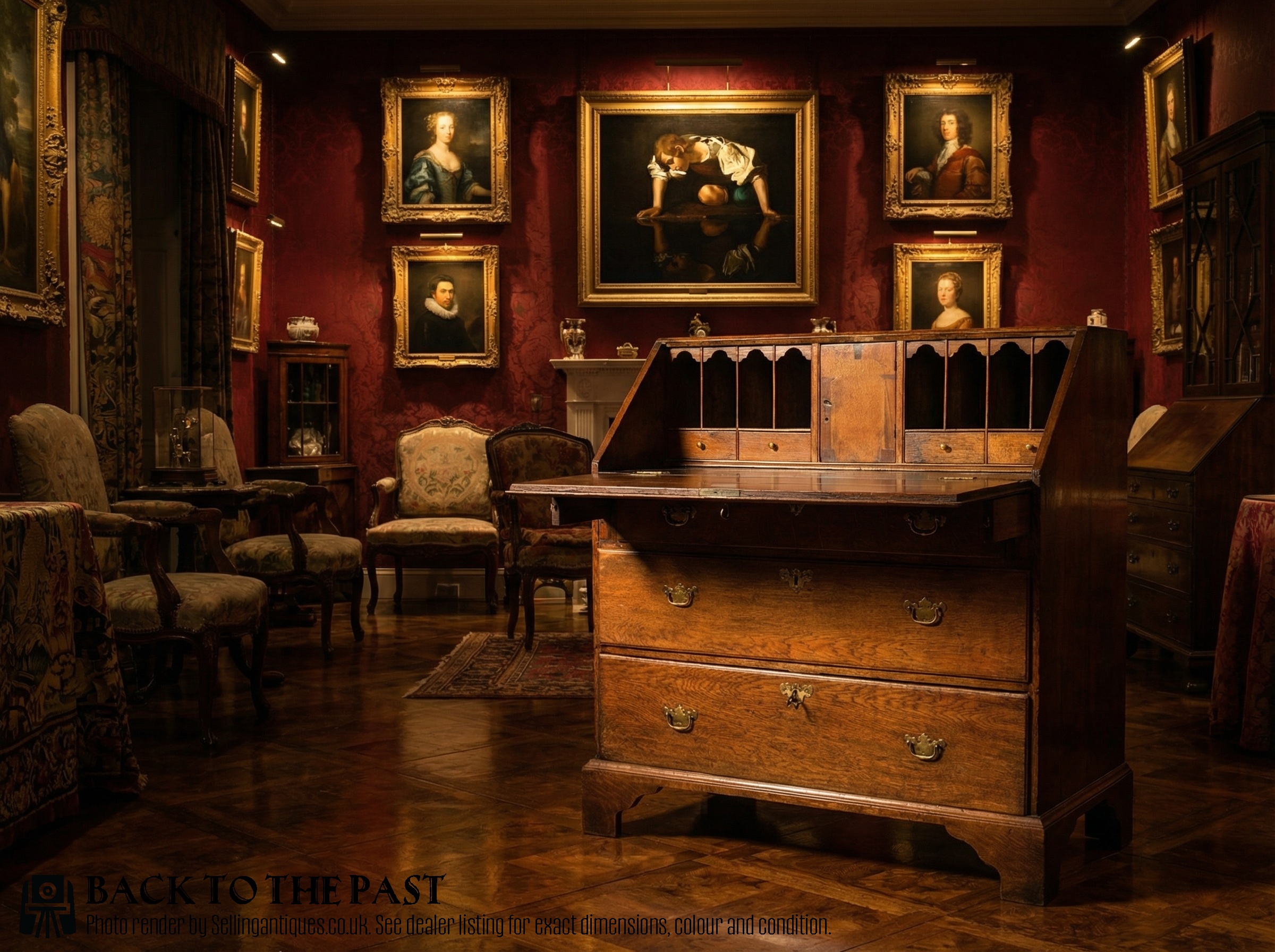
Traditional Oak Writing Slope
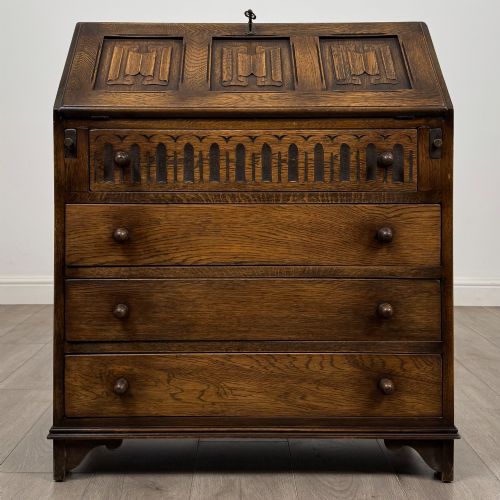
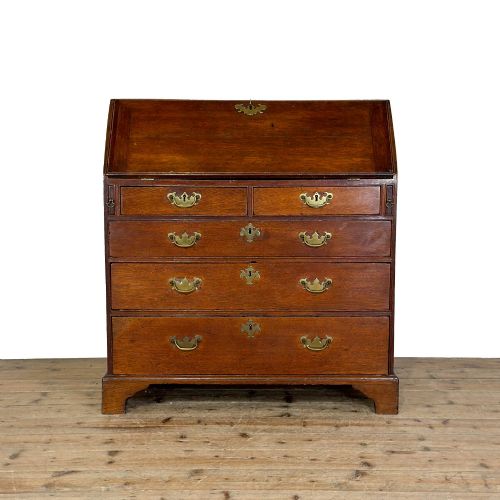
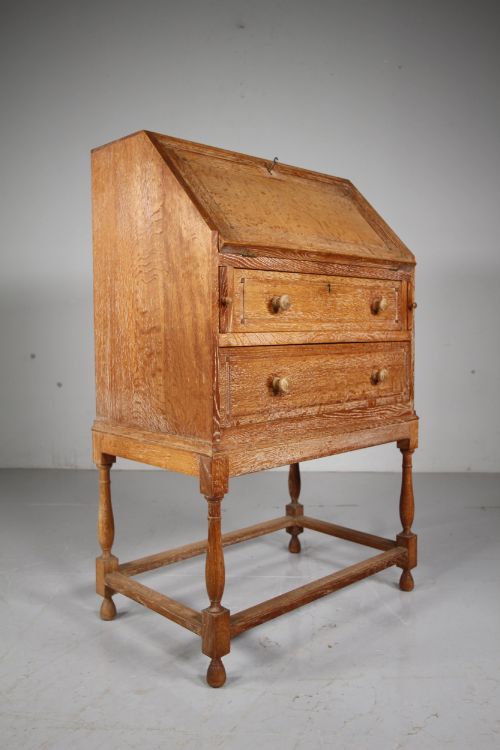
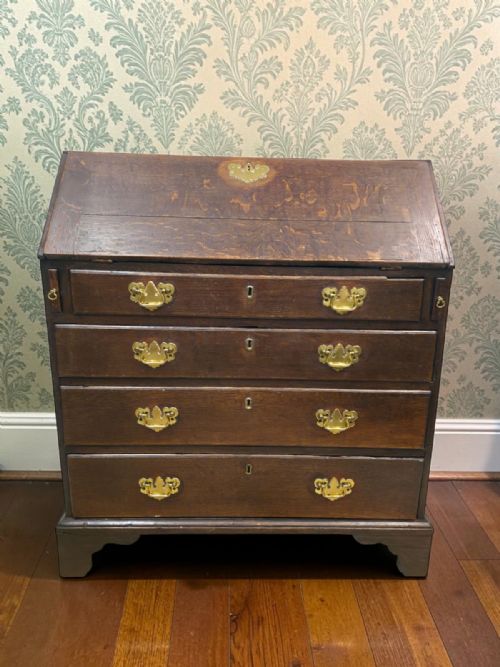
A traditional oak writing slope typically takes the form of a bureau or desk, designed for seated correspondence and document storage. These items span periods from the seventeenth century through to the Edwardian era and the nineteen-twenties.
The pieces on this page appear mainly as fall-front writing bureaux, alongside Davenport desks and ink stands. Oak and pollard oak dominate the construction, often paired with brass, leather, and cut glass fittings.
Makers and styles reflect Georgian, Victorian, and revival movements such as Jacobean and Tudor. Buyers will frequently encounter solid oak construction or oak veneer surfaces across various centuries.
How they were made
Cabinet makers utilised solid oak and oak veneer, shaping panels and framing drawers with traditional joinery. Timber selection ranged from plain boards to figured pollard oak for decorative impact.
Metal components such as brass handles, iron hinges, and cut glass inkwells completed the functional writing desks. Leather inserts were frequently fitted to the sloping writing surfaces to provide a smooth plane for quibs and pens.
Traditional Oak Writing Slope Retail Price Guide 2026
Typical asking prices for traditional oak writing slope among the pieces listed under this phrase on Sellingantiques today, from the lower quarter to the upper quarter. They describe what is for sale here now, not the wider market.
Listings feature items spanning the seventeenth century, Georgian period, Victorian era, and nineteen-twenties in solid oak and pollard oak.
What varies in quality
The standard of carving and timber selection marks the difference between standard items and superior work. Finely figured pollard oak and crisp linenfold carving indicate greater workshop skill.
Unusual configurations and original labels, such as those from Heals of London, elevate certain desks above plain vernacular pieces. The integration of fitted interior compartments also demonstrates higher craftsmanship.
Heals of London
The Traditional Oak Writing Slope Glossary
- Bureau
- A writing desk with a sloping fall-front that opens to reveal internal drawers and pigeon holes. It often stands on bracket feet or straight legs.
- Fall-front
- The hinged flap on a desk that pulls down to form the writing surface. This panel conceals the fitted interior when closed.
- Pollard oak
- Timber taken from trees that have been pollarded, producing a highly figured and knotted grain pattern. Cabinet makers used this veneer for decorative emphasis.
- Linenfold
- A style of wood carving that imitates folded fabric, popular in revival furniture. It frequently appears on panelled doors and drawer fronts.
- Davenport desk
- A compact small desk featuring a sloping writing top and drawers accessed from the side. These pieces date largely from the nineteenth century.
Traditional Oak Writing Slope: Frequently Asked Questions
What is a traditional oak writing slope?
A traditional oak writing slope is a piece of furniture designed for writing letters, featuring a sloping surface and storage for paper.
These pieces range from seventeenth-century boxes to twentieth-century bureaux built by makers such as Heals of London.
How do I date an oak bureau?
Dating relies on observing construction methods, timber choice, and period styles such as Georgian, Victorian, or Jacobean revival.
Earlier pieces often show vernacular hand-working, while Edwardian and later examples display different hardware and veneer techniques.
What is pollard oak?
Pollard oak comes from trees pruned close to the trunk, which creates a tightly patterned, decorative wood grain.
Cabinet makers used this timber for striking veneers on nineteenth-century Davenport desks and specialised writing furniture.
How were Davenport desks used?
Davenport desks served as compact writing stations where letters and documents could be stored within side drawers.
Their small footprint made them popular in Victorian sitting rooms for private correspondence.