

Traditional Oak Writing Bureau
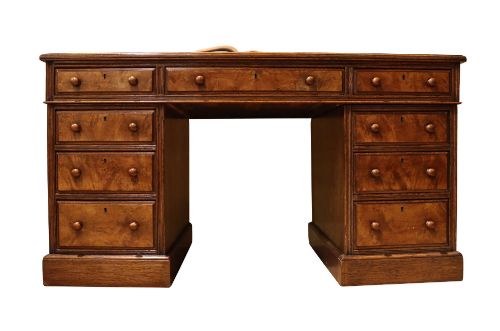
A traditional oak writing bureau is a fitted workspace with a fall front, offering solid timber construction and compartmentalised storage that anchors a room.
What these pieces are
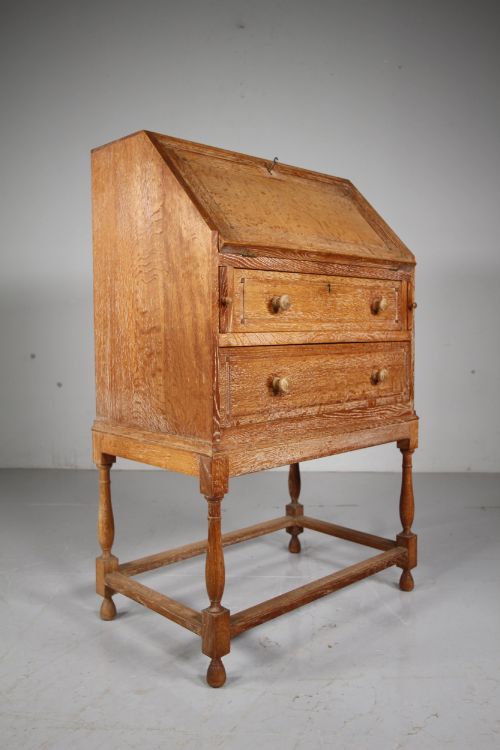
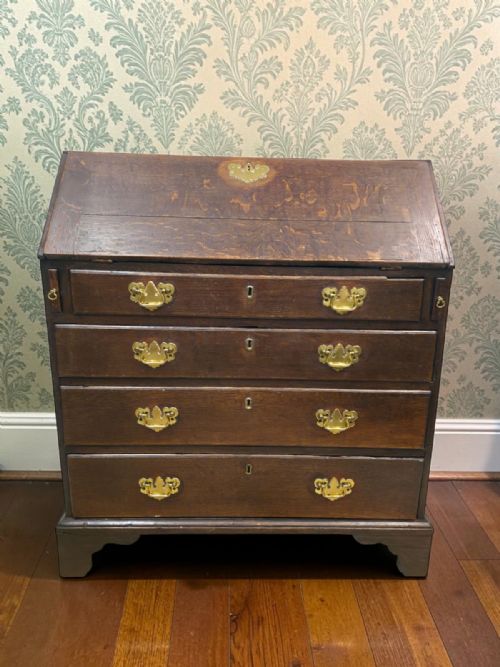
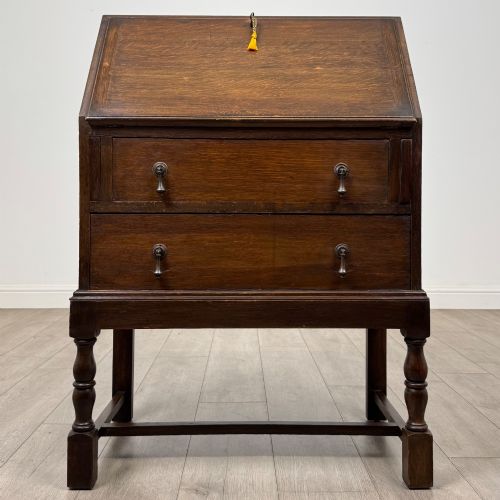
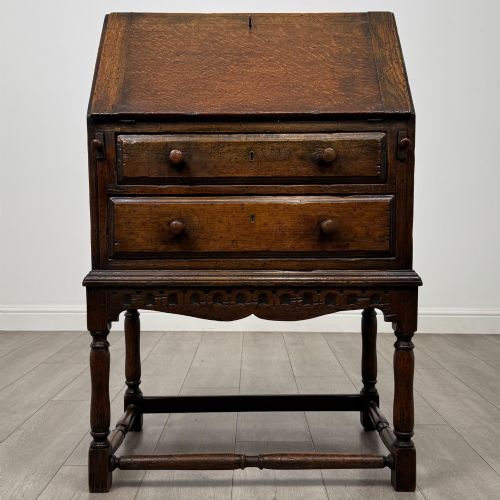
A traditional oak writing bureau combines a sloping fall front that drops to form a writing surface with internal pigeonholes and drawers. These pieces provide concealed storage for correspondence while maintaining a compact footprint when closed.
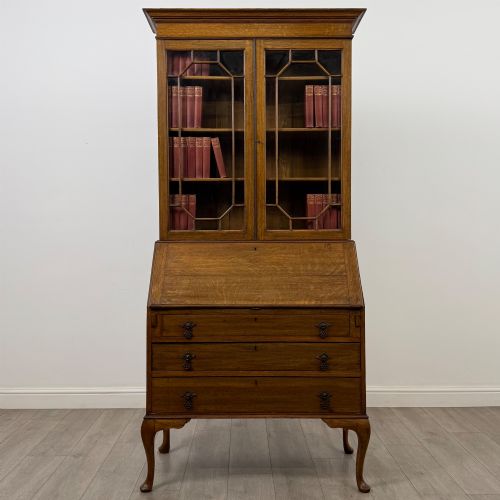
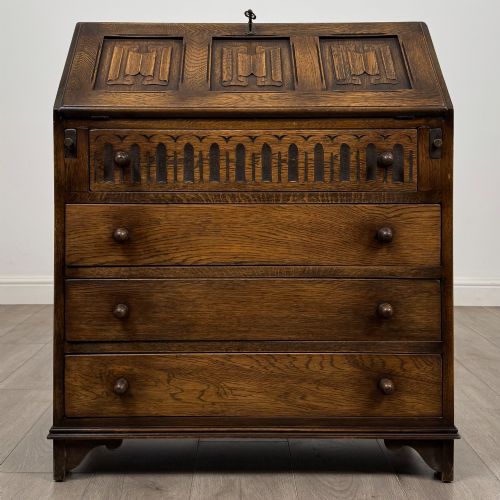
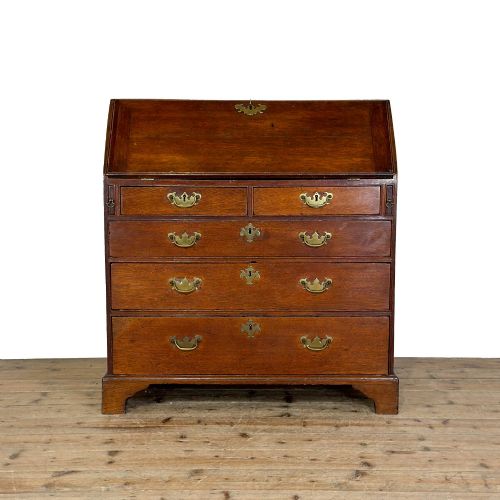
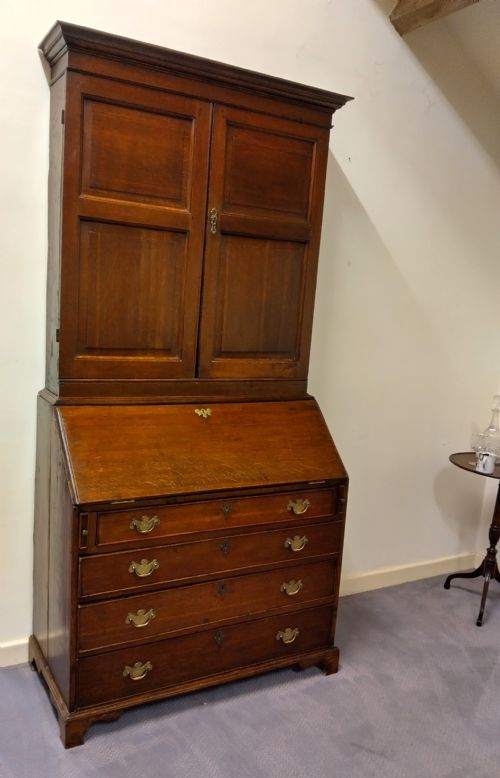
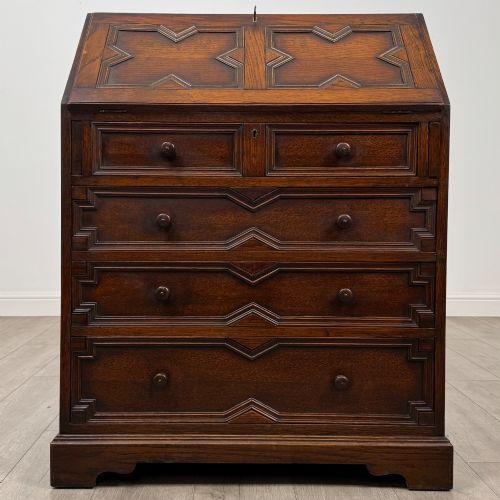
The versions most commonly met on this page belong to the Georgian period alongside later Jacobean Revival interpretations. Makers construct these items as standalone desks or as bureau bookcases featuring upper display sections.
How they were made
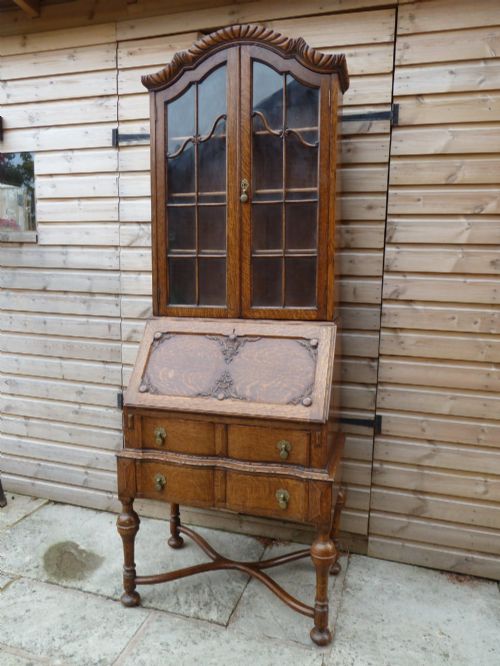
Craftsmen built these pieces using solid oak, complemented by brass handles and hinges that secure the fall front and drawers. Glass panels appear in the upper doors of taller bureau bookcase variants.
Joinery methods follow traditional cabinet-making practices suited to hardwood, accommodating timber movement across centuries of use.
Retail Price Guide 2026
Typical UK retail prices for traditional oak writing bureau, calculated from the Sellingantiques database of over a million retail prices indexed since 2003. This retail price guide relies exclusively on Sellingantiques data; no external sources or auction records are used, so the figures do not describe the wider market.
One early bureau carries an adaptation for television viewing, proving antique oak furniture readily absorbs modern habits.
What varies in quality
Quality separates in the selection of timber grain, the crispness of internal drawer fitting, and the integrity of the structural modifications seen in older examples. Earlier eighteenth-century carcass work displays a different hand-finished character compared to twentieth-century revival pieces.
The proportion of the fall front and the retention of original brass hardware elevate certain examples, whilst adapted pieces reflect alterations made to suit modern living.
The Traditional Oak Writing Bureau Glossary
- Fall front
- The hinged sloping panel that opens outward to create a flat writing surface. This feature conceals the internal stationery compartments when closed.
- Bureau bookcase
- A combined form featuring a sloping desk compartment below an upper shelving or display cabinet with glazed doors. These tall items maximise vertical storage.
- Pigeonhole
- A small open compartment within the interior of the desk used for sorting letters and papers. These sections often sit above small secret drawers.
- Jacobean Revival
- A later stylistic movement reproducing seventeenth-century motifs such as geometric mouldings and dark finishes. This style appears in twentieth-century pieces.
Frequently Asked Questions
How do I use a bureau?
Lower the hinged fall front to reveal the writing surface and internal compartments for your correspondence. The sloping panel creates a sturdy desk for daily writing tasks.
Close the front when finished to hide paperwork and restore a tidy appearance to the room.
Are these desks suitable for laptops?
The internal writing space accommodates modern laptops provided you check the dimensions of the open fall front. Many traditional surfaces easily hold portable technology.
Ensure the hinges and support lopers take the weight before placing heavy electronic equipment on the desk.
How do I date an oak bureau?
Examine the construction methods of the internal drawers, the timber patination, and the style of the brass hardware. Georgian examples display distinct cabinet-making traits from the seventeen and eighteenth centuries.
Revival pieces from the twentieth century often feature darker finishes and heavier mouldings characteristic of the Jacobean style.
What is a bureau bookcase?
A bureau bookcase combines a lower writing desk with an upper shelving unit enclosed by glass doors. This tall furniture piece serves both storage and display functions.
Items of this form offer integrated shelving for books alongside the standard fitted writing compartment.