
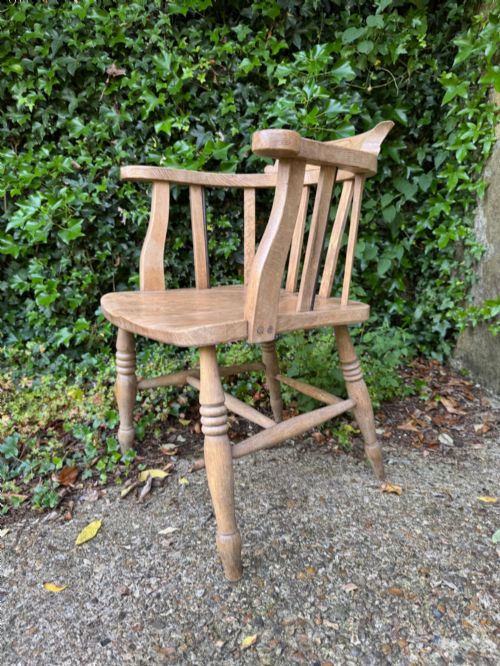
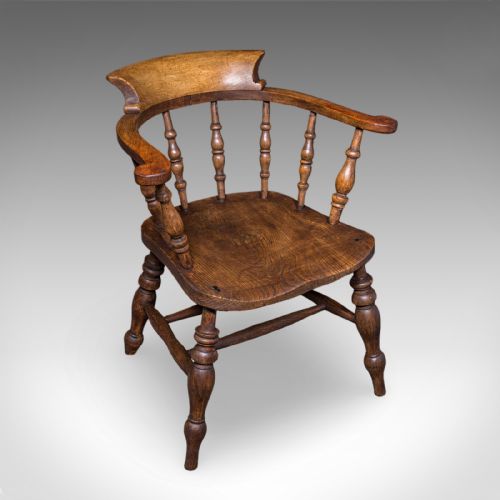
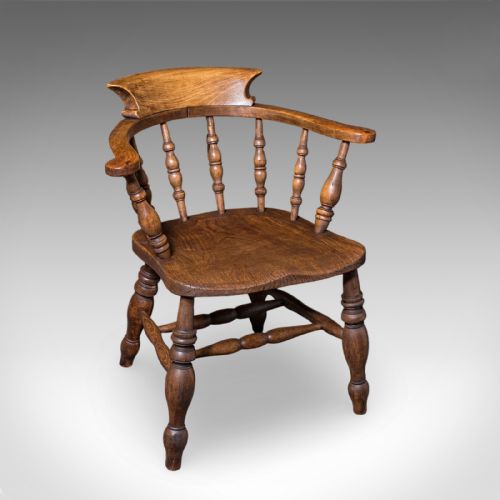
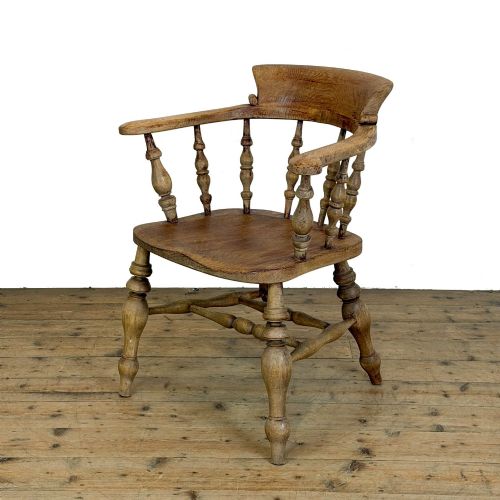
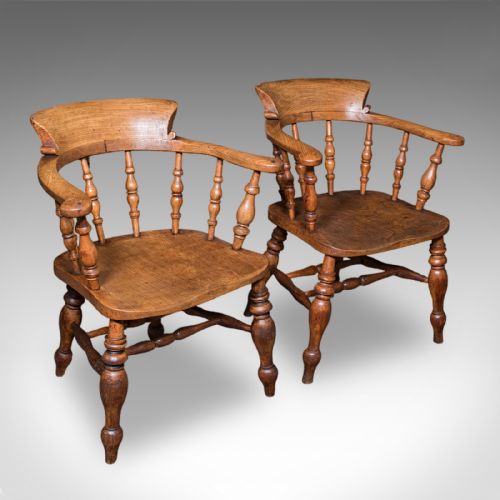


Traditional Oak Tub Chair
A traditional oak tub chair offers sturdy low-slung seating, and buyers choose these pieces for their robust construction and deep, comfortable elbow rests.
Traditional Oak Tub Chair
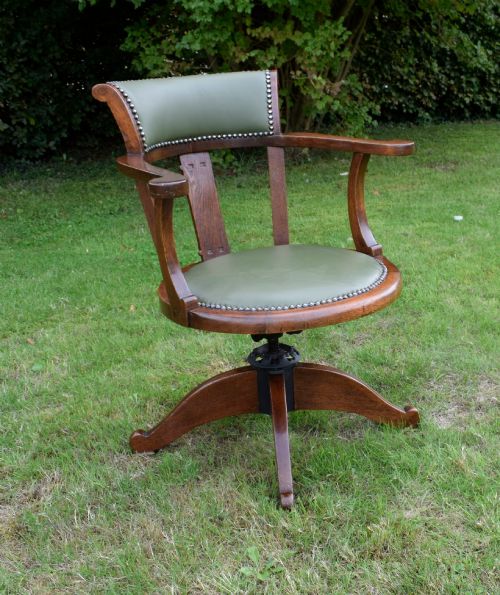
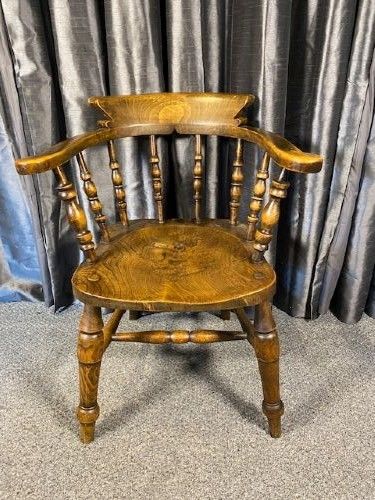
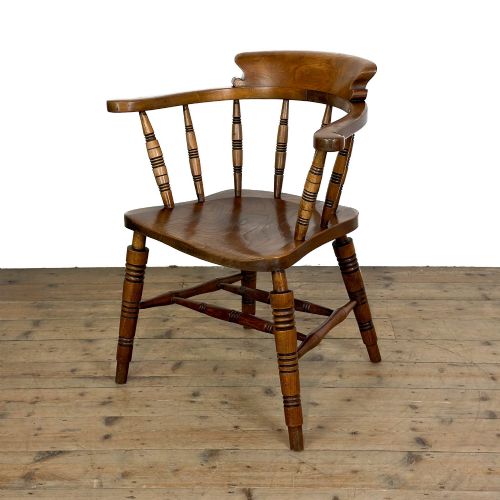
A traditional oak tub chair encompasses solid timber seating designed with curved backs and integrated armrests, often appearing in forms such as captain's chairs, smoker's bows, and desk chairs. These designs originate from nineteenth century and early twentieth century periods, spanning Victorian and Edwardian eras.
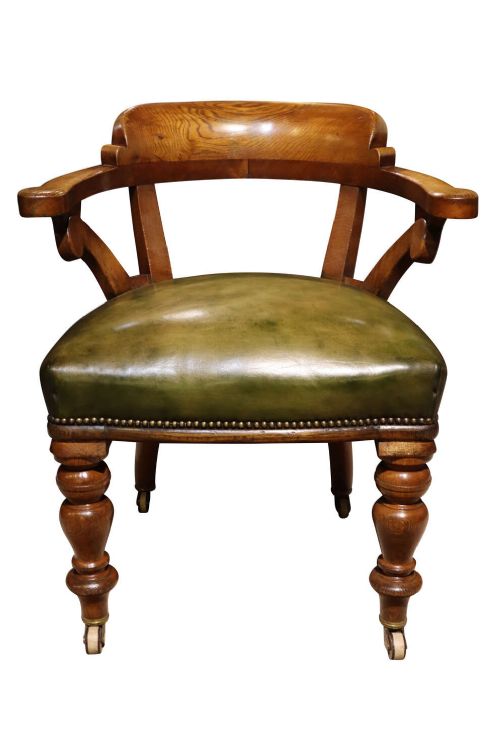
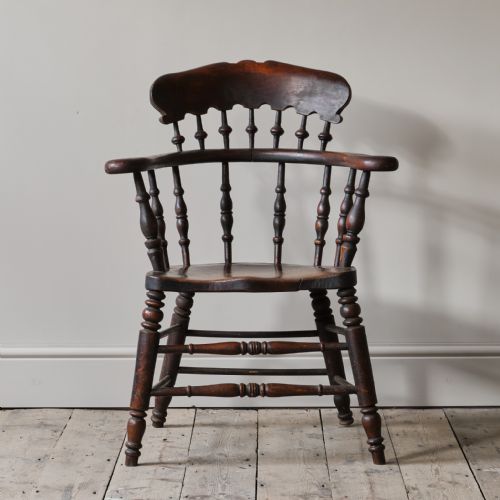
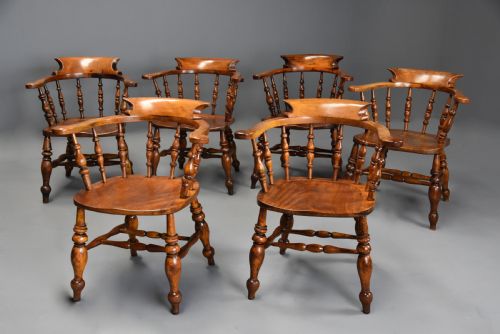
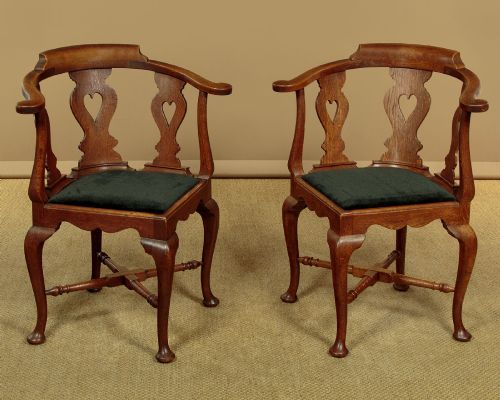
The variations most commonly met on this page include nineteenth century smoker's bows and Victorian or Edwardian office and library chairs. Examples often combine robust frames with inset leather or hide seats, alongside simpler country house elbow seats.
How they were made
Makers utilised solid timbers including oak, elm, beech, and ash to construct these frames, frequently pairing an oak structural framework with elm seats or beech spindles. Hardwood construction ensured durability for daily seating at desks or in libraries.
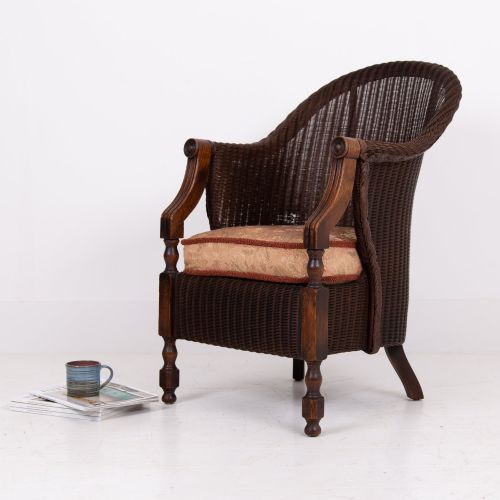
Upholstery elements incorporate brass fixings alongside leather, hide, and fabric inserts. Selected pieces also combine Lloyd Loom techniques with timber framing for garden room seating.
Current listings demonstrate chair forms spanning the Victorian, Edwardian, and 1930s periods, constructed from oak, elm, beech, ash, leather, and brass.
What varies in quality
The standard of timber selection and finish determines the character of each piece, distinguishing utilitarian office seating from finer golden oak library armchairs with fitted leather pads. Richness of grain and depth of tone in the wood reveal the care taken by the maker.
The integrity of the curved backrail construction and the tightness of turned spindle joints dictate the structural success of the chair. Heavier gauge timbers and well-preserved original hide or leather seating elevate the tier of the piece.
The Traditional Oak Tub Chair Glossary
- Smoker's bow
- A type of Windsor chair with a low, continuous curved back rail and armrests, popular in nineteenth century English homes and offices.
- Captain's chair
- A sturdy low-backed wooden armchair designed for swivel desk use or dining, typically featuring turned spindles.
- Golden oak
- A bright, warm shade and finish of oak timber frequently seen on Victorian library and desk chairs.
- Hide
- A heavy animal leather used for upholstery on desk chair seats, offering durability and a smooth surface.
Traditional Oak Tub Chair: Frequently Asked Questions
What is a traditional oak tub chair?
A traditional oak tub chair is a solid timber seat featuring a curved enclosing back and integrated armrests. These pieces span nineteenth and early twentieth century styles including captain's chairs and smoker's bows.
They serve as functional seating for desks, libraries, and studies, combining durable hardwood frames with wooden or leather-upholstered seats.
How do I use a smoker's bow chair?
Smoker's bow chairs function well as desk chairs, library seating, or accent pieces in a study. Their low, rounded back supports the arms while sitting for extended periods.
Position them at a writing table or in a corner where the curved wooden framing can be appreciated from all angles.
How do I distinguish Victorian from Edwardian chairs?
Victorian chairs often display heavier proportions and rich golden oak finishes with buttoned leather pads. Edwardian examples tend toward slightly lighter framing while retaining traditional country house forms.
Examining the turning of the spindles and the style of the wood finish helps identify the manufacturing period.
What materials are used in these chairs?
These chairs are constructed from solid hardwoods including oak, elm, beech, and ash. Seats are frequently shaped from a single piece of elm or fitted with tan hide and green leather.
Additional materials like brass tacks and woven Lloyd Loom appear on specific nineteenth and twentieth century variations.