

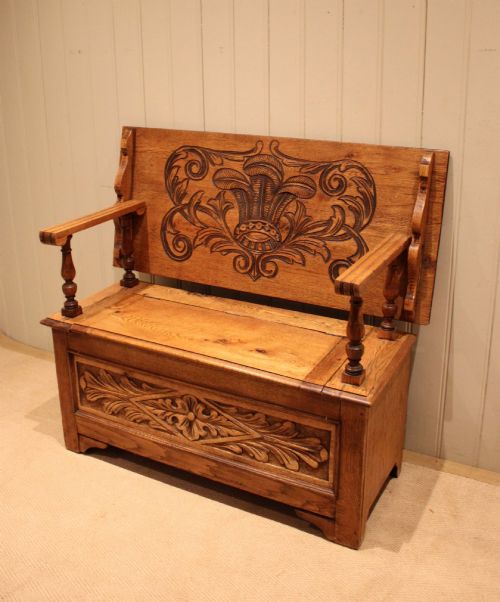
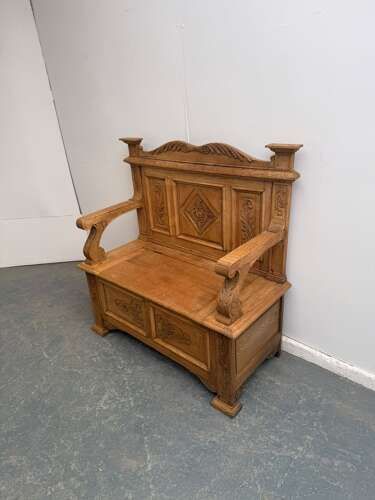
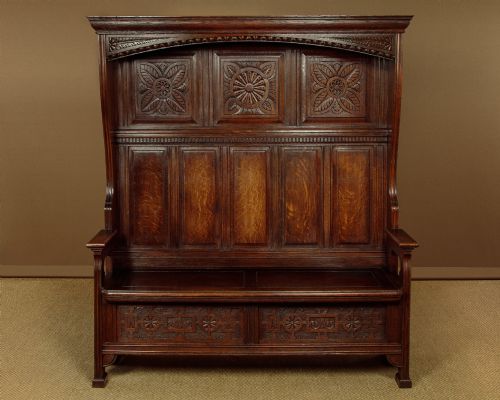
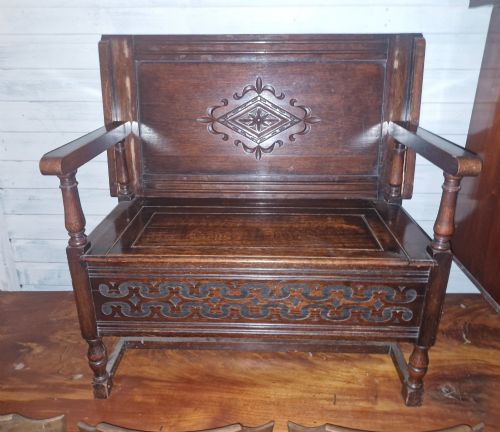
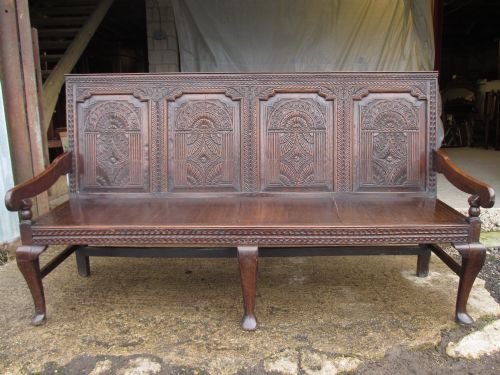
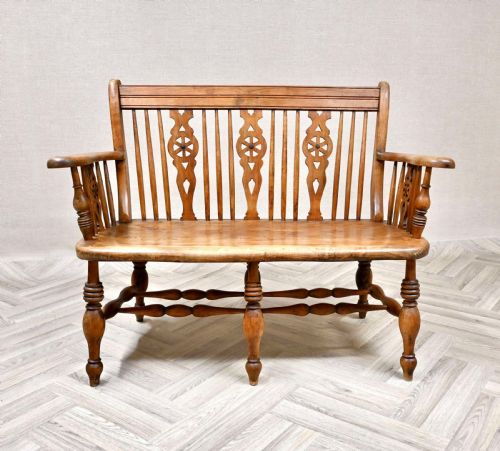
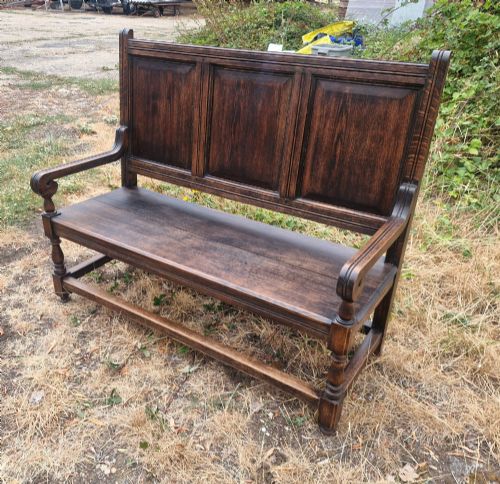
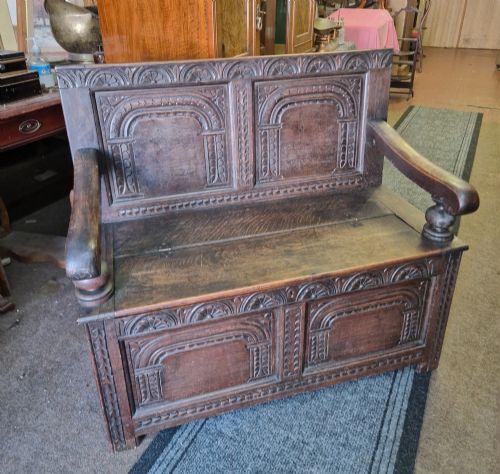


Traditional Oak Settling Bench
A traditional oak settling bench brings centuries of craftsmanship and practical seating into a hallway or living space.

Traditional Oak Settling Bench
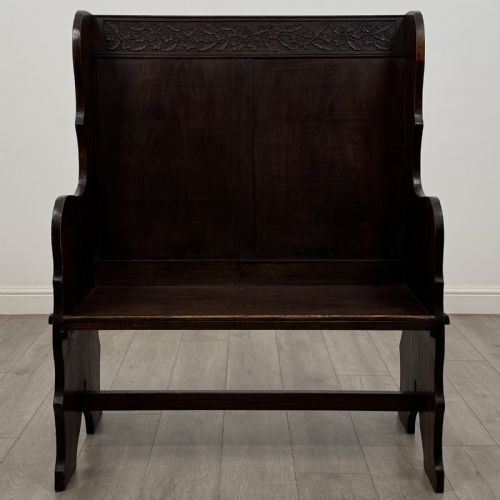
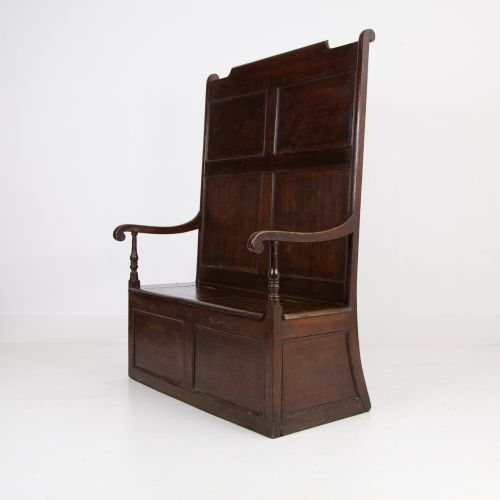
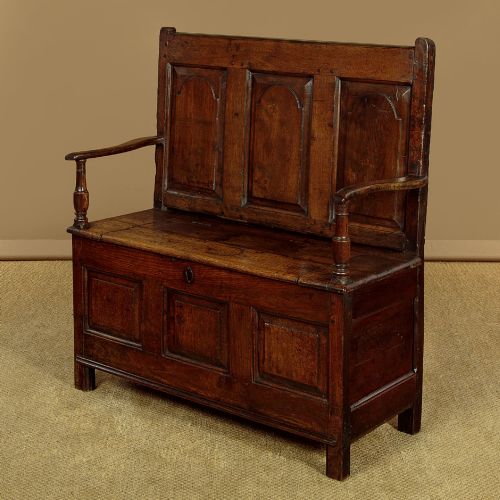
A traditional oak settling bench encompasses robust wooden seating designed for domestic spaces, frequently incorporating high backs or enclosed storage compartments beneath the seat.
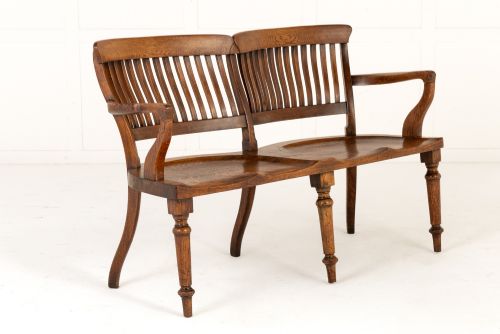
The selections available here span from the eighteenth century through the Victorian era and into the early twentieth century, showing influences from Georgian, Welsh vernacular, and rustic farmhouse styles.
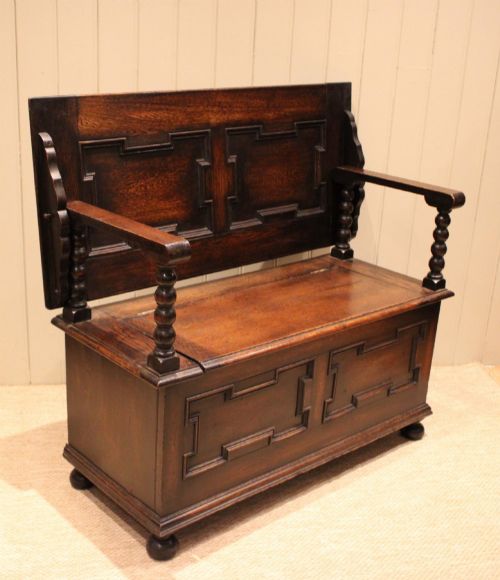
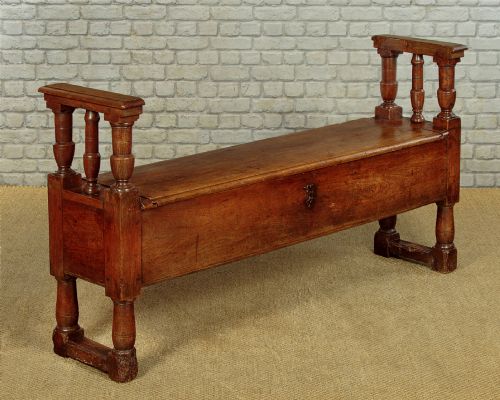
Buyers will encounter various formats, including panelled box settles, monks benches with fold-over tops, and open hall seats constructed from solid timbers.
Materials and Construction
Makers relied primarily on solid oak, frequently supplemented with elm, pine, cherrywood, and rush for seating components or secondary structures.
Joinery methods included traditional panel construction, mortise and tenon joints, and hand-carved detailing applied to backs and canopies.
Surface treatments range from historical waxed finishes and bleached oak to limed panels and carved decorations dating from revival periods.
Traditional Oak Settling Bench Retail Price Guide 2026
Typical asking prices for traditional oak settling bench among the pieces listed under this phrase on Sellingantiques today, from the lower quarter to the upper quarter. They describe what is for sale here now, not the wider market.
Listings feature periods spanning from the eighteenth century to the 1930s, constructed predominantly in oak alongside elm, pine, and cherrywood.
Quality and Distinction
The distinction between standard examples and superior pieces rests upon the integrity of the timber, the depth and crispness of hand-carved ornamentation, and the preservation of original structural elements.
Proportion and scale dictate the desirability of a piece, with smaller settles and those featuring integrated storage boxes or canopy tops demonstrating greater versatility and craftsmanship.
The patina accumulated on the wood over centuries, together with untouched surfaces and solid joints, separates vernacular items made for everyday use from later revival pieces.
The Traditional Oak Settling Bench Glossary
- Settle
- A wooden bench with a high back, solid arms, and often a closed box base designed to keep out draughts in older homes.
- Monks bench
- A convertible piece of furniture featuring a hinged top that folds down to transform the high back into a table surface.
- Vernacular
- Furniture built by local tradesmen using regional traditions and readily available native timbers rather than following strict metropolitan pattern books.
- Box settle
- A variation incorporating a lidded compartment beneath the seat for storing household goods, blankets, or boots.
Traditional Oak Settling Bench: Frequently Asked Questions
Where should I place a settle?
These benches sit comfortably in hallways, boot rooms, or large kitchens where their high backs can block draughts from doors.
They also work well against living room walls, offering both seating and practical interior storage.
How do I use the storage?
Many traditional designs feature a lift-up lid on the seat box, providing deep concealment for shoes, boots, and household linens.
Ensure items stored inside are dry to protect the historic interior timbers from moisture.
Are monks benches authentic?
While the format dates back centuries, many surviving examples found today were produced during the late nineteenth and early twentieth centuries as revival pieces.
Examining the construction methods and timber characteristics helps determine whether a piece originates from the Georgian period or later.
How do I care for the oak?
Maintain the wood by applying traditional beeswax periodically to nourish the grain and preserve the historic surface sheen.
Keep the furniture away from direct heat sources and radiators to prevent the solid timber from splitting.