

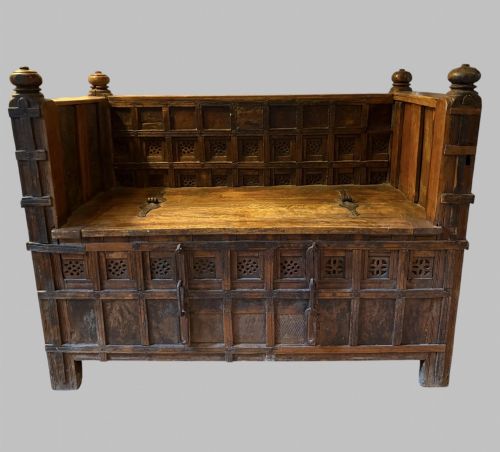
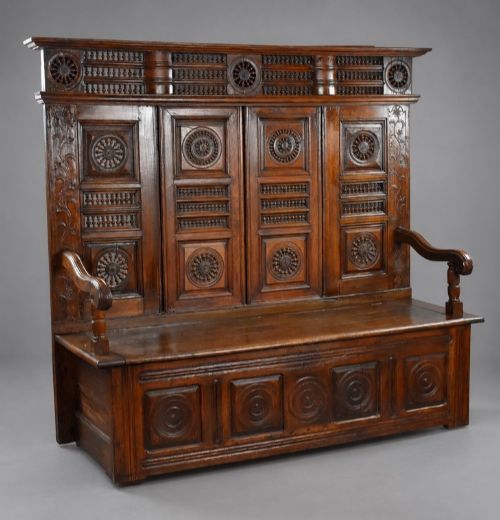
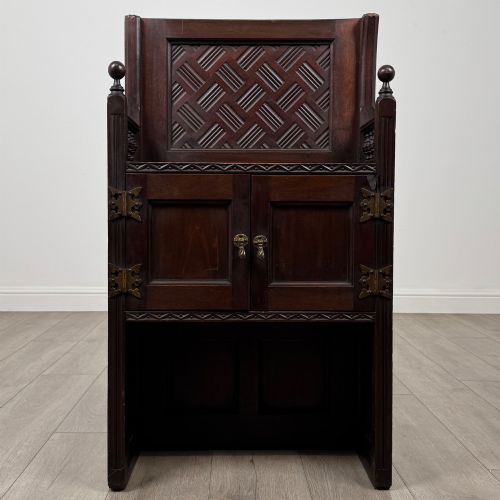
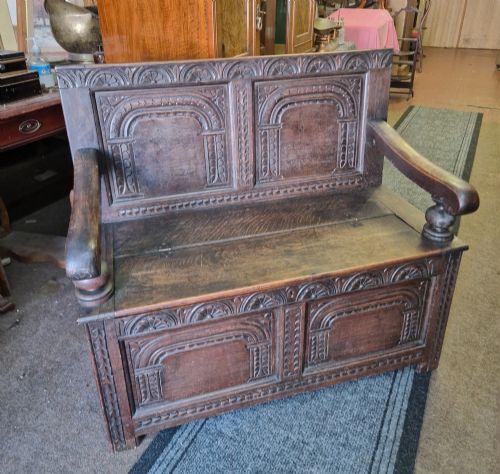




Carved Panel Entry Bench
A carved panel entry bench anchors a hallway with sturdy seating and historic timber presence.

Carved Panel Entry Bench
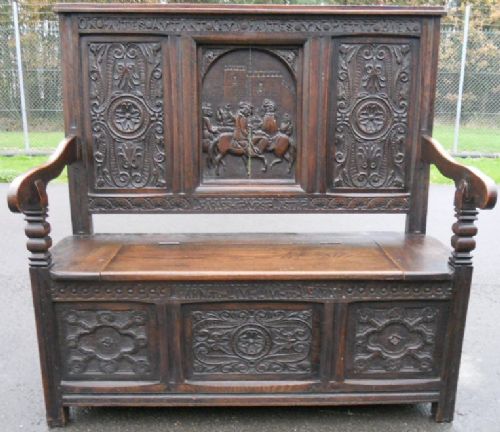
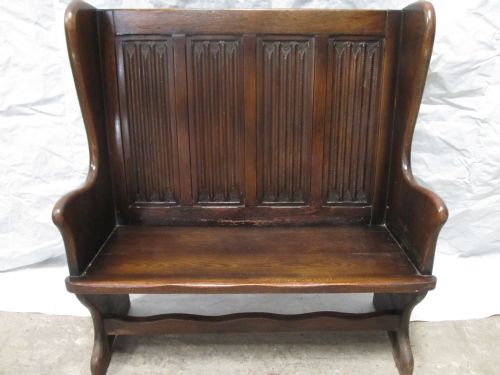
When you search for a carved panel entry bench, you are looking for substantial wooden seating designed for a hall or passageway, often featuring high backs and hinged seats. The pieces on this page span from the eighteenth century through the Edwardian era, incorporating styles such as Georgian Country, Jacobean Revival, and Victorian Gothic.
You are most likely to meet oak and mahogany examples on this page, taking the form of settles, hall seats, and high-back benches. These items combine practical storage or seating with decorative carved panels that reflect their period of origin.
Materials and construction
Makers utilised solid timbers such as oak and walnut, shaping them with hand tools to build robust frames and panelled backs. Iron and brass fixtures, including hinges and hooks, appear alongside fabric elements where appropriate.
Carving was executed directly into the wood of the back panels and framework, employing techniques drawn from Renaissance Revival and Flemish Baroque traditions to create deep relief patterns.
Carved Panel Entry Bench Retail Price Guide 2026
Typical asking prices for carved panel entry bench among the pieces listed under this phrase on Sellingantiques today, from the lower quarter to the upper quarter. They describe what is for sale here now, not the wider market.
One listed pew originates directly from St. Paul's Church in Tiverton, bringing centuries of ecclesiastical sitting straight to the hallway.
Assessing quality
Quality rests in the crispness of the timber carving and the structural integrity of the joints, separating utilitarian workshop output from ambitious cabinet work. Dense grain in the primary oak or walnut timber indicates a superior selection of material.
Proportion and the handling of historical revival styles dictate the visual success of the piece, with finer examples showing harmonious balance between decorative panels and structural framing.
The Carved Panel Entry Bench Glossary
- Settle
- A wooden bench with a high back, solid arms, and often a hinged seat concealing a storage box. This form provided draught protection in large entrance halls.
- Panel
- A flat piece of wood set within a surrounding frame to allow for natural wood expansion without splitting. Carved decoration is frequently applied directly to these surfaces.
- Jacobean Revival
- A nineteenth-century design style that copies seventeenth-century English motifs, characterised by heavy proportions and geometric or floral carved panels.
- Hall seat
- A lighter alternative to the traditional settle, designed for brief seating in an entranceway. These often incorporate umbrella stands or panelled backs.
Carved Panel Entry Bench: Frequently Asked Questions
Where should I place a carved panel entry bench?
These pieces suit spacious hallways, boot rooms, or large living areas where their high backs can be appreciated against a wall.
Ensure the depth of the seat and the height of the back fit the proportions of your room before placement.
How do I care for the wood?
Maintain the timber by dusting with a dry cloth and applying natural wax periodically to nourish the surface.
Keep the bench away from direct heat sources and strong sunlight to prevent the carved panels from drying out.
Are these benches comfortable for daily use?
Traditional wooden settles have upright wooden backs designed for posture rather than lounging.
You can add a custom squab cushion to the seat base for softer daily sitting.
How can I tell the period of the carving?
Examine the tool marks, the depth of the relief, and the wear patterns on the timber surface.
Revival pieces from the Victorian era often display sharper, machine-assisted finishing compared to eighteenth-century hand work.