

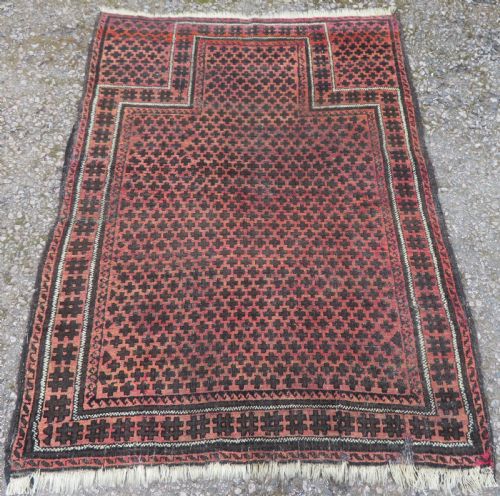


Traditional Mihrab Prayer Carpet
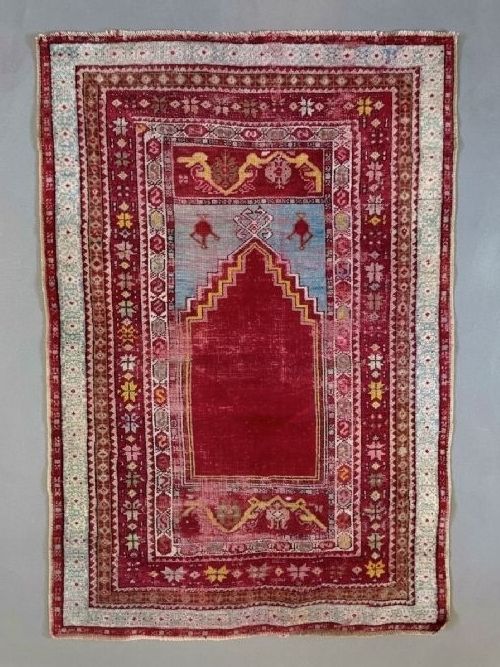
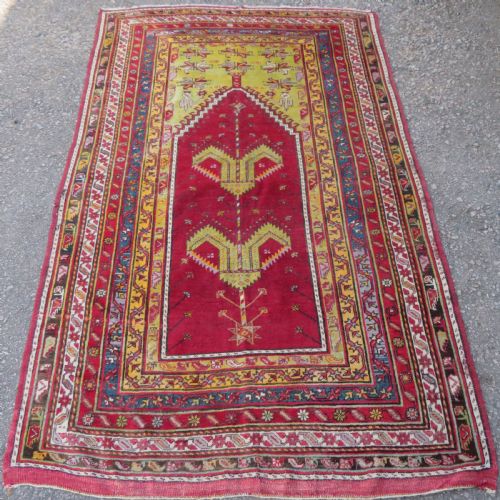
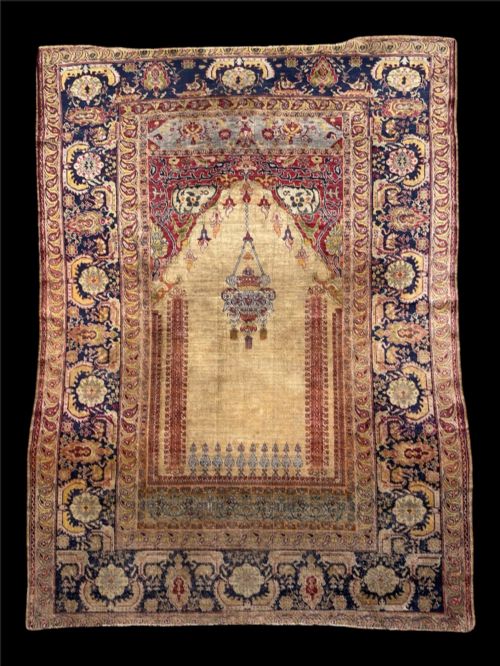
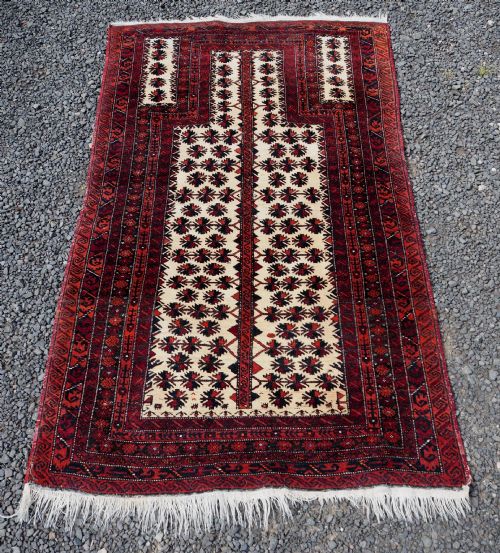
Traditional mihrab prayer carpet examples are woven textiles defined by a central arch design directing the user toward Mecca, originating from Turkish, Persian, Caucasian and Afghan regions.
Traditional Mihrab Prayer Carpet
A traditional mihrab prayer carpet serves as a portable space for daily devotions, featuring an architectural arch motif known as the mihrab that points toward Mecca during prayer. These pieces frequently originate from Anatolian, Turkish, Persian, Caucasian and Afghan tribal or village workshops.
The layout generally centres on a single pointed arch, though double mihrab, triple mihrab and mosque lantern variations appear across specific nineteenth-century and early twentieth-century examples. Buyers will encounter formats ranging from compact village mats to room-sized area rugs.
Originating regions dictate the specific stylistic vocabulary, with Turkish centres like Ghiordes, Kirsehir, Ladik and Milas employing distinct geometric or floral borders. Afghan and Baluch examples introduce tribal motifs, lotus leaves and ram horn details within the niche.
How they were made
Weavers constructed these textiles using wool, cotton and silk fibres, frequently incorporating hand-spun wool for foundation yarns and pile. Natural dyeing traditions provided the deep palette seen across nineteenth-century and earlier specimens.
The construction relies on hand-knotted pile techniques executed on vertical or horizontal looms, paired with sturdy cotton or wool warps and wefts. Village and tribal pieces demonstrate tight knotting methods designed to withstand sustained domestic use.
Regional styles represented include Anatolian, Ottoman, Turkmen, Afghan, Caucasian and Persian tribal traditions.
What varies in quality
Quality rests primarily in the fineness of the knot density and the precision of the drawing within the mihrab arch and border geometry. Tightly knotted specimens retain crisp architectural lines and greater structural integrity over decades of handling.
The purity and depth of the dye palette distinguish superior examples from standard production, particularly where natural indigo, madder and varied secondary tones interact without muddying. Early nineteenth-century and eighteenth-century pieces often display a harmonious softening of hue.
The Traditional Mihrab Prayer Carpet Glossary
- Mihrab
- The arched niche in a prayer rug that mimics the mihrab of a mosque, oriented toward Mecca during worship. This architectural motif forms the compositional focus of the textile.
- Ghiordes
- A historic weaving centre in western Anatolia renowned for distinctive prayer rug designs featuring tiered arches and floral motifs. Pieces attributed to this tradition often exhibit finely spun wool pile.
- Warp
- The vertical threads stretched lengthwise on a loom before weaving begins, forming the foundational skeleton of the carpet. Fringe typically extends from these exposed structural threads.
- Ladik
- A town in central Anatolia celebrated for producing prayer rugs with distinctive pilasters, stepped arches and tulip motifs. Eighteenth-century and nineteenth-century examples from this region are particularly prized.
- Kizil Ayak
- A Turkmen tribal group known for distinctive prayer rugs featuring repeated guls and mosque designs. These nomadic pieces often utilise rich red grounds and archaic border arrangements.
Traditional Mihrab Prayer Carpet: Frequently Asked Questions
What is a traditional mihrab prayer carpet?
A traditional mihrab prayer carpet is a hand-knotted textile created for personal devotion, featuring a distinctive arch design that represents the mihrab found in mosques.
These rugs were historically produced across Turkey, the Caucasus, Persia and Afghanistan by village and tribal weavers utilising wool, cotton and silk.
How do you identify a prayer rug?
Prayer rugs are identified primarily by the architectural arch motif, or mihrab, located at one end of the field, which directs the user toward Mecca.
They also tend to be smaller in format than standard floor carpets, designed for portability and individual daily use.
Where were these rugs made?
These textiles were woven in diverse regions including Anatolian towns like Ghiordes, Kirsehir, Ladik, Milas and Kula, as well as by Afghan, Baluch and Caucasian tribal communities.
Each weaving region developed distinct geometric or floral vocabulary tied to local cultural traditions and available materials.
How should I care for an antique prayer rug?
Antique prayer rugs require gentle maintenance, including regular low-suction vacuuming without a beating brush and protection from direct sunlight to preserve natural dyes.
Professional textile conservators should handle any deep cleaning or structural repairs to safeguard the hand-spun wool and silk fibres.