
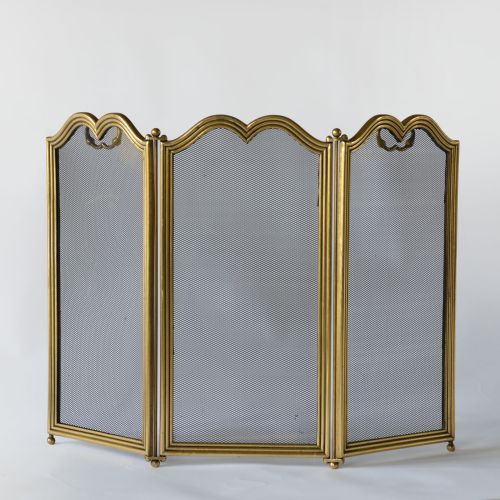


Traditional Metal Fire Fender
A traditional metal fire fender frames a hearth with structural guard and period weight, keeping domestic spaces safe while anchoring the fireplace.
Traditional Metal Fire Fender
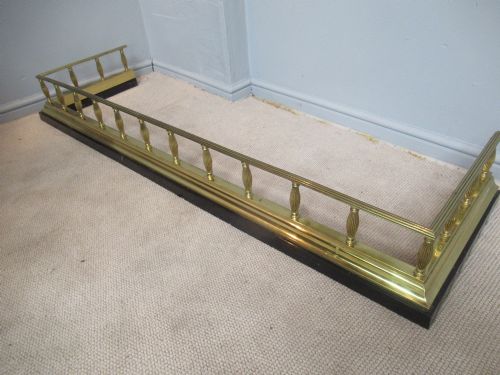
A traditional metal fire fender is a hearth accessory designed to contain embers and protect flooring, appearing frequently in Victorian, Edwardian, and Regency forms across this selection.
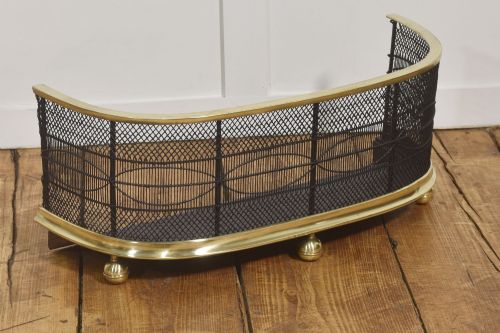
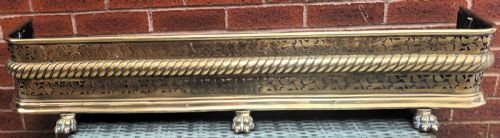
Buyers encounter heavy curb fenders in pierced brass or steel alongside club fenders featuring upholstered leather seats and wire mesh nursery guards built for hearth safety.
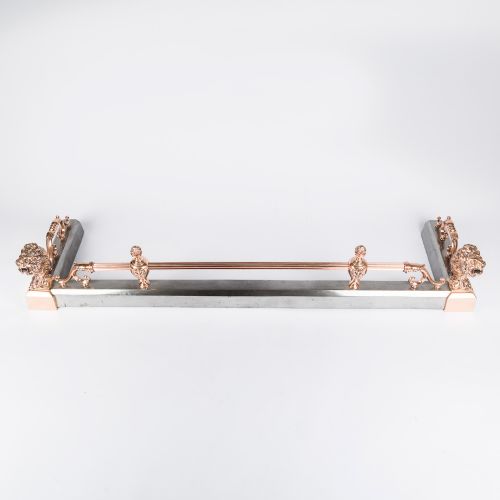
These fireplace furnishings range from simple extending bars to elaborate country house club styles incorporating brass, copper, and iron components.
Materials and construction methods
Metal fire fenders utilise combinations of brass, steel, iron, and copper, often shaped through piercing, casting, and wire weaving.
Many examples integrate structural iron frames with decorative brass rails, pierced metal panels, or woven iron wire mesh.
Upholstered seating sections on club variants incorporate leather or oak supported by steel and brass frameworks.
Listings feature brass, steel, iron, copper, leather, and wire mesh across Victorian, Edwardian, and Regency periods.
Distinguishing build quality and finish
Quality varies through the weight of the metal gauge, the precision of pierced brass decoration, and the solidity of corner joints.
Superior examples display crisp casting detail, such as lions or decorative mouldings, alongside robust internal framing and intact mesh or leather.
The Traditional Metal Fire Fender Glossary
- Curb fender
- A low metal barrier placed on the floor around a fireplace opening to contain sparks and ash. These typically feature pierced brass or heavy iron construction.
- Club fender
- A low hearth guard equipped with upholstered top rails functioning as seats. They often combine steel frames with leather squabs.
- Nursery fender
- A tall protective metal guard enclosing the hearth to keep children and clothing away from open flames. They frequently employ wire mesh or woven iron wire.
- Pierced brass
- Metal sheet perforated with decorative patterns through stamping or piercing. This technique defines many Victorian hearth accessories.
Traditional Metal Fire Fender: Frequently Asked Questions
How do I choose the right size fender?
Measure the width and depth of your hearth stone carefully to ensure the perimeter sits comfortably within the available floor space.
Account for any clearance needed around fire tools or hearth accessories when selecting extending or fixed designs.
What is a club fender used for?
A club fender provides a low barrier around the hearth while offering integrated upholstered seating close to the fire.
Originating in country houses, these dual-purpose pieces allowed occupants to sit directly by the warmth of the grate.
How do I clean brass and steel fenders?
Remove accumulated dust using a soft dry cloth before addressing specific metal surfaces with appropriate traditional cleaners.
Avoid abrasive pads that might scratch pierced brass patterns or damage aged steel and copper patination.
How do I identify a Victorian fender?
Victorian examples often display heavy brass construction with characteristic flower or geometric piercing, alongside robust iron frames.
Look for period manufacturing marks, patination on the metal, and construction techniques typical of nineteenth-century metalwork.