




Brass Nursery Fender Guard
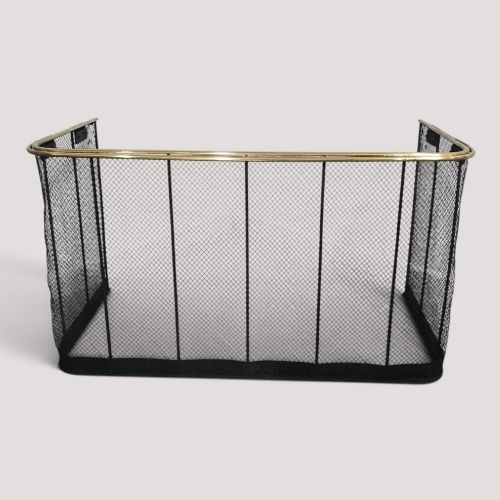
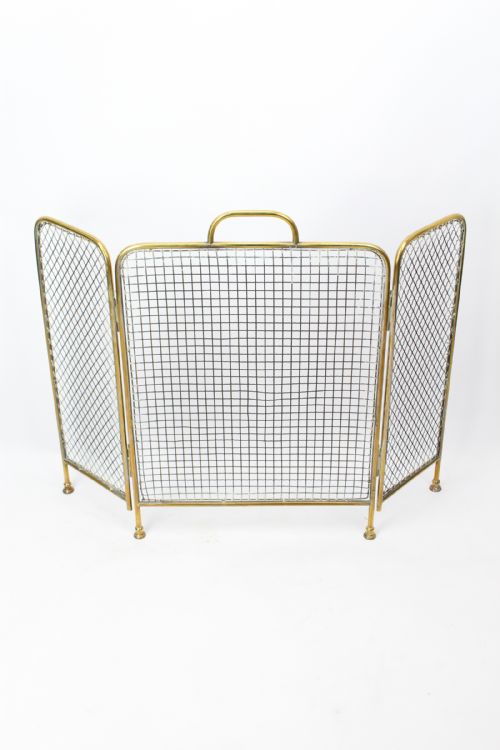
A brass nursery fender guard keeps children safe from open flames while adding bright, period metalwork to a hearth.
Brass Nursery Fender Guard
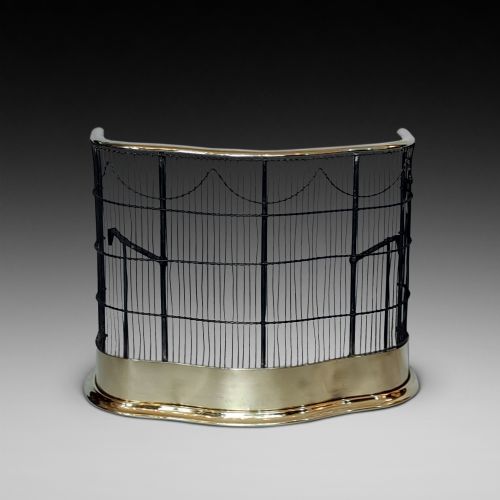
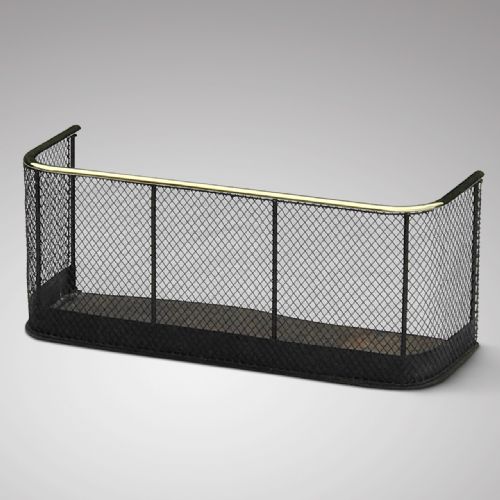
When you search for a brass nursery fender guard, you encounter sturdy barriers designed historically to protect children from open hearths. These pieces combine a low metal fender base with a tall protective mesh screen.
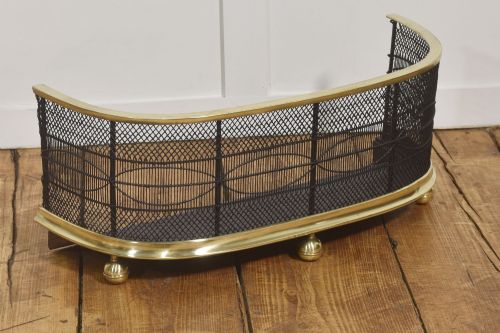
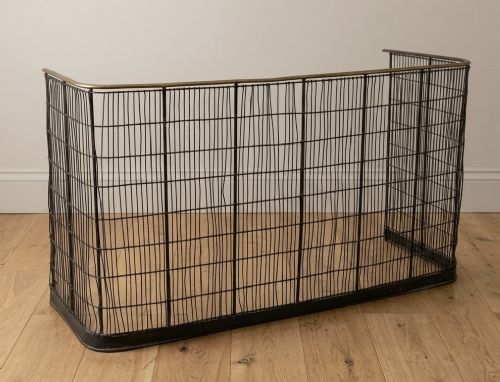
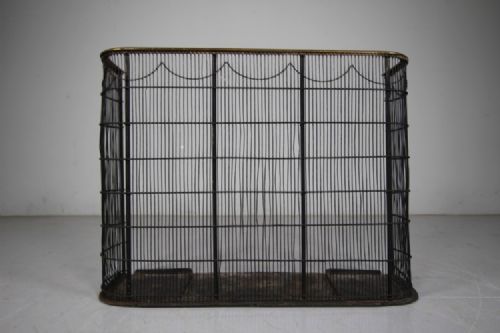
The versions you meet most frequently on this page date from the Victorian era and the nineteenth century. They often feature bright brass top rails combined with woven iron wire or steel wire mesh.
Some examples include practical additions such as clothes rails or shovels. Forms range from straight barriers to bowed and serpentine profiles that project out into the room.
How they were made
Makers constructed these pieces using heavy brass frames paired with iron or steel wire mesh. The metal wire was woven tightly to contain sparks while maintaining visibility of the fire.
Bright brass top rails and rims provided a finished decorative edge to the structural ironwork. Folding mechanisms and clothes rails required sturdy hinged joints integrated directly into the metal frame.
Some nineteenth-century guards included built-in shovels and clothes rails, turning the hearth into a multi-tasking Victorian utility station.
What varies in quality
Quality rests in the weight of the brass framing and the tightness of the wirework mesh. Superior examples use heavy gauge brass and robust wrought iron that hold their shape rigidly over decades of hearth use.
Finer pieces show careful proportioning in bowed or serpentine outlines and well-engineered folding joints. Simpler utilitarian guards utilise basic straight frames with standard iron wire.
The Brass Nursery Fender Guard Glossary
- Fender
- A low metal guard placed around the hearth to contain ashes and logs. In these pieces, it forms the base for the tall safety screen.
- Wire mesh
- A woven barrier of iron or steel wire set within the brass frame. It allows heat to radiate into the room while stopping sparks.
- Serpentine
- A gently undulating curved shape often seen in the profile of the guard. This contour adds elegance and stability to the floor footprint.
- Club fender
- A low fireside seat combined with a fender structure. Some historical examples double as nursery guards.
- Clothes rail
- An integrated upper bar used historically for drying garments by the fire. It appears on selected nineteenth-century nursery guards.
Brass Nursery Fender Guard: Frequently Asked Questions
What is a brass nursery fender guard?
It is a tall protective hearth screen combined with a metal fender base.
Historically, these barriers kept young children safely away from open coal fires.
How do I date a brass nursery fender?
Dating relies on stylistic clues like Regency curves or Victorian proportions.
Materials also help, as nineteenth-century pieces frequently combine solid brass with woven iron wire.
Can I fold a nursery fire guard?
Some period examples feature folding brass frames designed for flexible placement.
Check the hinges on specific pieces to see if they offer adjustable configurations.
Were these guards used for drying clothes?
Certain nineteenth-century versions include an integrated upper rail intended for warming garments.
This practical addition turned the hearth protection into a dual-purpose household utility.
How do I fit one around my fireplace?
Measure your hearth space carefully to match straight, bowed, or serpentine footprints.
Ensure the guard sits firmly on the floor around the perimeter of the fireplace.