




Traditional Mahogany Tray Table
A traditional mahogany tray table brings sturdy timber and clever folding stands together for portable service and everyday use.
Traditional Mahogany Tray Table
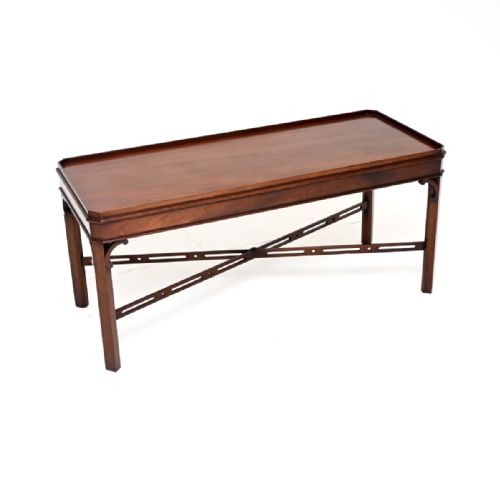
A traditional mahogany tray table combines a removable timber tray with a folding or fixed wooden stand, serving as a versatile piece for entertaining or daily use. These tables appear across multiple periods, ranging from eighteenth-century examples to later revival pieces from the twentieth century.
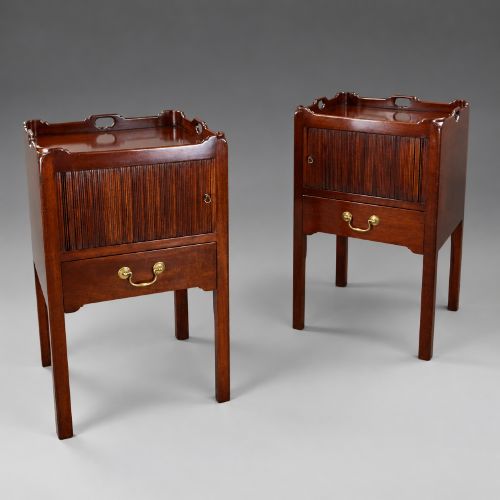
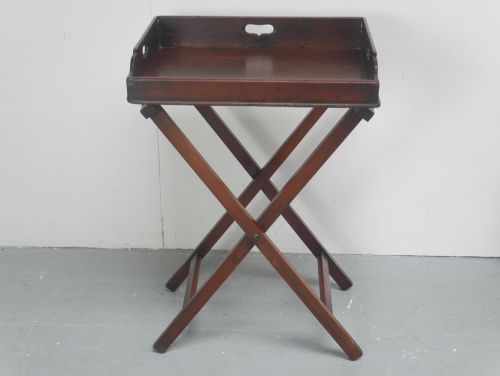
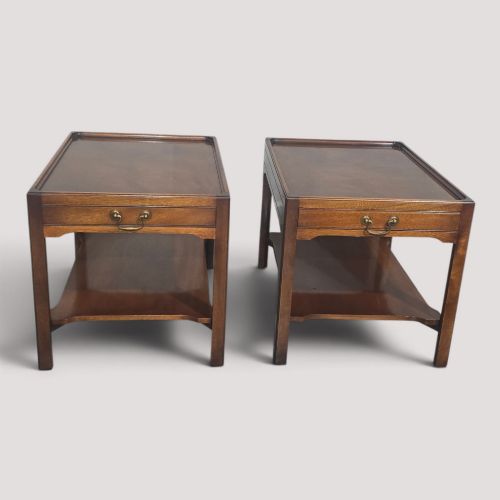
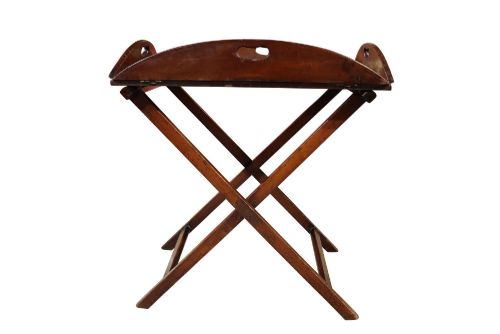
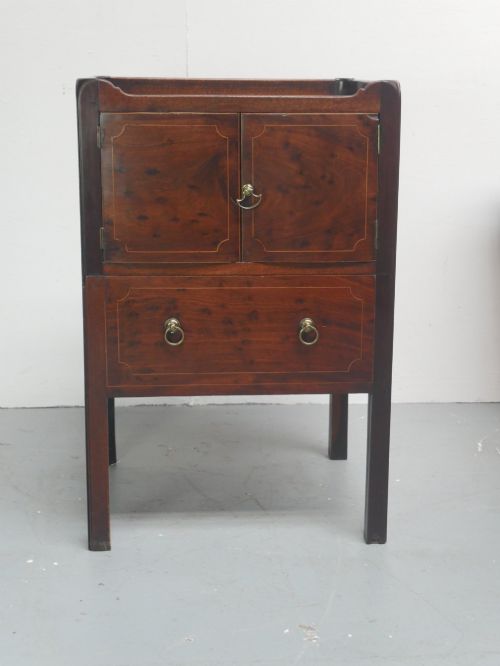
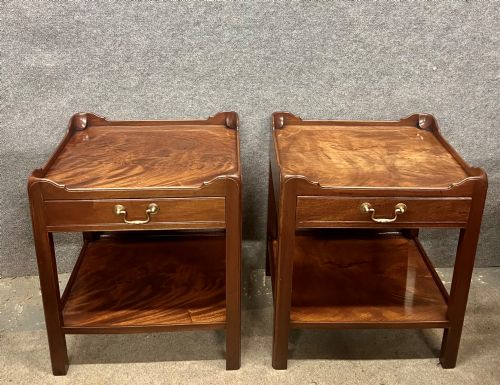
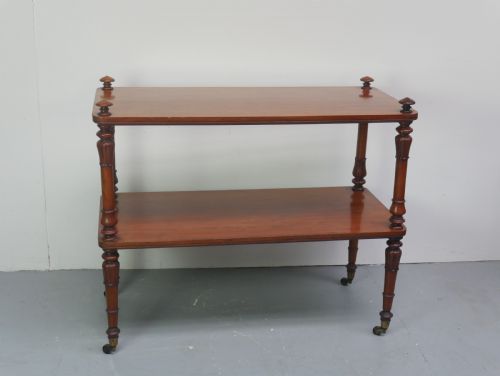
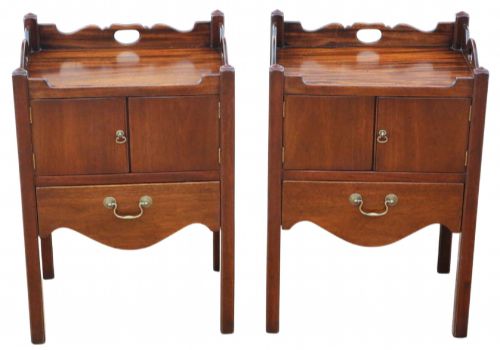
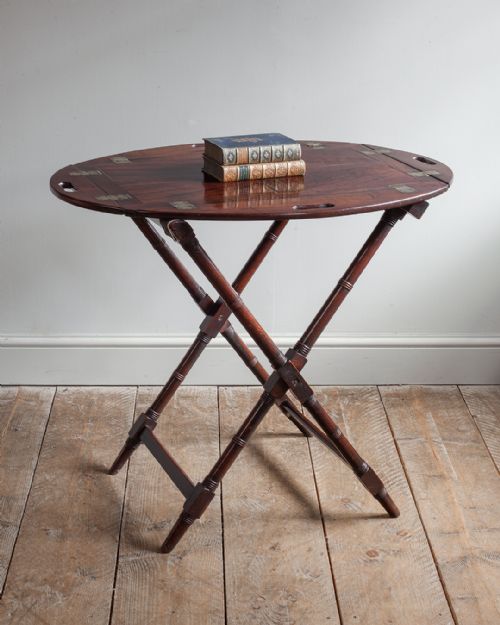
The most common form on this page pairs a rectangular mahogany tray featuring carrying cut-outs with a collapsible X-frame stand. Alongside these folding butler tables, the selection includes related occasional furniture like bedside cabinets, dumb waiters, and lamp tables constructed from the same dark timber.
Origins span formal Georgian workshops up to later Victorian and Edwardian iterations, reflecting enduring utility in English country houses and town residences. Buyers select these items for their dual function as stable side surfaces and portable serving trays.
Materials and construction methods
Makers relied primarily on solid mahogany and mahogany veneers, prized for rich grain patterns and durability under frequent handling. Brass hinges, handles, and occasional boxwood inlay provide functional reinforcement and decorative contrast against the dark wood.
Folding stands often incorporate canvas webbing or cotton webbing to support the tray securely while permitting easy collapse for storage. Joinery techniques range from traditional dovetails on tray corners to sturdy pivot joints on X-frame folding supports.
Traditional Mahogany Tray Table Retail Price Guide 2026
Typical asking prices for traditional mahogany tray table among the pieces listed under this phrase on Sellingantiques today, from the lower quarter to the upper quarter. They describe what is for sale here now, not the wider market.
Several tables show clever folding hinges designed so busy butlers could pack away service trays in seconds.
Judging quality in construction and age
Quality rests heavily on the crispness of the timber joinery and the integrity of the folding mechanism, where tight tolerances prevent wobble during service. Early pieces display hand-cut dovetails and patinated surfaces developed through decades of polishing.
The choice of secondary timbers, such as oak for internal frames or stands, indicates the workshop standard behind each piece. Original stands paired with their corresponding trays command greater interest than assembled combinations from separate eras.
The Traditional Mahogany Tray Table Glossary
- Mahogany
- A durable tropical hardwood known for a reddish-brown tone and fine grain, used extensively in British cabinetmaking. It takes a high polish and resists warping.
- Butler's Tray
- A shallow wooden tray with hinged or fixed sides and carrying handles designed for carrying silver, glass, or china. It lifts off its supporting stand for independent use.
- X-frame Stand
- A folding wooden support constructed in a scissors shape that collapses flat when the tray is removed. Canvas or cotton webbing often limits the spread of the legs.
- Boxwood Inlay
- Contrasting pale timber inserted into carved recesses to create geometric lines or decorative motifs on the wood surface. It frames panels and tabletops with crisp precision.
- Dumb Waiter
- A tiered revolving table used to hold dishes and utensils without requiring a servant present. These multi-tier stands usually rest on a central tripod base.
Traditional Mahogany Tray Table: Frequently Asked Questions
What is a traditional mahogany tray table used for?
These pieces function primarily as movable side surfaces for serving refreshments, holding lamps, or displaying decorative objects in living spaces.
The removable top allows owners to carry items directly from kitchen to parlor before placing the tray back onto its folding stand.
How do I spot an 18th-century tray table?
Eighteenth-century examples typically display hand-cut joinery, pegged tenons, and deep natural patina accumulated through generations of polishing.
Closer inspection of the underside reveals tool marks and timber shrinkage characteristic of early hand-tool woodworking methods.
Are the trays fixed to the stands?
Most traditional butler tables feature trays that lift off the folding stand completely for effortless transport and compact storage.
Some related occasional pieces and bedside cabinets integrate fixed tops with enclosed cupboard storage beneath.
How do I care for antique mahogany furniture?
Maintain the finish by dusting regularly with a soft, dry cloth and avoiding placement near direct heat sources or strong sunlight.
Occasional application of appropriate wax preserves the moisture and lustre of the timber without building up heavy residues.