
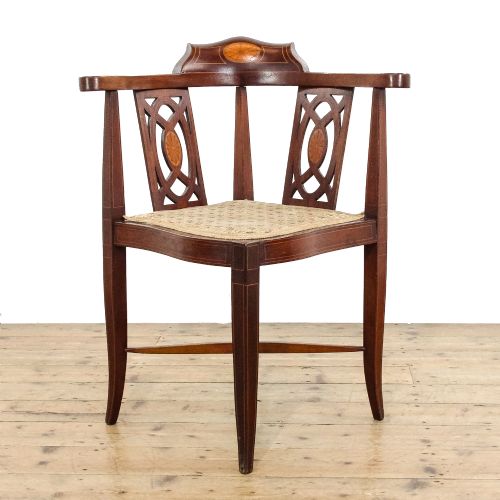
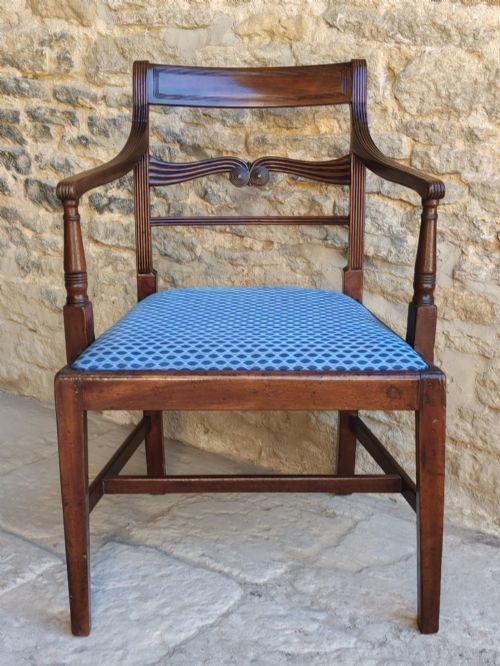
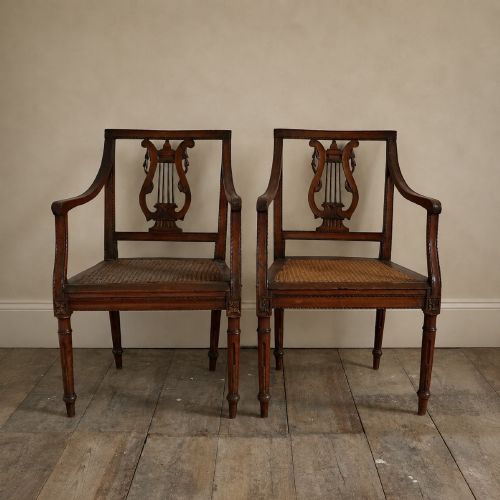
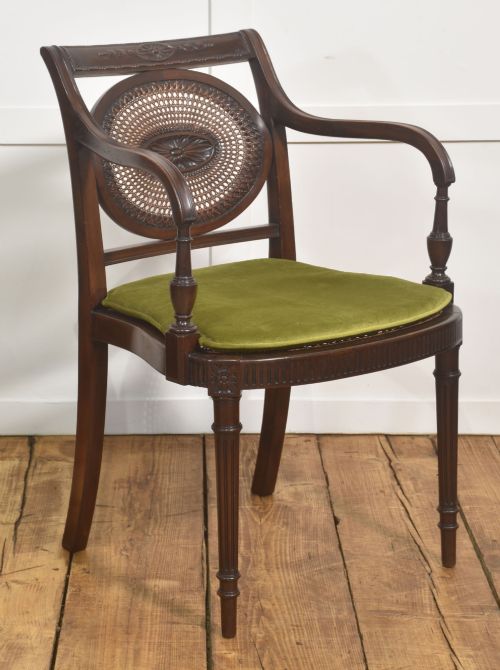
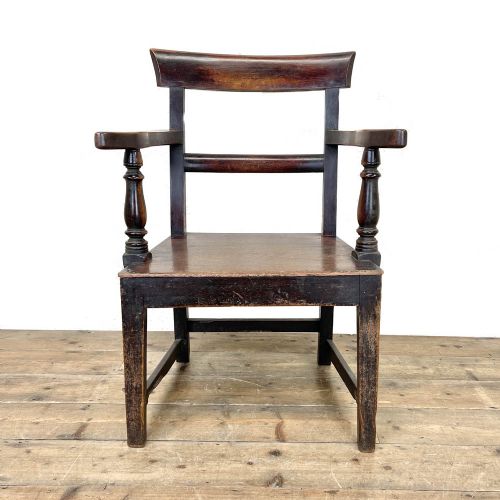
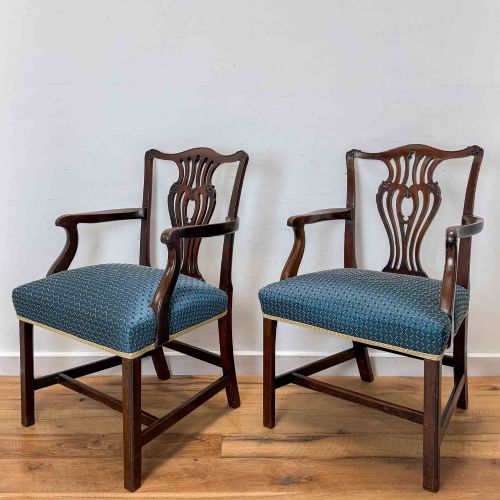
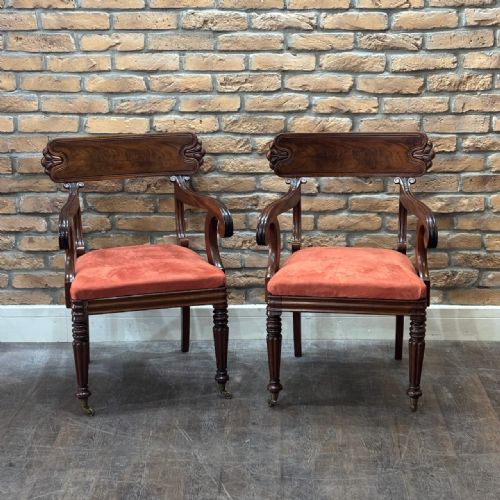
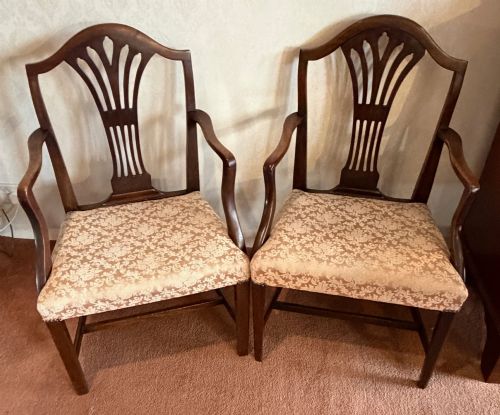
Traditional Mahogany Elbow Chairs
Traditional mahogany elbow chairs offer solid timber frames and supportive armrests, blending sturdy seating with formal period character for a study or dining room.
Traditional Mahogany Elbow Chairs
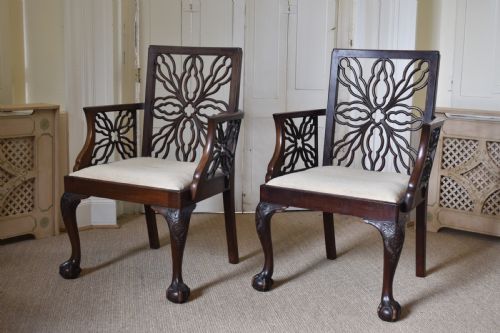
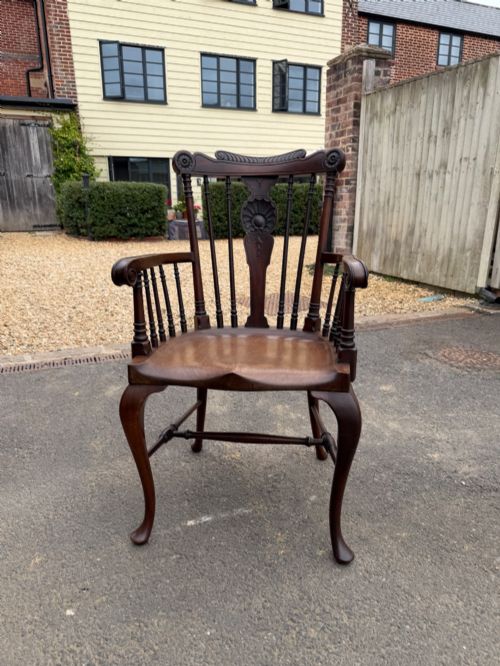
Traditional mahogany elbow chairs appear across several distinct historical periods, spanning Georgian, Regency, Victorian, and Edwardian eras. Buyers searching this phrase encounter sturdy carvers, desk chairs, and open armchairs designed to sit comfortably at a desk, library table, or the head of a dining table.
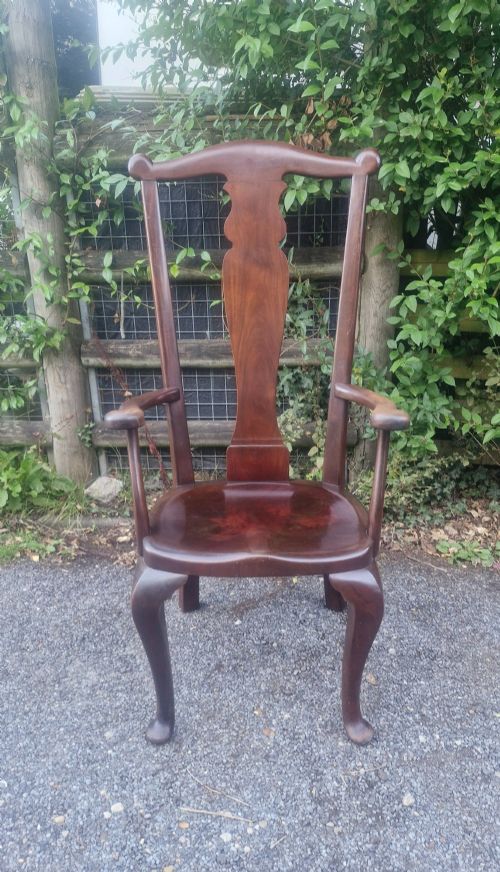
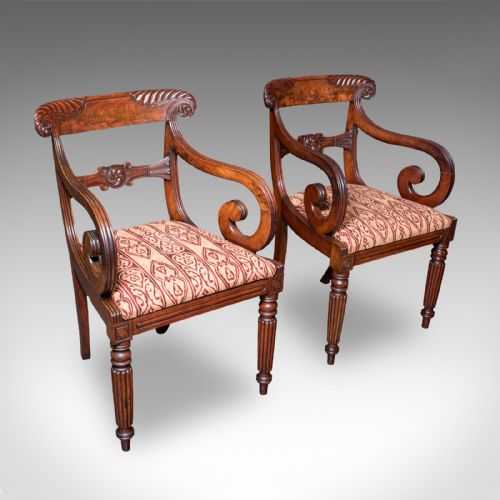
The most common examples on this page date from the nineteenth century, including Georgian and Regency models alongside later revival pieces. These seating forms typically feature open arms, curved supports, and timber frames constructed to provide robust daily support.
Makers and workshops constructed these chairs using dense tropical hardwood, often pairing the exposed woodwork with drop-in or upholstered seats. Regional English and Scottish variations emerge through distinctive splat designs, scroll arms, and carved back rails.
Construction and Materials
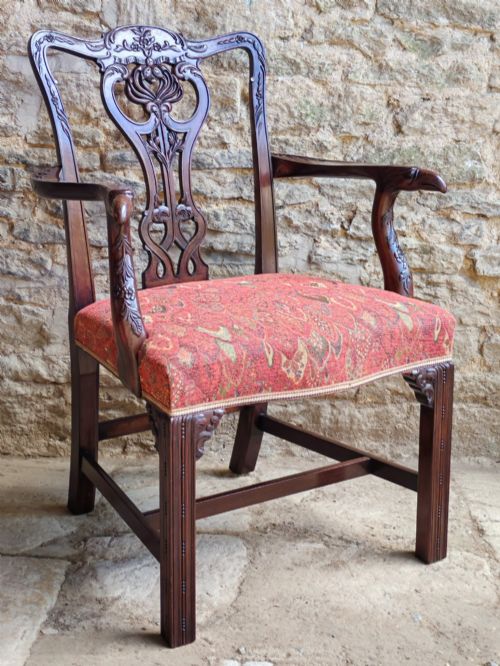
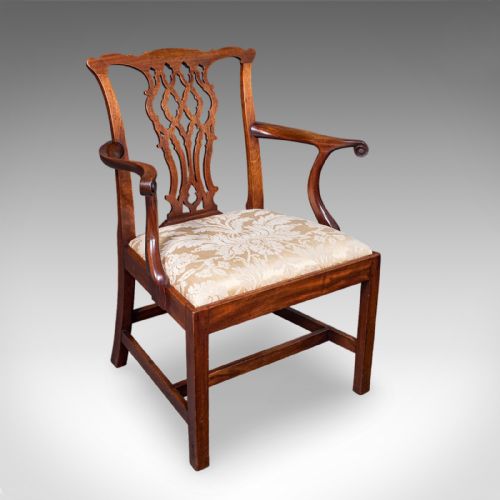
Cabinetmakers utilised dense mahogany timber for the primary frame, mortise and tenon joints, and decorative carved elements. This stable wood allowed craftsmen to execute intricate pierced splats, reeded legs, and scroll arm details without risking structural failure.
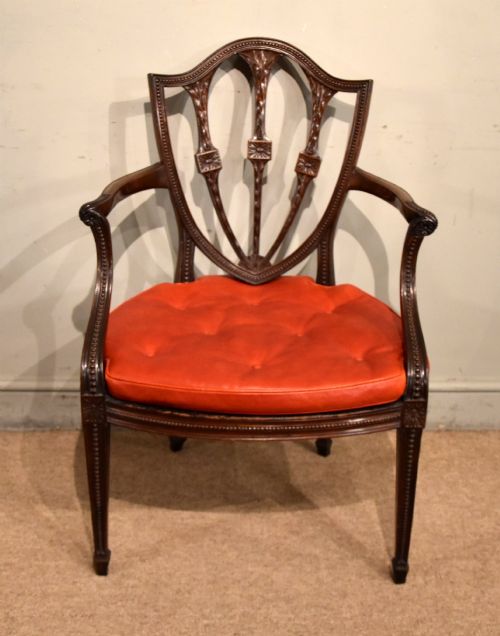
Workshops integrated various secondary materials for the seats, incorporating drop-in pads, cane webbing, and upholstered cushions covered in fabric, leather, or velvet. Brass fittings occasionally reinforced structural stress points or secured castors on desk and library armchairs.
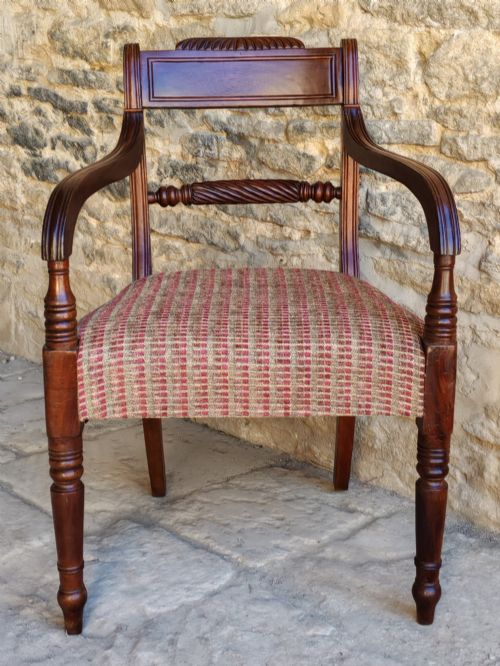
Listings feature mahogany elbow chairs spanning the Georgian, Regency, Victorian, and Edwardian periods, constructed with cane, leather, and upholstered fabric seats.
Judging Quality and Craftsmanship
Superior examples demonstrate crisp, deep hand-carving on the back splats and arms, whereas lesser pieces rely on shallow moulding or factory stamping. The precision of the joinery determines the long-term rigidity of the frame under regular use.
The selection of the mahogany timber influences the visual depth of the surface, with well-figured grain patterns commanding greater attention than plain stock. Original upholstery foundations and surviving secondary woods also elevate the integrity of a piece.
Howard and Sons·Gillows
The Traditional Mahogany Elbow Chairs Glossary
- Carver chair
- A dining chair fitted with arms, traditionally placed at the head of a table or used as a desk seat. These pieces match standard dining heights while offering elbow support.
- Elbow chair
- An armchair featuring low arms designed to support the user's elbows while seated at a desk or table. This term often interchanges with carver and open armchair in period listings.
- Ropeback
- A chair back design incorporating carved twist or rope motifs along the vertical splats or top rail. This decorative style gained popularity during the Regency period.
- Scroll arm
- An armrest curved outward in a continuous volute or scroll shape. Cabinetmakers carved these directly from solid mahogany blocks on nineteenth-century seating.
- Chippendale revival
- A late nineteenth or early twentieth-century style replicating the mid-eighteenth-century designs of Thomas Chippendale. These pieces emulate carved ribbon backs and cabriole legs.
Traditional Mahogany Elbow Chairs: Frequently Asked Questions
Where should I place an elbow chair?
These armchairs suit studies, libraries, and bedroom corners where a substantial seat is required. They also function well as head-of-table seating in a formal dining room.
Ensure adequate clearance around desks or tables so the armrests slide underneath comfortably. The open design allows them to sit neatly against walls when not in active use.
How do I care for mahogany timber?
Maintain the wood by applying a quality beeswax periodically to nourish the surface and preserve the polished finish. Avoid placing chairs in direct sunlight or near heat sources to prevent timber splitting.
Dust the carved details regularly with a soft dry cloth. Protect upholstered pads and cane panels from sharp objects and excessive moisture.
What is the difference between a carver and an armchair?
Carver chairs traditionally feature lighter frames designed to sit alongside matching single dining chairs. They provide elbow support without occupying the heavy footprint of a large armchair.
Standard armchairs often include upholstered sides or deeper seats intended for drawing rooms and reception spaces. Both terms overlap frequently in antique descriptions.