


Traditional Library Steps
Traditional library steps are practical climbing pieces designed for reaching high shelves, combining sturdy utility with classic period timber work.
Traditional Library Steps
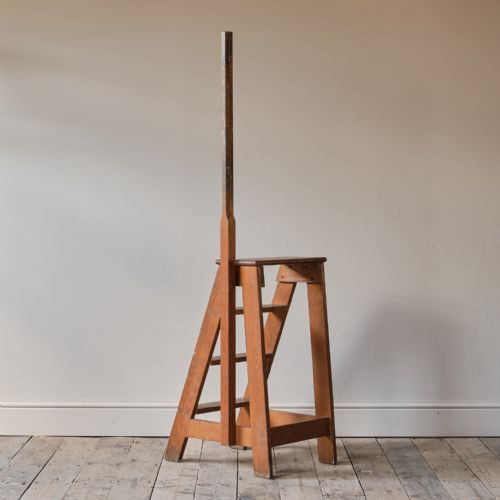
When you search for traditional library steps, you are looking at functional climbing frames that evolved to service tall bookcases in period homes. These pieces range from upright ladders to clever metamorphic designs that shift forms.
You are most likely to meet oak and mahogany examples spanning the Georgian, Victorian, and Edwardian eras. Forms vary from simple A-frame structures to spiral stairs and stepped bookcases.
How they were made
Cabinet makers utilised dense hardwoods such as oak, mahogany, and walnut to ensure structural integrity under weight. Pine and other timbers appear in more rustic or utilitarian workshop builds.
Treads frequently incorporate inset leather panels for grip, sometimes accented with brass hardware and fittings. Joinery relies on traditional carpentry techniques appropriate to the period of manufacture.
Listings span periods from the Georgian era through the Edwardian period, utilising oak, mahogany, pine, and leather.
What varies in quality
The distinction between standard utility items and finer pieces lies in the choice of timber selection and joinery execution. Elaborate grain patterns and secondary materials like fitted leather elevate the construction.
Proportion and stability dictate the usefulness of a set, with larger library proportions requiring more complex engineering to remain balanced. Simpler rustic pine ladders contrast sharply against formal Regency or Georgian designs.
Phillips Brothers
The Traditional Library Steps Glossary
- Metamorphic
- Furniture that transforms from one object into another, such as library steps turning into a chair.
- Tread
- The horizontal surface of a step upon which a person places their foot when climbing.
- Fusee
- A conical pulley used in clock movements to maintain even driving force as the mainspring unwinds.
- A-frame
- A self-supporting structural configuration shaped like the capital letter A, providing stability without wall attachment.
Traditional Library Steps: Frequently Asked Questions
What are traditional library steps used for?
These pieces provide physical access to high bookshelves in rooms with elevated ceilings. They serve both a practical climbing function and a decorative display purpose.
Historically, larger domestic libraries required dedicated furniture to reach volumes stored near the ceiling. Today, buyers still utilise them for functional access alongside period interior styling.
How do I identify a Victorian set?
Victorian examples often employ dense hardwoods and heavier proportions compared to lighter Edwardian or Georgian iterations. Construction details reflect nineteenth-century workshop practices.
Examining the timber species and joinery style helps confirm the manufacturing period. Darker mahogany and heavy oak construction typically point toward nineteenth-century origins.
Are metamorphic library steps stable?
Metamorphic pieces incorporate pivoting or folding mechanisms to transform between seating and climbing configurations. When properly maintained, these moving joints lock securely into position.
Buyers should inspect the pivot points and hinges to ensure the dual-purpose frame supports weight safely in both modes.
Where should I place library steps at home?
These pieces suit placement beside tall bookcases, high shelving units, or blank wall spaces in studies and living areas. Their vertical profile makes them adaptable to compact rooms.
They also function effectively as plant stands or display surfaces when not actively employed for climbing.