


Traditional Lake Landscape Painting
These traditional lake landscape painting works capture quiet waters and mountain horizons, offering a timeless view that brings calm to any room.
Traditional Lake Landscape Painting
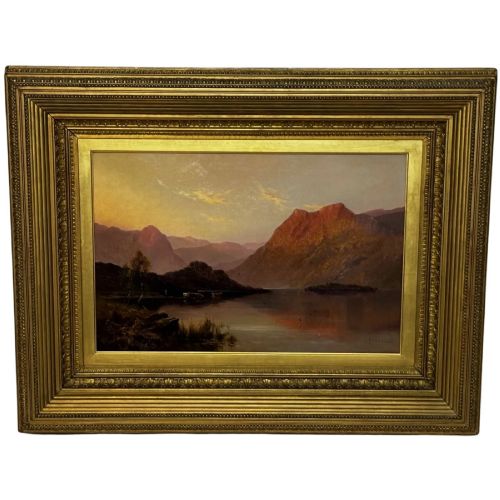
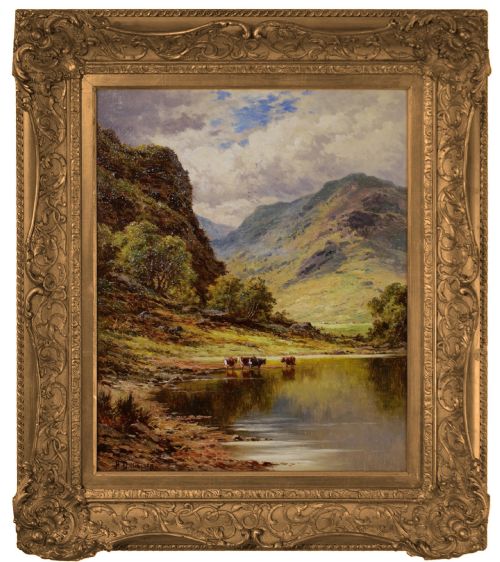
A traditional lake landscape painting typically depicts serene stretches of water, mountainous backdrops, and pastoral scenes framed in period woodwork. These works emerge largely from the nineteenth century, including Victorian and Edwardian periods, stretching into mid-century examples.
The compositions vary from intimate watercolours on paper to large canvas oil paintings and occasionally hand-painted stained glass panels. Painters capture specific locales ranging from Scottish highlands and English lakes to Alpine valleys and Dutch frozen waters.
Materials and technique
Oil paint applied to canvas or wood panel forms the foundation of the majority of these works, allowing artists to build rich textures and deep water reflections. Watercolour on paper appears alongside these oils, offering lighter, more translucent atmospheric effects.
Frames are constructed from wood, frequently finished with gesso and gilt or giltwood to complement the rich tones of the painted landscape within. Hand-painted details on glass panels introduce an alternative medium that uses light directly through the depicted lake scene.
Several canvases capture icy winter scenes where tiny figures brave frozen lakes to skate beneath crisp Victorian skies.
Judging quality
Quality rests upon the artist's command of light, atmosphere, and natural proportion, distinguishing masterly brushwork from generic studio output. Stronger examples display confident handling of water reflections and mountain light that create a genuine sense of space.
The preservation of the original paint surface and the character of the period frame contribute significantly to the standing of a piece. Works carrying clear provenance or attribution to known regional painters hold greater weight among collectors.
Alfred Fontville de Breanski Jr·Henry H. Parker·Frank Hider·Charles Leslie·Giulio Cecchini·J Laporte·James Gunson Atkinson·John Douglas Perrett·James Bell Anderson·Joseph Farrington·Stephen Enoch Hogley·R.L. Howey·Alexis De Leeuw·Alfred de Breanski Snr·Benjamin Williams Leader·T.B. Garvie·George Harrison·Louis Smets·William Mellor·Samuel Hart Turpin·Fred Merriman·Percy Lancaster·Charles Pettitt
The Traditional Lake Landscape Painting Glossary
- Oil on canvas
- Pigments bound in drying oil applied to a stretched woven fabric support. This combination permits rich blending and durable surface textures.
- Giltwood
- Wood carved and covered with a thin layer of gold leaf or gold paint. It frequently frames nineteenth-century paintings to add warmth and contrast.
- Gesso
- A paint mixture consisting of a neutral binder mixed with chalk, gypsum, or pigment. It prepares wooden frames and panels to receive gilding or paint.
- Watercolour
- Paint consisting of transparent pigment suspended in a water-based solution. It is typically applied to paper to achieve delicate atmospheric washes.
- Oil on panel
- Pigments bound in oil applied directly to a flat piece of wood rather than canvas. This solid support provides a rigid surface for detailed brushwork.
Traditional Lake Landscape Painting: Frequently Asked Questions
What is a traditional lake landscape painting?
These artworks depict bodies of water set among hills, mountains, or pastoral valleys, painted primarily during the nineteenth and early twentieth centuries. They record specific topography and atmospheric conditions across Britain and Europe.
Artists utilised oil paints and watercolours to capture the reflective qualities of water and the changing light of skies above the lakes.
How should I hang an oil painting?
Hang your artwork on an interior wall away from direct sunlight, dampness, and extreme temperature fluctuations from radiators. Secure fixings suited to the weight of the frame and the specific wall material.
Ensure the painting is displayed at eye level to best appreciate the brushwork and the balance of the lake composition.
How do I identify the period of a painting?
Examine the materials of the canvas support, the pigments used, and the style of the wooden or giltwood frame. Nineteenth-century works often carry specific stretcher marks and handwritten inscriptions on the reverse.
Signatures or dates inscribed by the artist provide the most direct indicator of when the landscape was created.
Are these paintings cleaned easily?
Surface dust can be removed gently with a very soft, dry brush, taking care around any impasto brushstrokes or fragile areas. Professional conservators should handle deeper cleaning to remove aged varnish or accumulated grime.
Avoid using water, solvents, or household cleaning products directly on the painted surface.