
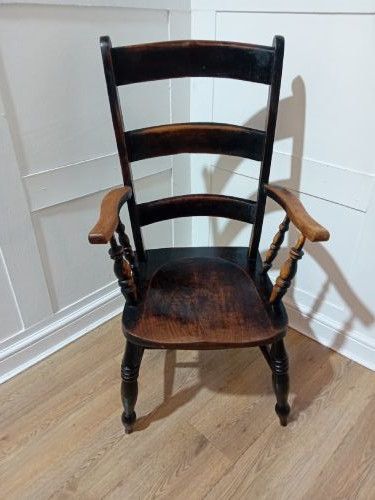
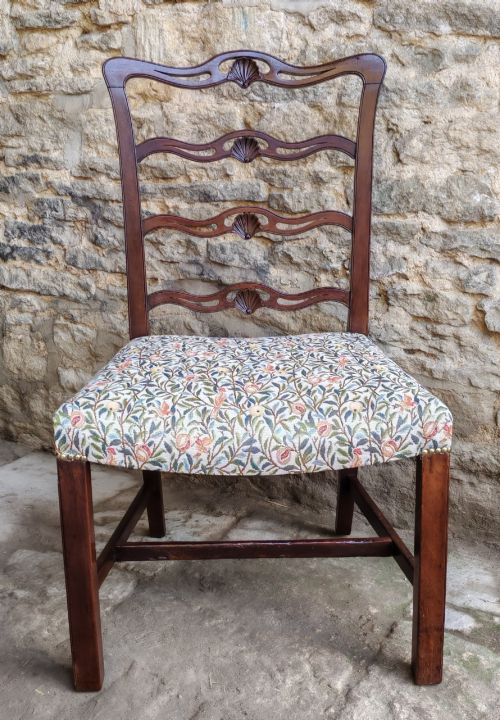
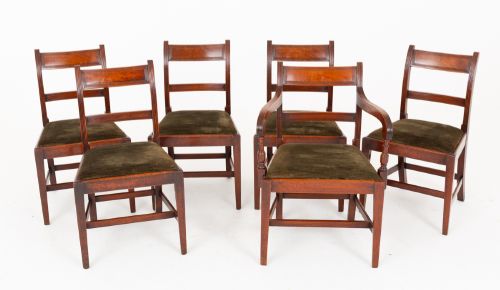
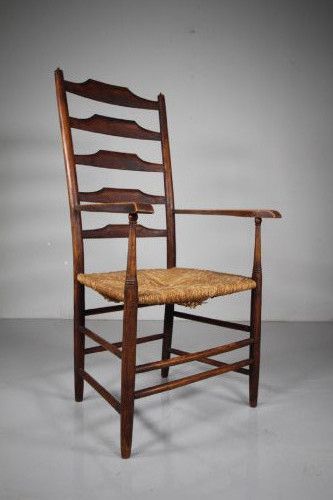
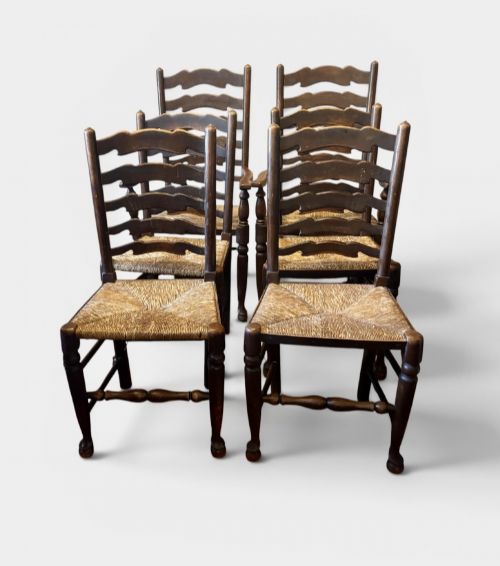


Traditional Ladder Back Chair
A traditional ladder back chair offers honest construction and enduring comfort, shaped by generations of rural and domestic use.
Traditional Ladder Back Chair
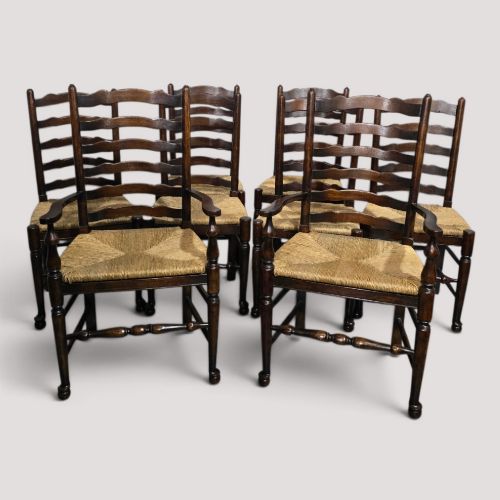
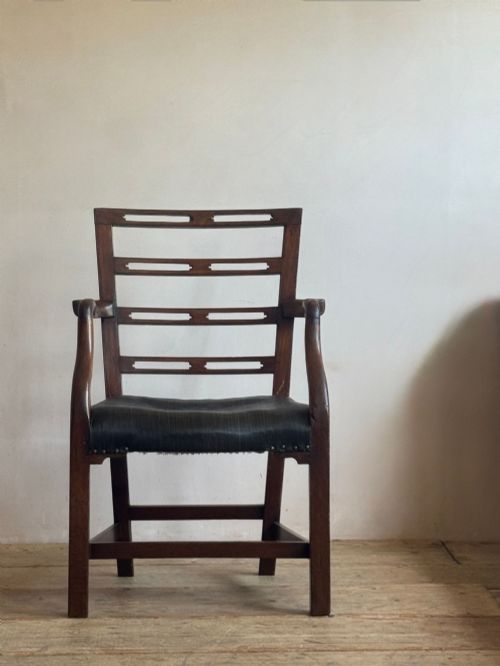
A traditional ladder back chair is a form defined by horizontal slats between upright posts, built for everyday utility in kitchens, dining rooms and parlours. These seating pieces span several centuries, with examples appearing across the Georgian period, the nineteenth century and into the Arts and Crafts movement of 1900 and 1930.
The versions most commonly met on this page include sets of dining chairs alongside individual armchairs, rocking chairs, high chairs, desk chairs and settees. Origins range from English country workshops to Dutch makers, utilising local timbers and traditional regional designs.
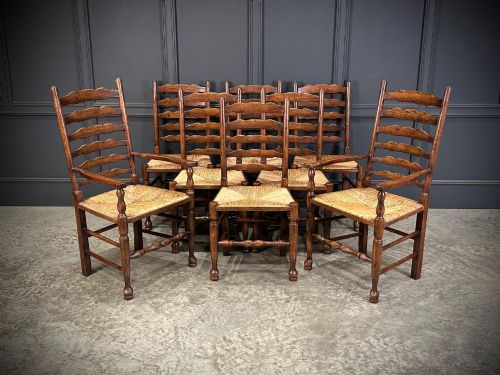
Makers fashioned these forms as single side chairs or matched sets numbering up to twelve pieces. Forms vary from simple rush seated kitchen seating in ash and oak to finely carved mahogany examples reflecting Georgian and Victorian revival styles.
How they were made
Craftsmen built these frames using regional hardwoods such as oak, ash, elm, beech and mahogany, turning upright posts and shaping horizontal slats by hand. Seats frequently utilised woven rush to provide a resilient, flexible base for daily sitting.
Joinery relied on pegged mortise and tenon construction to secure the framework without metal fasteners. Some examples incorporated painted finishes on ash or retained original polished surfaces on mahogany and oak.
Listings feature oak, ash, elm, beech and mahogany timbers alongside rush and fabric seating across multiple centuries.
What varies in quality
The standard of a traditional ladder back chair rests in the harmony of its proportions and the integrity of its timber selection. Tighter spacing between graduated slats and more complex turning on the upright posts elevate the visual weight of the piece.
Original surface preservation distinguishes finer examples, whether through undisturbed patination on early oak and ash or crisp carving on mahogany frames. The neatness of the rush weaving and the retention of matching sets across larger quantities add significantly to the standing of the seating.
Philip Clissett·Dicon Nance·Lawrence Neal·Edward Gardener·Liberty and Co
The Traditional Ladder Back Chair Glossary
- Rush
- A wetland plant material woven tightly to create a supportive, resilient seat base. This traditional method appears frequently on country chairs and Arts and Crafts examples.
- Ladderback
- A chair back featuring multiple horizontal wooden rails resembling the rungs of a ladder. These slats are often slightly curved for ergonomic comfort.
- Vernacular
- Architecture or furniture built by local artisans using regional materials and traditional methods rather than high academic styles. Country vernacular pieces prioritise utility and local character.
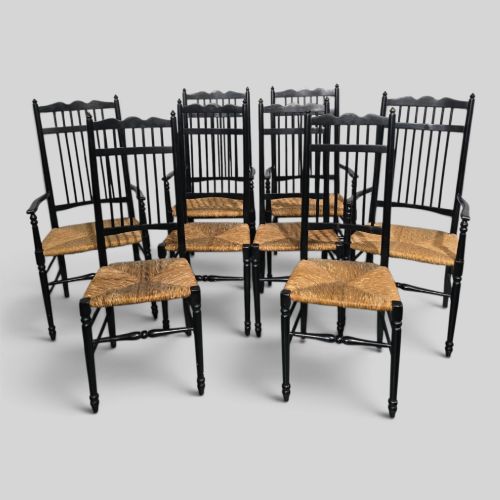
- Spindle back
- A variation of chair construction featuring thin turned vertical wooden rods supporting the backrest. This technique provides lighter visual weight while maintaining structural strength.
- Turned
- Wood shaped on a lathe by rotating the timber against cutting tools. This process creates decorative and structural cylindrical components like chair legs and arm supports.
Traditional Ladder Back Chair: Frequently Asked Questions
How do I date a ladder back chair?
Dating relies on observing timber species, turning profiles and construction methods. Earlier pieces often display ash or oak frames with hand-split components, while later revival styles from the nineteenth and twentieth centuries adopt different proportions.
Examining the wear patterns on the feet and the tightness of the rush seating also helps place the piece within periods such as the Georgian era or the Arts and Crafts movement.
Are ladder back chairs comfortable for daily dining?
Many of these chairs were designed for practical domestic use around farmhouse tables and dining rooms. The curved horizontal slats provide back support, while woven rush seats offer a flexible surface.
Adding loose squab cushions can adjust the height and softness for extended seating during modern meals.
What is the difference between side chairs and armchairs?
Side chairs feature an open frame without armrests, designed to tuck neatly beneath dining tables or desks. Armchairs include integrated arm supports attached to the upright posts, offering a more commanding seat often used at the head of a table or by a fireside.
Sets frequently combined a pair of armchairs with several side chairs for a complete dining arrangement.
How should I care for a rush seated chair?
Rush seats benefit from regular gentle dusting and stable indoor humidity to prevent the natural fibres from becoming brittle. Placing chairs away from direct heat sources protects the timber frames and woven surfaces.
Occasional careful cleaning maintains the condition of both the wood polish and the plant material.