

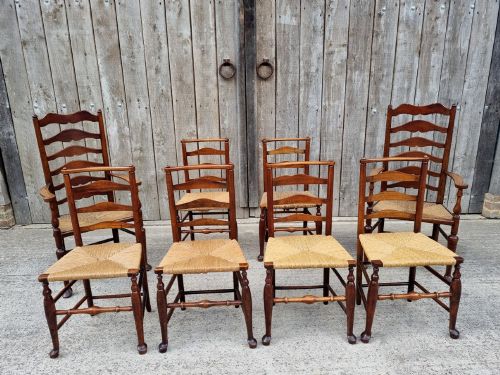
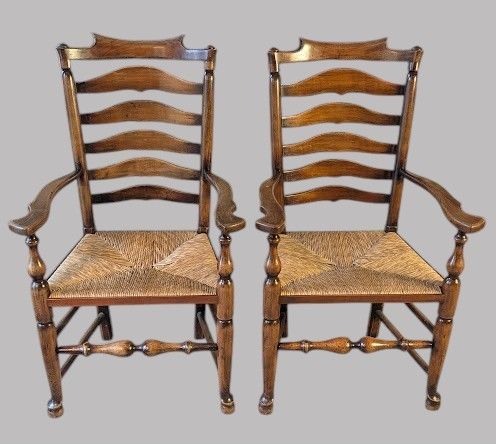
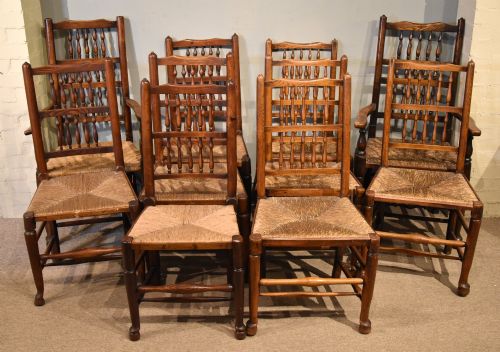
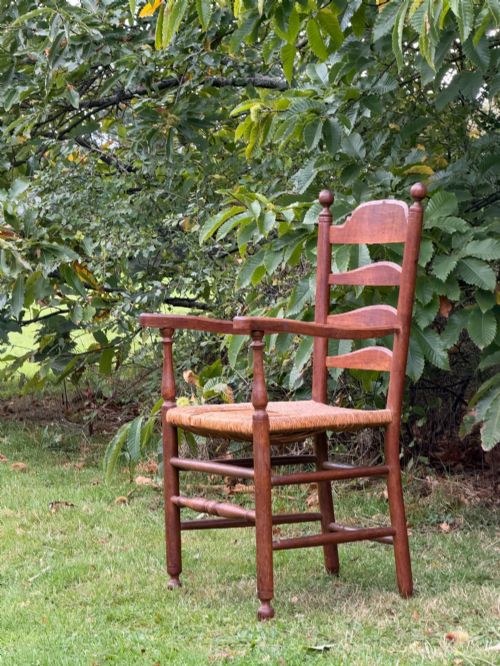
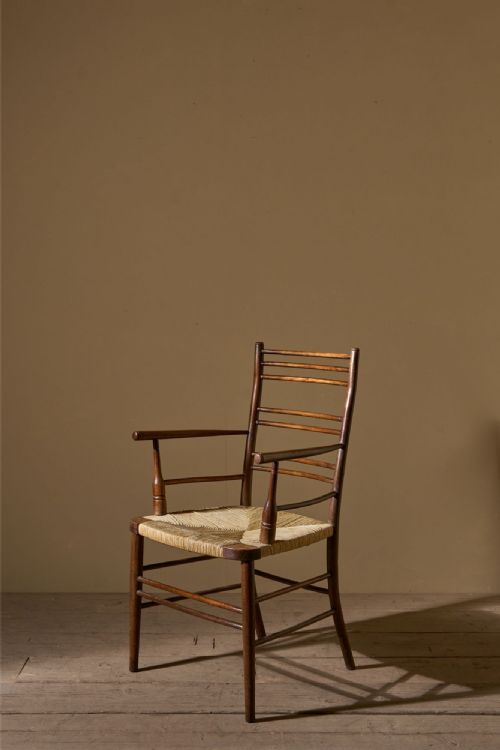
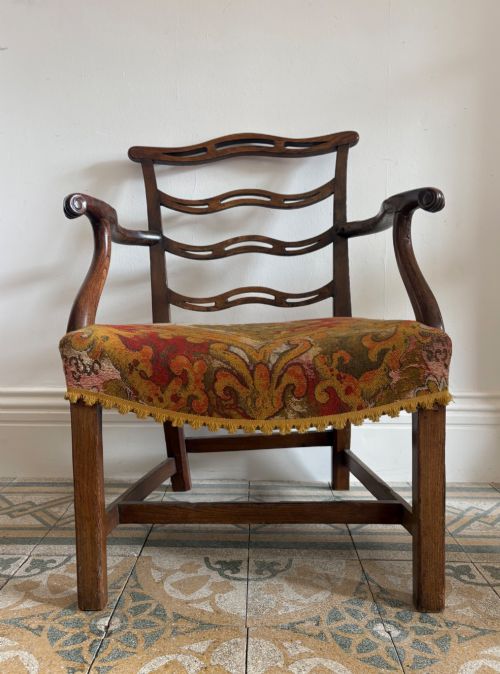


Brown Wooden Ladderback Armchair
A brown wooden ladderback armchair brings sturdy regional craft into the home, offering both practical seating and traditional character.
Brown Wooden Ladderback Armchair
A brown wooden ladderback armchair is defined by horizontal slats framed by upright posts, drawing on centuries of vernacular woodworking traditions across England and France. These pieces range from Georgian and Regency country designs to Arts and Crafts interpretations and early twentieth-century kitchen seating.
The versions most commonly found here include elm, oak, ash, and mahogany frames, often fitted with woven rush or tapestry fabric seats. Forms span standard armchairs and carvers to rocking chairs and children's high chairs, reflecting domestic uses from dining rooms to cottage kitchens.
How they were made
Construction relies on solid timbers like oak, ash, elm, and mahogany, shaped into turned uprights and curved horizontal slats. Frames are traditionally joined using pegged mortise and tenon methods suited to daily wear.
Seats are constructed using woven rush or upholstered in fabric and tapestry, depending on the regional workshop and period. Surfaces range from plain polished wood to painted finishes.
Brown Wooden Ladderback Armchair Retail Price Guide 2026
Typical asking prices for brown wooden ladderback armchair among the pieces listed under this phrase on Sellingantiques today, from the lower quarter to the upper quarter. They describe what is for sale here now, not the wider market.
Listings span multiple centuries from the 18th century through to the 1930s, featuring oak, ash, elm, mahogany, and rush materials.
What varies in quality
Quality rests in the choice of timber and the fineness of the turning on the uprights and arms. Solid construction of the joints and the tightness of the rush or fabric seating determine how well a chair survives centuries of use.
The sophistication of the ladderback slats, whether simple horizontal bars or complex wavy profiles, distinguishes standard provincial work from studio pieces such as those by Dicon Nance.
Dicon Nance
The Brown Wooden Ladderback Armchair Glossary
- Ladderback
- A chair back featuring a series of horizontal slats resembling the rungs of a ladder. This design dates back centuries in British and European vernacular furniture.
- Rush seat
- A seating surface woven from natural marsh grasses twisted into cords. It provides a resilient and traditional base common in country chairs.
- Carver
- An armchair designed to match a set of dining chairs, typically placed at the head of a table. These pieces often feature broader arms for comfort.
- Vernacular
- Furniture made by local craftsmen for everyday regional use rather than high-style court production. These pieces prioritise functional durability and local materials.
Brown Wooden Ladderback Armchair: Frequently Asked Questions
How do I clean a rush seat?
Rush seats should be dusted regularly with a soft brush and kept dry to prevent the natural fibres from weakening over time.
Avoid using harsh liquid cleaners or soaking the woven material, as moisture causes the grass cords to rot.
Are these chairs comfortable for daily use?
Most ladderback armchairs were built for utility and provide an upright seating position that supports the back well.
Adding a loose pad or cushion can increase comfort during long periods of sitting.
What timber is most common?
Elm, ash, and oak appear frequently in these listings, reflecting local woods used by regional carpenters and country workshops.
Mahogany and beech also feature in later or more formal interpretations of the ladderback design.
How do I date a ladderback?
Dating relies on examining the turning style of the wood, the method of joinery, and the wear patterns on the feet and arms.
Earlier pieces from the eighteenth century show distinct hand-tool marks compared to twentieth-century workshop productions.