
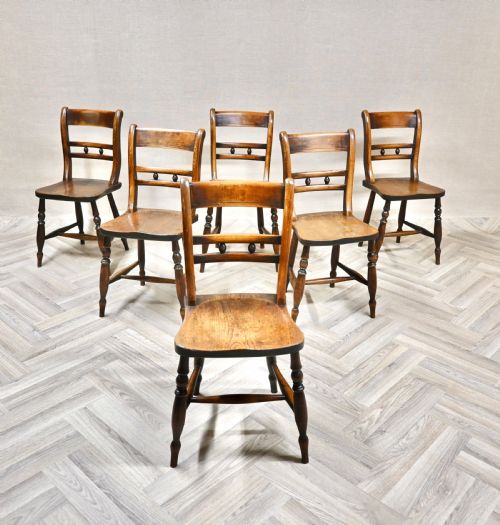
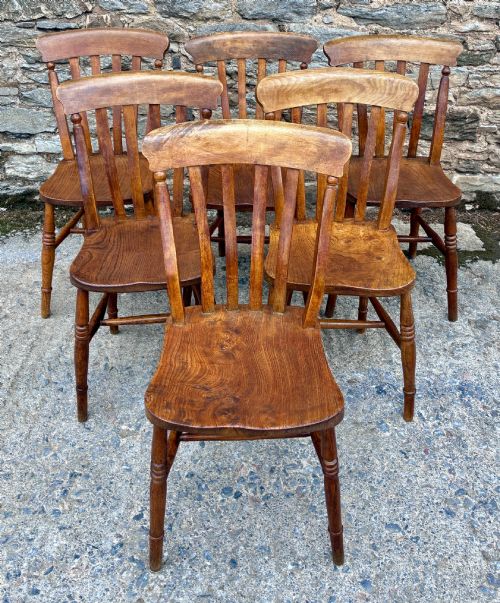
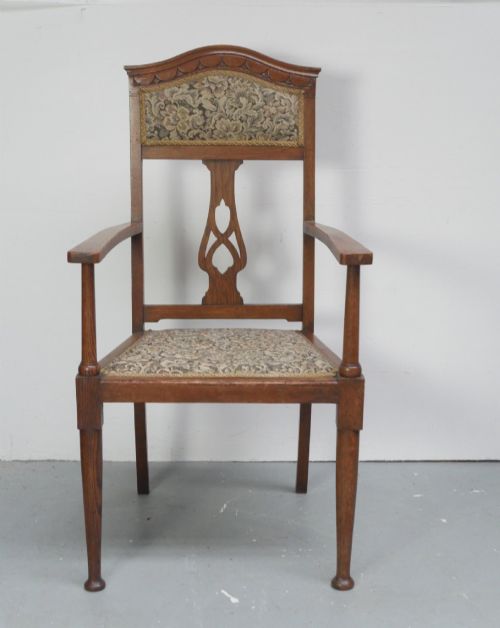


Warm Oak Side Chair
These warm oak side chair options bring honest timber construction and regional character straight into the dining room.
Warm Oak Side Chair
A warm oak side chair serves as a practical seat rooted in centuries of vernacular British furniture making. When you search for a warm oak side chair, you encounter sturdy dining seats, kitchen chairs, and occasional hall seating originating from the eighteenth, nineteenth, and early twentieth centuries.
The selections span several distinct regional styles, encompassing English country designs, Windsor forms, Arts and Crafts pieces, and Jacobean revival interpretations. You meet simpler ladder backs alongside robust spindle backs and turned leg configurations.
Makers ranged from provincial country workshops to notable firms such as Heal's. Many pieces feature complementary woods like elm, beech, or ash alongside the primary oak framework.
How they were made
Cabinet makers and bodgers constructed these chairs using solid native timbers, selecting oak for frames while often incorporating elm for heavy-wearing seats and ash or beech for turned spindles and legs. Traditional joinery relied on mortise and tenon joints, pegged constructions, and steam-bent components.
Seating surfaces utilised solid turned timber slabs or woven rush inserts. Surface finishes developed naturally through decades of use, highlighting the deep grain and warm patina inherent in matured oak.
Materials recorded include solid oak, elm, beech, ash, and woven rush.
What varies in quality
Quality rests upon the integrity of the original construction and the purity of the timber used throughout the frame. Superior examples display crisp turning on the legs and spindles, tight joinery without excessive modern intervention, and balanced proportions.
Chairs originating from identified workshops or distinct design movements command greater attention from collectors. The depth of the timber's grain and the presence of original rush seating or untouched patination also distinguish finer specimens.
Heals
The Warm Oak Side Chair Glossary
- Lathe back
- A chair featuring flat wooden slats steam-bent or shaped to form the backrest. This design appears frequently in nineteenth-century country seating.
- Windsor
- A chair built with a solid wooden seat into which the legs and back spindles are direct-tenoned. These pieces often combine multiple native timbers for structural strength.
- Ladder back
- A chair back constructed with horizontal rails positioned between two vertical uprights. These rails are typically arched or shaped for comfort.
- Rush seat
- A seating surface woven from dried marsh reeds, creating a durable and textured pad. This technique appears widely on traditional country ladder back chairs.
- Twist leg
- A structural support shaped into a helical or spiral form using a lathe or hand-carving techniques. This detail frequently characterises Edwardian and revival dining furniture.
Warm Oak Side Chair: Frequently Asked Questions
What defines a warm oak side chair?
These chairs are traditional wooden seating pieces constructed primarily from oak during the eighteenth, nineteenth, or early twentieth centuries. They function as dining seats, kitchen chairs, or hall furniture.
They showcase regional British craftsmanship, incorporating vernacular styles such as Windsor, ladder back, and lathe back designs.
How do I identify the period?
Dating relies on construction methods, joinery techniques, and stylistic markers recorded across different eras. Eighteenth-century pieces display heavy vernacular framing, while Victorian and Edwardian examples often feature turned legs or revived historical motifs.
Comparing the turning style and timber selection helps establish whether a piece belongs to the country vernacular tradition or a specific design movement like Arts and Crafts.
Were these chairs used for dining?
Many examples served utilitarian roles around the farmhouse kitchen or dining table. Their sturdy construction in oak and elm suited daily family life.
Some variations, such as hall chairs, were designed specifically for entryways or occasional seating rather than prolonged dining use.
How should I care for oak timber?
Solid oak benefits from minimal intervention, requiring only occasional dusting with a dry or slightly damp cloth. Avoiding direct heat sources and excessive moisture preserves the natural grain and historic finish.
Applying traditional beeswax helps nourish the wood and maintain its warm surface character over time.