


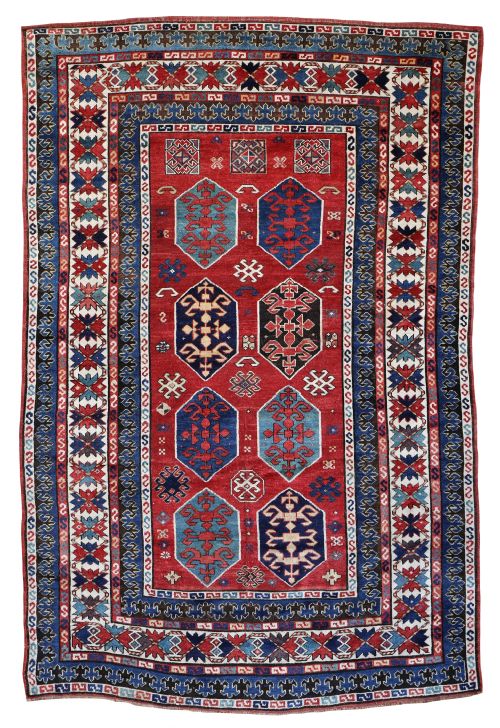


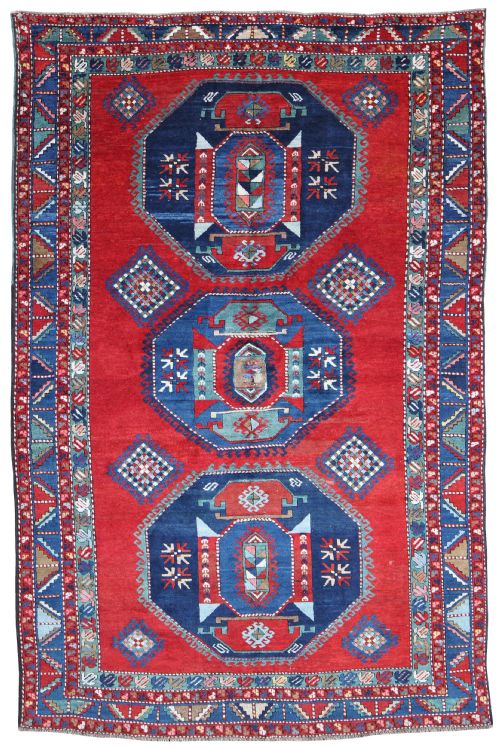

Traditional Kazak Floor Rug
A traditional kazak floor rug brings bold geometric patterns and thick pile from the Caucasus into your rooms.
Traditional Kazak Floor Rug
A traditional kazak floor rug is a woolen textile originating from the Caucasus region during the nineteenth and early twentieth centuries. These pieces carry the tribal motifs and bold medallion designs characteristic of Caucasian weaving traditions. Buyers searching for a traditional kazak floor rug will encounter formats ranging from standard area rugs to larger kelleh sizes.
The pieces listed here span several decades, including examples dated around 1880, 1890, 1900, and 1930. Specific regional substyles appear within the selection, such as Karachov, Moghan, Bordjalou, and Karabagh region variants. Most options present as either general antique Kazak rugs or broader Caucasian tribal carpets.
How a traditional kazak floor rug was made
Every traditional kazak floor rug relies entirely on wool for its construction, providing a durable and resilient structure designed for daily use on the floor. Weavers utilised traditional hand-knotting techniques characteristic of Caucasian tribal workshops to build dense piles and crisp geometric outlines. These methods resulted in robust textiles capable of withstanding generations of wear.
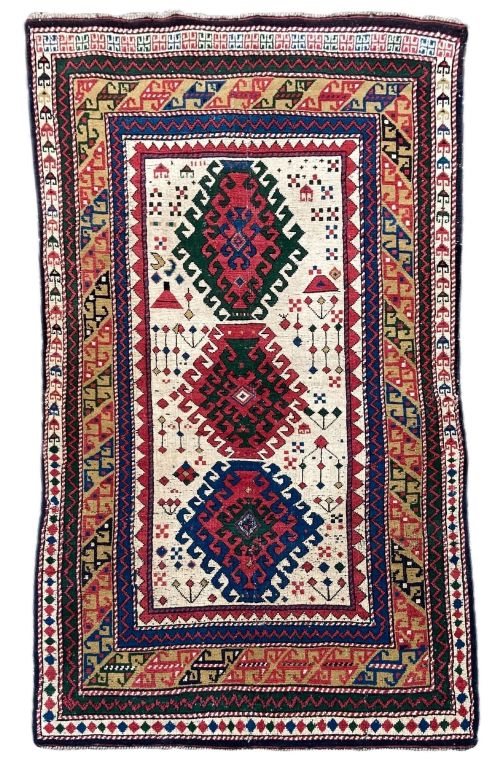
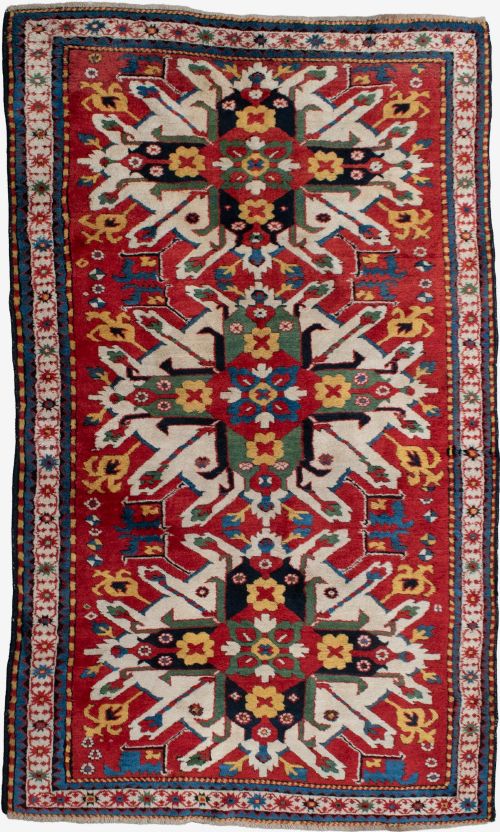
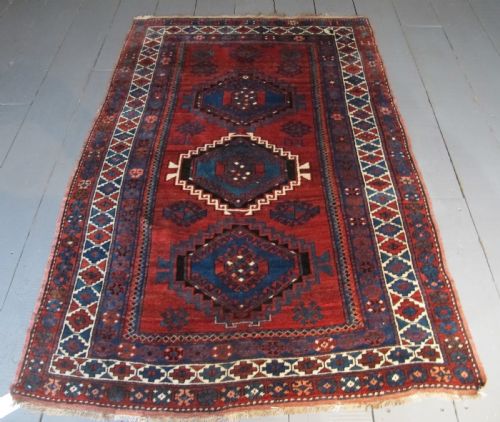
The construction incorporates distinct regional design elements such as hooked medallions, triple medallions, and striking green grounds. Artisans from the Caucasus region structured these heavy woolen floor coverings as functional folk art, balancing structural strength with expressive visual arrangements.
Some nineteenth-century weavers slipped secret little animal figures and tiny comb symbols into the corners of their heavy woolen rugs.
What varies in quality
The visual strength of a traditional kazak floor rug rests upon the clarity of its geometric motifs and the deliberate placement of medallions. Stronger examples display crisp drawing within the hooked or triple medallion formats, separating them from less defined compositions. Regional substyles like Bordjalou or Karachov introduce specific design disciplines that influence the visual impact of the piece.
Material handling and wool quality dictate the tactile presence of each woolen floor covering across different production dates. Pieces originating from the earlier nineteenth century often demonstrate distinct handling of the wool compared to later 1930 examples. The execution of regional attributes, such as the Karabagh region attribution or Moghan design structure, defines the individual character of each rug.
The Traditional Kazak Floor Rug Glossary
- Kazak
- A traditional designation for rugs woven in the Caucasus region, known for bold geometric patterns and thick wool pile. These pieces often feature prominent medallions and tribal folk art motifs.
- Karachov
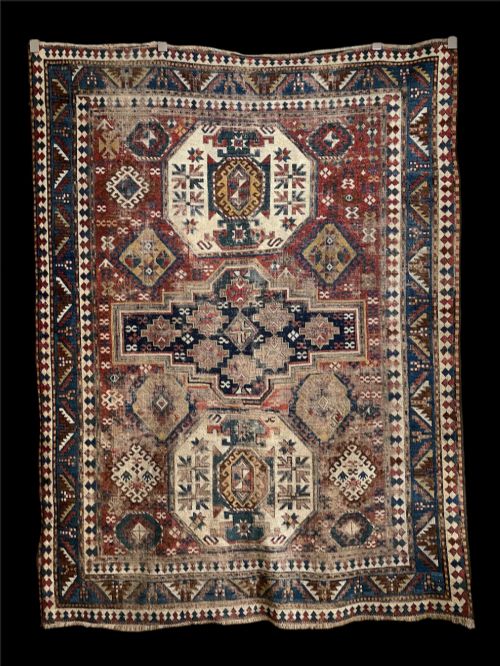
- A specific regional substyle of Caucasian rug recognised by a dominant central octagonal or rectangular medallion. This design layout forms a distinct subset within traditional weaving.
- Kelleh
- A large format rectangular carpet size used in traditional room layouts. These extended dimensions accommodate more complex multi-medallion arrangements.
- Bordjalou
- A recognizable tribal substyle originating from the Caucasus, frequently associated with distinctive hooked medallion configurations. The style represents a specific stream of folk art weaving.
- Medallion
- A central ornamental design motif placed within the field of the rug. In these textiles, medallions typically appear in hooked or triple configurations.
Traditional Kazak Floor Rug: Frequently Asked Questions
What is a traditional kazak floor rug?
A traditional kazak floor rug is a woolen textile woven in the Caucasus region, featuring geometric patterns and tribal motifs.
These pieces date from the nineteenth and early twentieth centuries, including regional types such as Karachov and Bordjalou.
How do I place a traditional kazak floor rug?
These woolen floor coverings suit high-traffic living areas and studies where their thick pile provides durability.
Their bold geometric designs anchor room schemes and complement both traditional and contemporary interiors.
How are different regional types told apart?
Regional types are distinguished by specific medallion layouts, such as the central octagonal forms of Karachov pieces or the triple medallions of standard Kazak rugs.
Substyles like Moghan and Bordjalou exhibit unique structural traits and motif arrangements developed within the Caucasus.
What materials make up these rugs?
Every traditional kazak floor rug listed here is constructed entirely from wool, providing a heavy and resilient pile.
This material choice supports the dense geometric knotting characteristic of Caucasian folk art weaving.