



Nineteenth Century Kazak Rug
A nineteenth century kazak rug brings striking tribal geometry and rich wool pile into a room.
Nineteenth Century Kazak Rug
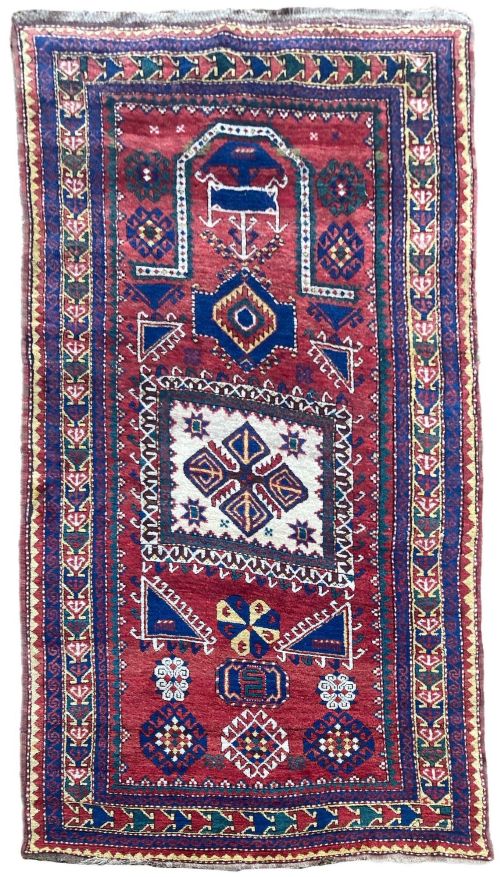
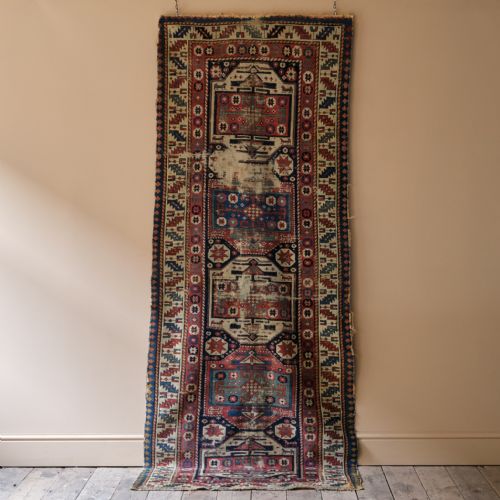
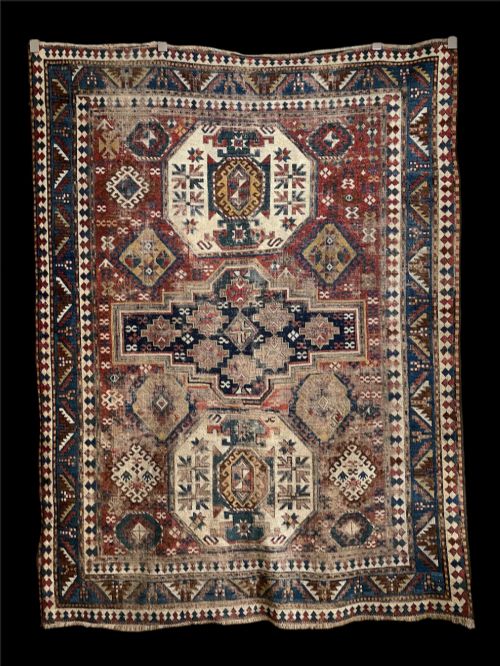
A nineteenth century kazak rug is a hand-knotted tribal textile originating from the Caucasus region. These pieces showcase bold geometric motifs, including hooked medallions and Memling güls, executed in saturated natural dyes. You will encounter formats ranging from square area rugs and long runners to specific prayer rugs.
The pieces listed here span the decades between 1860 and 1890, representing mature examples of Caucasian tribal weaving. Regional subgroups such as Fachralo, Moghan and Bordjalou appear frequently among the inventory. Each rug functions as practical floor covering while displaying the distinct folk art traditions of its makers.
How they were made
Weavers constructed these textiles entirely from wool, utilising sturdy wool foundations and thick wool piles for durability. Cotton also appears in the material makeup of specific pieces, providing structural stability for the dense knotting.
The creation relied on hand-spun yarns dyed with natural substances to achieve deep colour saturation. Artisans knotted the wool by hand to form resilient pile surfaces capable of withstanding generations of heavy foot traffic.
Listings span the decades between 1860 and 1890, constructed entirely from wool and cotton materials.
What varies in quality
Quality differences stem from the precision of the geometric drawing and the richness of the palette. Superior examples demonstrate confident execution of complex motifs like the Memling gül alongside exceptionally soft, well-balanced colour combinations.
The handling of wool pile and the integrity of the weave also dictate distinction across the range. Finer pieces maintain structural balance while preserving the vigorous, unhurried character of authentic tribal folk art.
The Nineteenth Century Kazak Rug Glossary
- Fachralo
- A specific design tradition within these rugs, often recognised by distinct prayer niches or large central medallions. These pieces originate from specific Caucasian weaving communities.
- Moghan
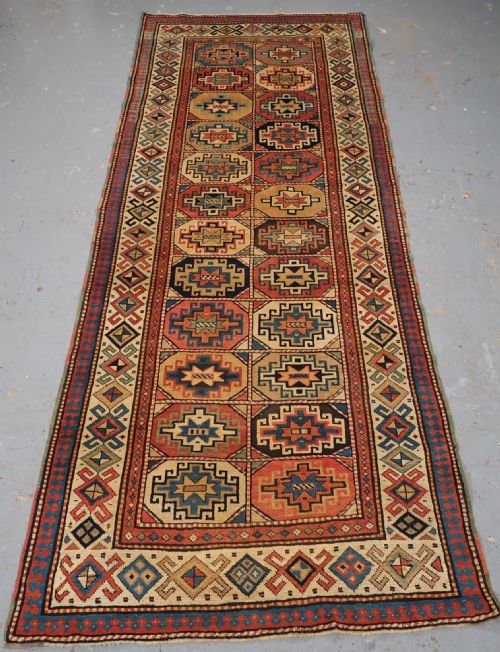
- A recognised subgroup of these textiles characterised by repeating hooked medallion designs or specific geometric border arrangements. They display notable consistency in tribal patterning.
- Bordjalou
- A regional attribution associated with particular Caucasian tribal weaving styles. These rugs typically exhibit bold folk art compositions.
- Memling gül
- A stepped octagonal medallion motif frequently found repeated across Caucasian carpets. This traditional design element carries deep cultural significance for the weavers.
- Prayer rug
- A specialised format featuring a mihrab or niche design intended for devotional use. These pieces often serve as striking decorative wall hangings or focal points on the floor.
Nineteenth Century Kazak Rug: Frequently Asked Questions
How do I clean my rug?
Professional specialist cleaning is essential for antique textiles to protect natural wool fibres and historic dyes. Regular gentle vacuuming without a beater bar prevents dust accumulation in the thick pile.
Avoid household detergents or saturation with water, which cause shrinkage and dye bleeding. Consult a conservator experienced in antique Caucasian weaving for proper maintenance.
Can I place these rugs in hallways?
Long runners and area formats suit hallways and corridors where durable wool construction handles foot traffic. Placing a quality underlay beneath the textile prevents slipping and reduces friction against the floor.
Rotate the piece periodically to ensure even wear across the surface over the years. Direct, prolonged sunlight should be avoided to protect the saturated natural dyes.
What defines tribal folk art?
Tribal folk art reflects vernacular weaving traditions passed down through generations within specific regional communities. Makers relied on memory and local motifs rather than rigid urban cartoons.
This approach results in charming asymmetries and vibrant, expressive geometric designs that differ from court workshop productions.
How do I identify different subgroups?
Subgroups like Fachralo, Moghan, and Bordjalou are identified by their specific medallion structures, border arrangements, and colour distribution. Examining the exact geometric arrangement of the central field reveals these regional traits.
Comparing structural details and palette characteristics helps distinguish one tribal workshop tradition from another.