




Traditional Kashan Rug
A traditional kashan rug brings centuries of Persian craftsmanship into a room, offering intricate floral designs and lasting comfort underfoot.
Traditional Kashan Rug
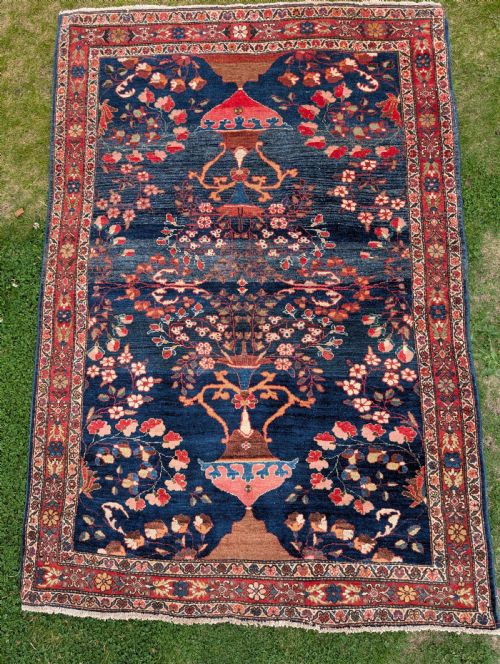
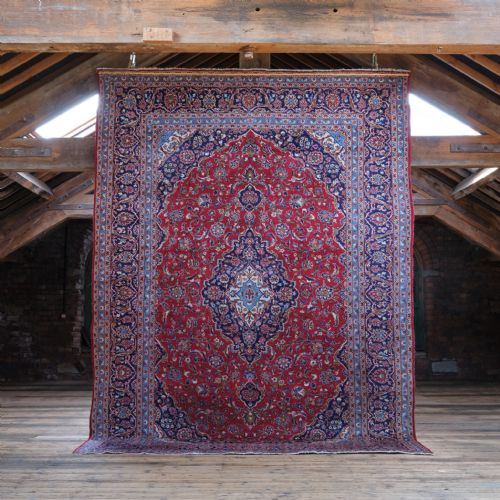
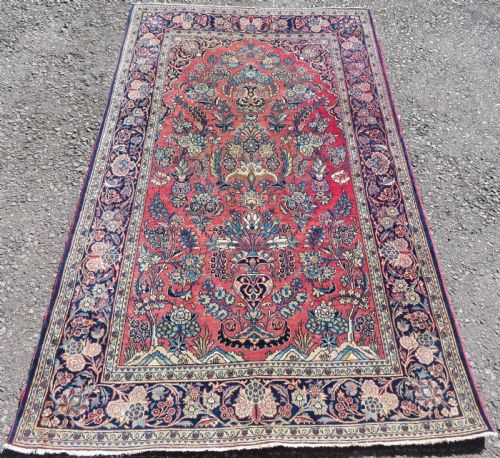
When you search for a traditional kashan rug, you encounter hand-knotted floor coverings originating mainly from central Persia, alongside related Indo-Persian pieces. The selection on this page centres on items from the late nineteenth and early twentieth centuries, including the Edwardian era and decades up to the nineteen-forties.
Buyers meet various formats ranging from compact area rugs to large palace-size carpets and specialised prayer rugs. These pieces often display classic floral motifs, vases, and all-over patterns rooted in Persian design traditions.
How they were made
Weavers constructed these carpets using cotton foundations for strength and stability, combined with wool, kork wool, kurk wool, or silk for the pile. Hand-knotting techniques allowed makers to achieve tight, detailed surface patterns and durable structures.
Certain examples incorporate part-silk elements or fine, soft wool to enhance texture and visual depth. The integration of these materials defines the distinct weight and handle of each finished textile.
One historical rug includes a pictorial design depicting figures, offering a break from traditional floral repeats.
What varies in quality
Quality differences stem primarily from the density of the knotting and the refinement of the materials utilised in the pile. Finer wools, such as kork or kurk, alongside select silk additions, allow for sharper pattern definition and a softer handle.
The precision of the floral vase designs and the subtlety of the colour palette also distinguish finer examples from standard production. Artisans who employed superior hand-knotting density achieved greater durability and intricate detail.
Mohtasham Kashan·Mokhtashem Keshan·Haroon Kashan
The Traditional Kashan Rug Glossary
- Kashan
- A historic city in central Persia renowned for producing finely knotted carpets and rugs with intricate floral designs.
- Kork wool
- High-quality wool harvested from the neck and shoulders of sheep, valued for its softness and fine texture.
- Prayer rug
- A smaller rug featuring a mihrab or niche design, historically used for individual prayer.
- Hand-knotted
- A method where individual strands of yarn are tied by hand onto a warp foundation to form the pile.
- Area rug
- A portable floor covering smaller than a room-sized carpet, used to define specific spaces.
Traditional Kashan Rug: Frequently Asked Questions
How do I clean a traditional kashan rug?
Professional specialist cleaning is essential for antique knotted rugs to protect delicate wool and silk fibres from damage. Regular gentle vacuuming without the rotating brush helps remove surface dust safely.
Avoid household detergents and moisture immersion, which can weaken the cotton foundation and alter the natural dyes. Consult a specialist experienced in Persian textiles before undertaking any maintenance.
Are these rugs suitable for high traffic areas?
Many wool examples tolerate moderate daily foot traffic well due to the robust nature of hand-knotted construction and durable cotton foundations. Placing a suitable rug underlay beneath the piece prevents sliding and reduces fibre wear.
Delicate silk or part-silk pieces suit lower-traffic spaces or display use where foot traffic is minimal. Selecting the correct placement preserves the condition of the pile over time.
How can I tell the age of a kashan rug?
Examining the materials, dyes, and structural wear provides clues to the period of origin. Pieces from the nineteenth and early twentieth centuries often display vegetable-based dyes and specific regional weaving traits.
Consulting the construction density and comparing known workshop signatures or stylistic markers helps narrow down the decade of production. Documentation or archive records offer further confirmation for older pieces.
What is the difference between wool and silk kashans?
Wool and kork wool versions offer warmth, resilience, and a soft, dense pile suited for everyday living spaces. Silk and part-silk pieces provide a lighter weight, distinct sheen, and greater detail resolution in the motifs.
Silk examples generally serve decorative or display functions rather than heavy utility. Both material types reflect the traditional artistry of central Persian workshops.