
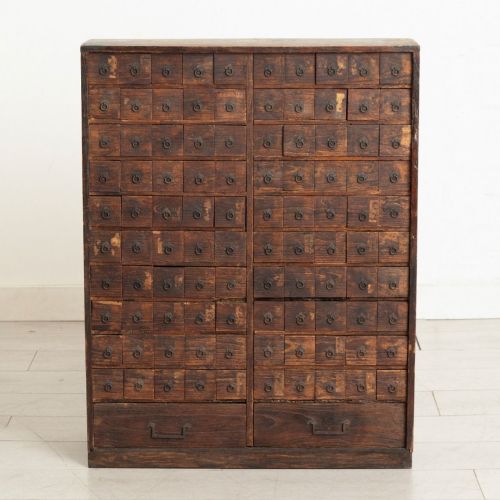


Traditional Japanese Tansu
Traditional Japanese tansu chests are practical storage pieces offering sturdy drawer configurations and substantial iron hardware that ground a room.
Traditional Japanese Tansu
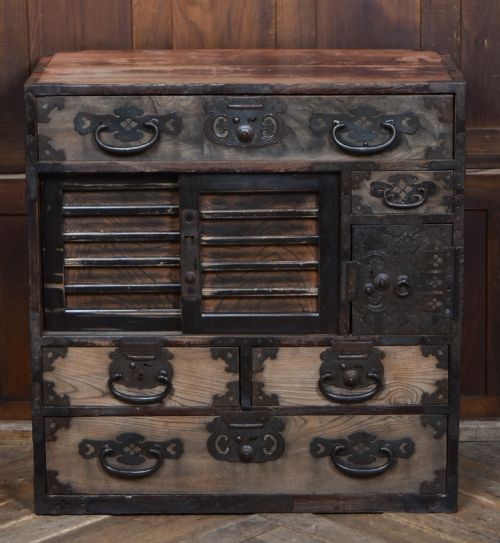
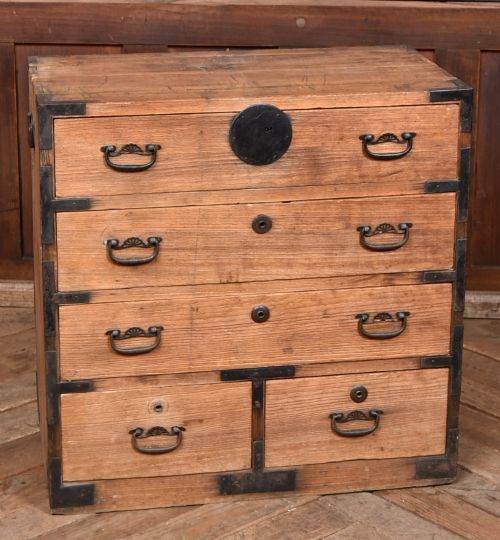
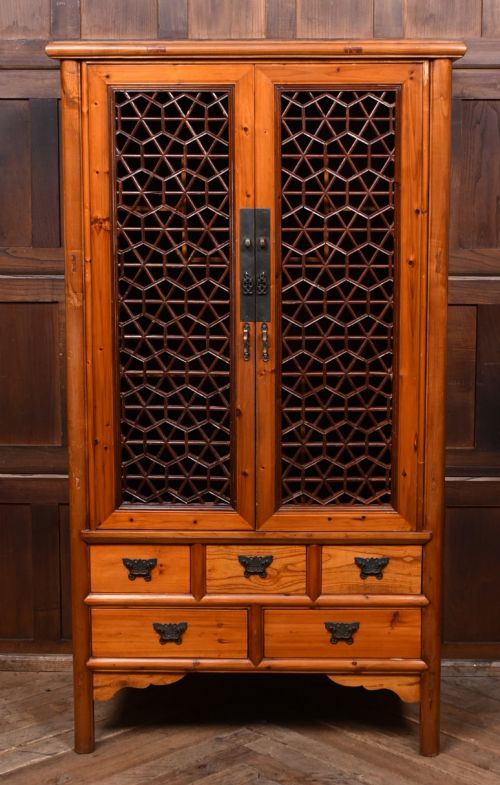
Traditional Japanese tansu items comprise functional storage pieces, including chests of drawers, apothecary cabinets, larder cupboards, and kitchen tansu known as mizuya. These objects originate predominantly from the 19th century and the early decades of the 20th century, encompassing the Meiji and Taisho periods.
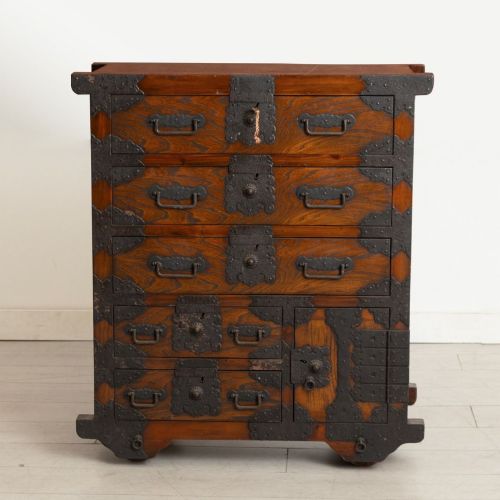
A buyer examining traditional japanese tansu will most frequently encounter sturdy chest of drawers configurations designed for domestic storage. Pieces range from wheeled kuruma-dansu variants to step chests and keyaki merchant cabinets utilised in traditional interiors.
How traditional japanese tansu were constructed
Makers built traditional japanese tansu using native timbers such as cedar, elm, pine, chestnut, and keyaki zelkova wood, often selecting softer woods for internal framing and durable hardwoods for primary surfaces. These panels meet through precise joinery designed to accommodate seasonal humidity changes without compromising the structure.
Heavy iron hardware, including decorative lock plates, corner brackets, and robust carrying handles, reinforces the framework and secures the drawers. Certain examples feature red lacquer finishes that protect the wood while providing a distinct visual depth.
Wheel-mounted chests let historical merchants roll their entire worldly wealth out the door during a sudden fire.
What separates fine traditional japanese tansu
The distinction between standard examples and superior traditional japanese tansu rests on the choice of cabinet timber and the complexity of the internal arrangement. Elm, cedar, and zelkova wood exhibit varied grain patterns and natural weights that elevate the physical presence of the cabinet.
The artistic execution and weight of the iron mounts dictate the refinement of the piece. Elaborate hand-forged lock plates and plates showing careful engraving distinguish workshop production from standard utility items.
The Traditional Japanese Tansu Glossary
- Tansu
- Traditional Japanese mobile storage cabinetry and chests built for domestic utility. These pieces incorporate heavy iron hardware and multiple internal compartments.
- Zelkova
- A dense hardwood utilised in traditional cabinetmaking for its decorative grain and durability. This timber is frequently termed keyaki in Japanese woodworking.
- Kuruma-Dansu
- A wheeled merchant chest designed for rapid transport of goods during emergencies. The integral wheels sit beneath a heavily reinforced timber body.
- Mizuya
- A kitchen tansu utilised for storing utensils, provisions, and dishware in traditional domestic settings. These cabinets feature sliding doors and numerous small drawers.
- Kaidan-Tansu
- A step chest constructed to provide both staircase access to a loft and integrated storage compartments. The stepped profile incorporates drawers beneath each riser.
Traditional Japanese Tansu: Frequently Asked Questions
What is a tansu chest used for?
Traditional Japanese tansu chests served primarily as mobile or stationary storage units for clothing, valuables, documents, and household provisions.
Today, buyers utilise these substantial cabinets as statement storage pieces in living rooms, hallways, and bedrooms, where their deep drawers accommodate modern linens and objects.
How do I identify a Meiji period tansu?
Meiji period pieces typically date from the late 19th century to the early 20th century, displaying traditional joinery combined with robust hand-forged iron hardware.
These pieces often utilise native woods such as cedar, elm, and zelkova, reflecting the utilitarian requirements of Japanese domestic architecture before Western design influences became widespread.
Are tansu chests heavy?
These cabinets are constructed from dense native timbers like elm, cedar, and zelkova wood, reinforced with heavy iron handles, lock plates, and corner brackets.
Because of this solid timber and iron construction, larger chests require multiple people to lift, though variants like the kuruma-dansu include integrated wheels for easier movement.
Where should I place a tansu in my home?
Tansu cabinets function well against plain walls where their detailed iron hardware and rich wood grains can serve as a natural focal point in a room.
Smaller apothecary drawers and low chests suit entryways or living spaces, while larger larder cupboards and merchant chests provide generous storage capacity in dining areas.