



Traditional Imari Wall Plate
A traditional imari wall plate brings bold iron-red, cobalt blue and gold decoration to a room, offering rich colour and pattern.
Traditional Imari Wall Plate
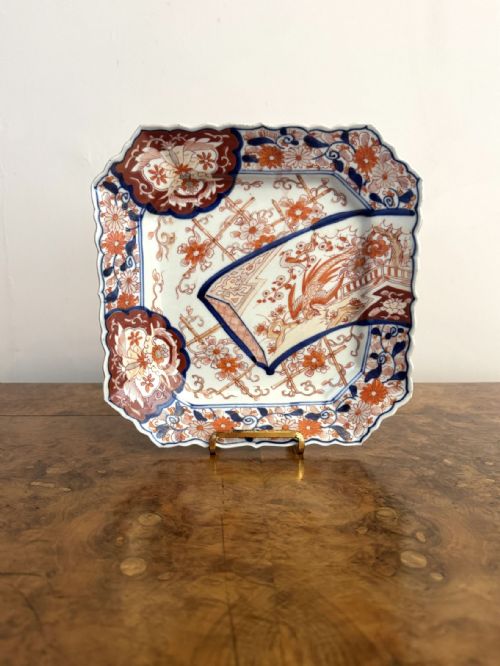
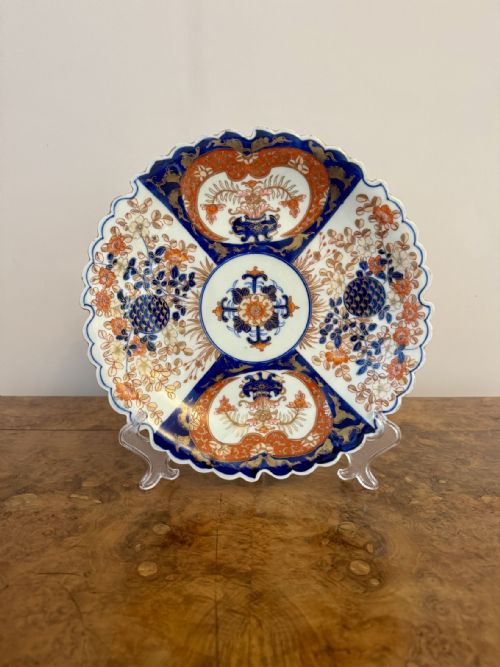
A traditional imari wall plate is a decorative ceramic piece meant for display, often seen in large charger sizes or square shapes. These items range from late 17th-century pieces to 19th-century Victorian works and 1900s examples.
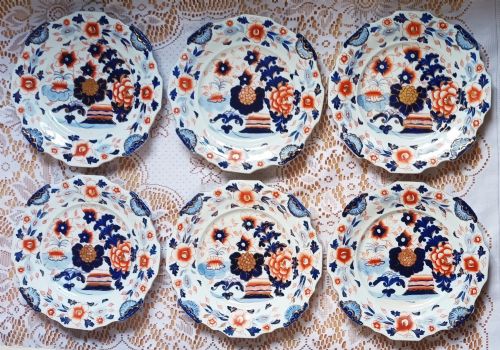
Most selections on this page originate from Japan, spanning the Edo and Meiji periods, alongside English Georgian ironstone interpretations of Japanese patterns and Chinese export wares. Buyers encounter individual plates, pairs, and grouped collections suited for hanging or surface display.
Materials and methods
The foundation rests on porcelain, ceramic, or ironstone, shaped into plates, chargers, and platters with occasional scalloped edges. Artisans applied cobalt underglaze beneath the transparent finish before adding enamel colours.
Detailing relied on gold leaf and gilt work to accent the rich red and blue palettes. Hand-painted execution defined these ceramics across Japanese and English workshops.
Listings feature porcelain, ceramic, ironstone, enamel, and gold leaf across 17th-century to 20th-century periods.
Distinctions in craftsmanship
The standard of a traditional imari wall plate rests on the precision of its hand-painted brushwork and the vibrancy of the enamel and cobalt underglaze. Rich application of gold leaf and gilt further separates exceptional chargers from standard wares.
Form and scale also dictate worth, with large chargers, unusual square shapes, and matched pairs demonstrating superior artistic ambition compared to basic circular dishes.
The Traditional Imari Wall Plate Glossary
- Imari
- A style of ceramic originating in Japan, characterised by a palette of cobalt blue, iron-red, and gilt details. It gained popularity in the West during the Edo period.
- Charger
- A large decorative plate or platter used primarily for display on walls or sideboards rather than dining. These pieces command attention through their generous scale.
- Cobalt Underglaze
- A blue pigment applied to raw ceramic before firing and glazing, ensuring the colour remains permanent and sharp beneath the glossy surface layer.
- Ironstone
- A type of heavy, durable ceramic developed in 19th-century England, frequently utilised to produce sturdy plates bearing Japanese-inspired patterns.
- Gilt
- A thin layer of gold applied to the surface of ceramics to highlight painted motifs and add metallic warmth to the overall design.
Traditional Imari Wall Plate: Frequently Asked Questions
How do I hang a heavy charger?
Large chargers require robust, specialist wire wall hangers that grip the rim securely without placing undue stress on the ceramic body.
Ensure the wall fixing engages directly with a stud or uses a proper wall plug to support the weight safely.
Can these plates be used for food?
Antique decorative plates and chargers are intended for visual display rather than daily dining use. Many feature delicate enamel and gilt details that can wear with cutlery contact.
Older glazes may also not meet modern standards for food safety, making wall mounting or cabinet display the sensible choice.
What is the difference between Edo and Meiji pieces?
Edo period items date from earlier centuries up to 1868, often reflecting classical Japanese aesthetic traditions. Meiji period works span from 1868 to 1912, a time of increased international trade and bolder decorative output.
Both periods share the distinct red, blue, and gold palette associated with this ware.
How do I clean an antique plate?
Dust gently with a soft, dry cloth to remove surface particles without disturbing the glaze or enamel. Avoid soaking or using chemical detergents.
Water can seep into older ceramic bodies or degrade delicate gilt highlights over time.