




Traditional Imari Floral Plates
Traditional imari floral plates bring striking pattern and rich colour to a table, combining hand-painted cobalt underglaze with vibrant enamels.
Traditional Imari Floral Plates
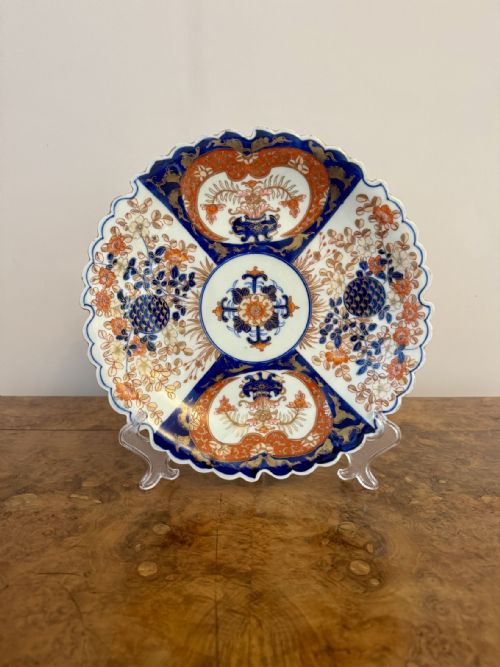
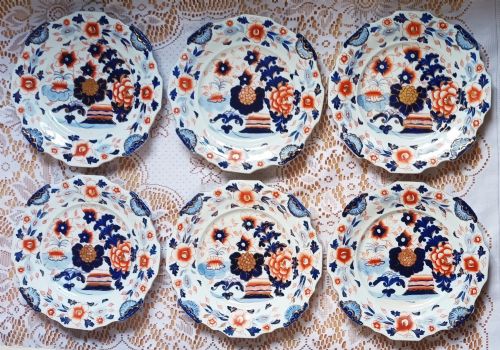
Traditional imari floral plates encompass decorative chargers, large platters and dinner wares originating primarily from Japanese Meiji period workshops and 19th-century English iterations. When exploring traditional imari floral plates, the selection focuses heavily on early 20th-century and 19th-century porcelain and ironstone examples featuring scalloped or rounded edges.
The aesthetic bridges Japanese Meiji aesthetics with Victorian and Georgian interpretations often styled as Japan pattern ironstone china. Buyers encounter individual display plates, pairs, and matched sets designed for visual impact rather than heavy daily dining.
How they were made
Makers built these pieces using ceramic, porcelain, or ironstone bodies shaped into plates, chargers, and platters with occasional scalloped edges. Artisans applied cobalt underglaze for the foundational blue motifs before firing the piece.
Vibrant enamel colours and gold leaf gilding were subsequently hand-painted over the glaze and fixed in a second, lower-temperature kiln firing. This layered technique produced the characteristic tactile surface where the gilt and enamel sit slightly proud of the white ceramic base.
Some chargers arrive with old wire woven so tightly around the rim you suspect a Victorian butler feared gravity more than burglars.
What varies in quality
Quality rests in the crispness of the cobalt underglaze painting and the density and registration of the overglaze enamels. Finer examples display meticulous brushwork where floral panels and geometric borders align precisely without smudging or bleeding into the white ground.
The preservation of the gold leaf gilding and enamel pigments dictates the visual strength of the piece. Superior specimens retain their original metallic brilliance and depth of colour across both central medallions and intricate rim details.
The Traditional Imari Floral Plates Glossary
- Cobalt underglaze
- A blue pigment applied directly to the raw ceramic body before glazing and firing, creating a permanent colour beneath the glassy surface. It forms the deep blue foundation of traditional imari designs.
- Imari
- A style of ceramic originating from the Japanese port of Imari, defined by a palette of cobalt blue and iron red, frequently enriched with gold. English potteries later borrowed this aesthetic to produce their own ironstone versions.
- Charger
- A large decorative plate utilised primarily for display or serving rather than individual dining. These substantial pieces showcase the most complex floral and geometric compositions.
- Ironstone
- A heavy, durable type of earthenware patented in the 19th century as a robust alternative to porcelain. It accepted imari patterns readily and sustained less damage during daily use.
Traditional Imari Floral Plates: Frequently Asked Questions
Are these plates safe for daily dining?
Most of these pieces are antique display items, chargers, or decorative plates intended for visual appreciation on walls or sideboards.
Due to the delicate nature of the overglaze enamels and gold leaf gilding, modern washing and heavy cutlery use will damage the decorative surfaces over time.
What is the difference between porcelain and ironstone imari?
Japanese examples are typically true porcelain, offering a ringing tone when tapped and a finer, more translucent body. English versions are usually ironstone, which is heavier, opaque, and substantially thicker in cross-section.
Both carried similar imari floral motifs, but the clay body and regional potting traditions separate the Asian origins from nineteenth-century English interpretations.
How do I clean antique imari plates?
Dust them gently with a soft, dry cloth or feather duster to remove everyday particles without abrasive friction.
If washing is strictly necessary, use lukewarm water with mild soap, avoiding harsh detergents and soaking, then dry immediately with a lint-free cloth.