

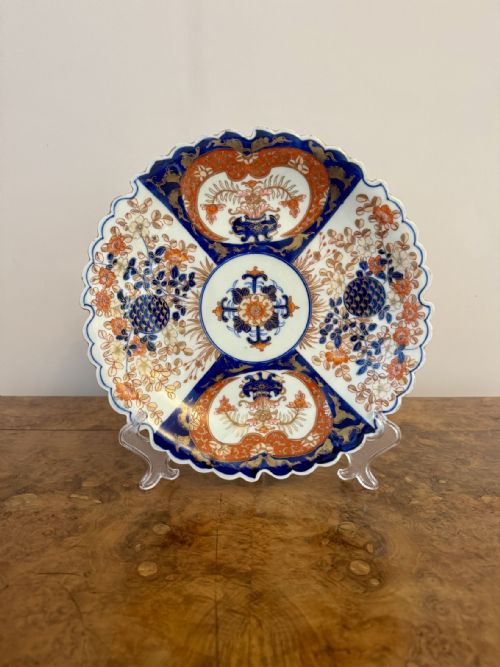


Traditional Imari Charger
A traditional imari charger is a bold ceramic centrepiece defined by rich cobalt underglaze and vibrant iron-red enamel, prized for centuries for its decorative impact.
Traditional Imari Charger
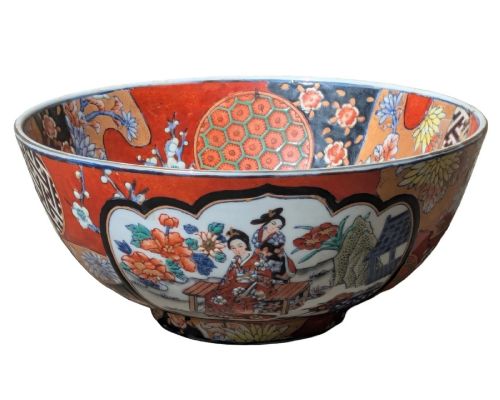
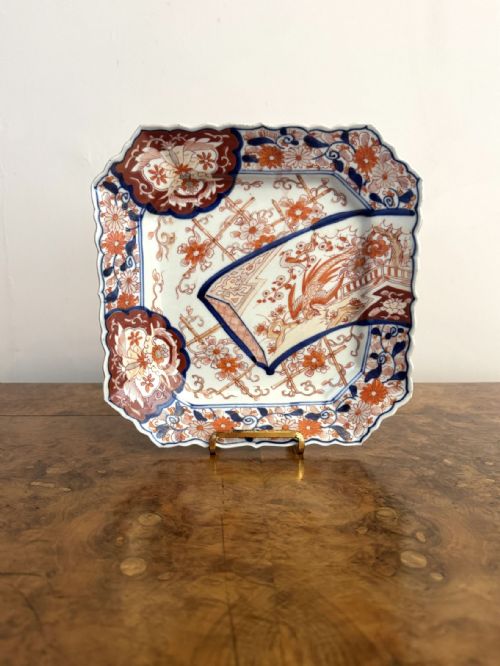
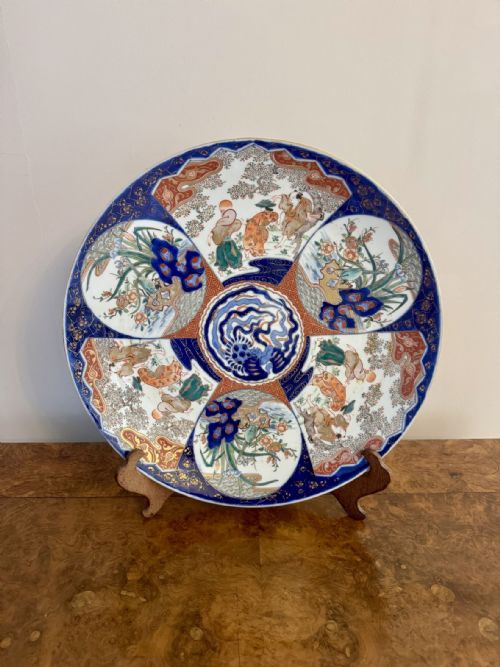
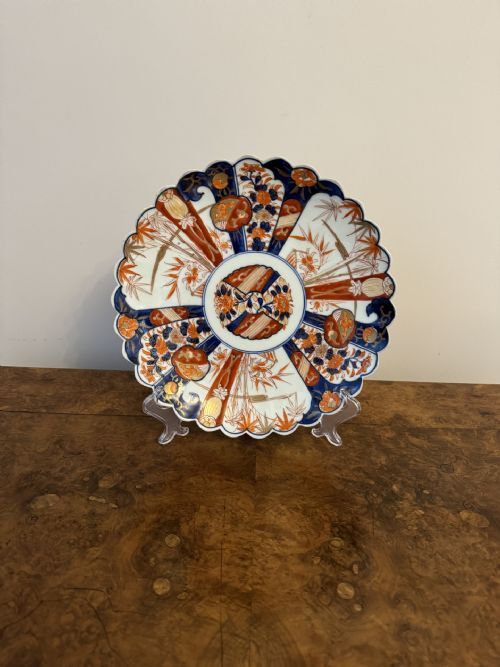
When searching for a traditional imari charger, buyers look at large decorative plates and platters that display the distinctive palette of Japanese and Chinese export ceramics. These pieces function primarily as display items rather than tableware, commanding attention on walls, sideboards and tables.
The pieces met most frequently on this page date from the nineteenth century and the early twentieth century, spanning the Victorian, Edwardian and Meiji periods. Alongside chargers, the selection includes related decorative plates, dishes and bowls sharing the same aesthetic lineage.
Originating predominantly from Japan, particularly the Arita region, these items often feature scalloped edges or square shapes alongside standard round forms. The visual weight comes from dense patterning that combines floral, geometric and figurative motifs.
Materials and Construction
Potters built these traditional imari charger pieces using hard-paste porcelain or ceramic, forming the body before applying the characteristic cobalt underglaze by hand. This blue pigment sinks deep into the body beneath a transparent glaze during the initial high-temperature firing.
After the primary glaze firing, artisans added secondary enamel colours, predominantly iron-red, which were fixed in a subsequent, lower-temperature kiln. Many examples incorporate gold leaf, gilding or delicate highlights that catch the light across the decorated surface.
Listings here span from the seventeenth century through the Victorian and Edwardian eras, encompassing porcelain, ceramic, enamel and gold leaf.
Quality Variations
The distinction between standard production and the finest examples rests on the crispness of the cobalt painting and the precision of the overglaze enamelling. Superior pieces display confident brushwork where lines remain sharp and the composition feels balanced rather than crowded.
Subtle differences in the purity of the porcelain body and the restraint shown in applying gold leaf and gilding also separate exceptional chargers from ordinary ones. The richest items achieve a harmonious depth where the blue underglaze and red enamel sit in clear dialogue.
The Traditional Imari Charger Glossary
- Cobalt Underglaze
- A blue metallic oxide pigment applied directly to the raw clay body before glazing and firing. This technique ensures the colour remains permanent and protected beneath the glass-like surface.
- Aka-e
- A Japanese term meaning red pictures, referring to the dominant iron-red enamel used in traditional colour schemes. It provides the fiery contrast against the deep cobalt blue.
- Charger
- A large decorative plate or platter traditionally used for ceremonial display rather than serving food. Their substantial diameter allows artists to execute complex, multi-layered compositional designs.
- Meiji Period
- The era in Japanese history spanning from 1868 to 1912, corresponding with the Victorian and Edwardian periods in Britain. Much of the exported decorative ware seen today dates from this prolific manufacturing era.
Traditional Imari Charger: Frequently Asked Questions
What is a traditional imari charger?
A traditional imari charger is a wide decorative ceramic plate distinguished by a rich colour palette of cobalt blue, iron-red and gilt highlights. Originating in Japan, these large pieces were designed primarily for visual display.
They bring an intense decorative presence to interiors through intricate hand-painted motifs that combine floral, brocade and naturalistic patterns across the surface.
How do I date a traditional imari charger?
Dating relies on examining the characteristics of the porcelain body, the style of the hand-painted decoration and the specific tones of the enamel colours. Pieces from the Meiji period often display a confident density of design and crisp underglaze blue.
Earlier examples from the seventeenth century, such as those from the Edo period, exhibit different potting weights and softer iron-red pigments compared to later nineteenth-century production.
How do I care for antique porcelain?
Antique porcelain requires gentle handling and should be displayed securely on stable surfaces or using padded wall-mounting brackets. Dusting with a soft, dry brush keeps the glazed and gilded surfaces clean without risking abrasion.
Avoid using liquid cleaners or submerging antique pieces in water, particularly those with delicate overglaze enamels and gold leaf highlights that can degrade over time.