

Traditional Horse Portrait
A traditional horse portrait captures the character and stature of an equine subject, drawn from centuries of British sporting and equestrian art.
Traditional Horse Portrait
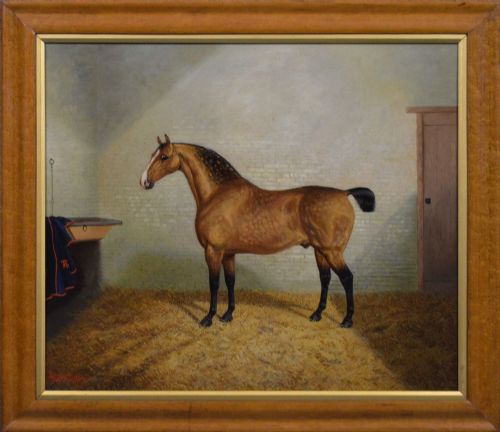
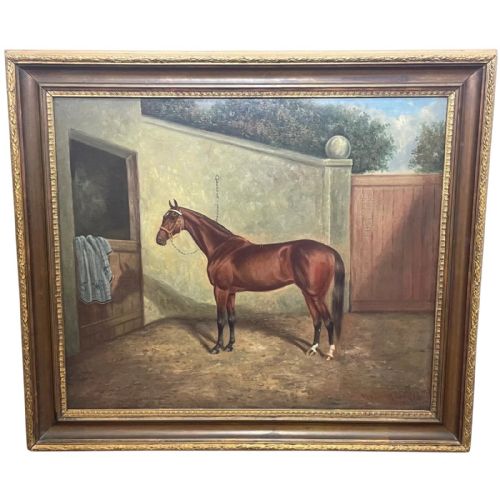
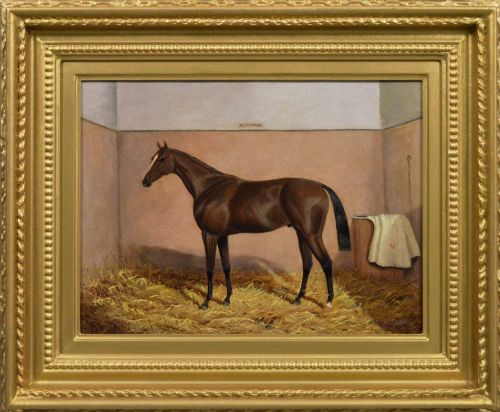
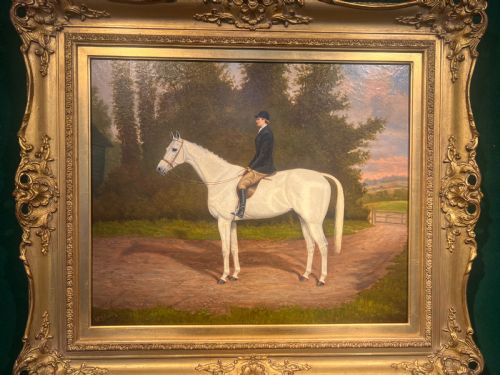
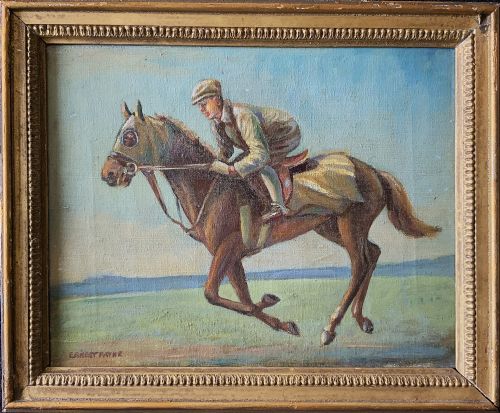
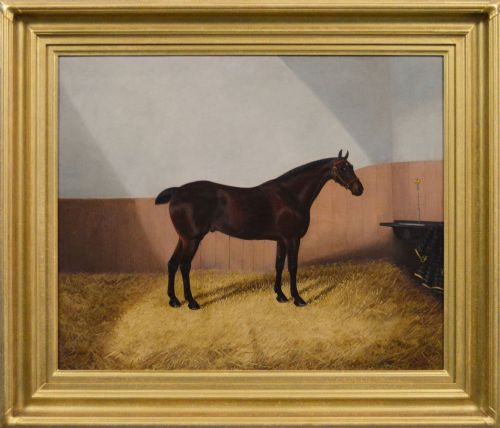
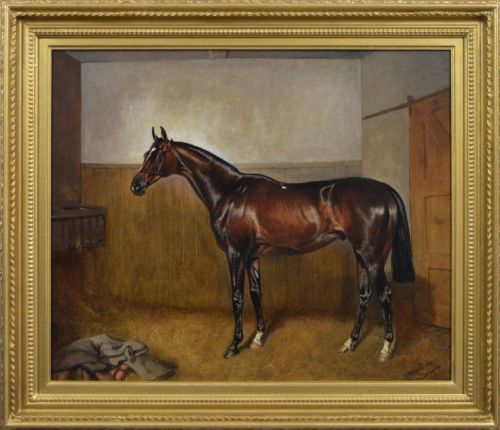
A traditional horse portrait focuses squarely on the equine subject, whether as a named champion racehorse, a working hunter in the field, or a prized stud in a stable setting. These works range from tightly focused studies of famous winners like Spion Kop and Persimmon to broader rural scenes involving hay wagons and hunting packs.
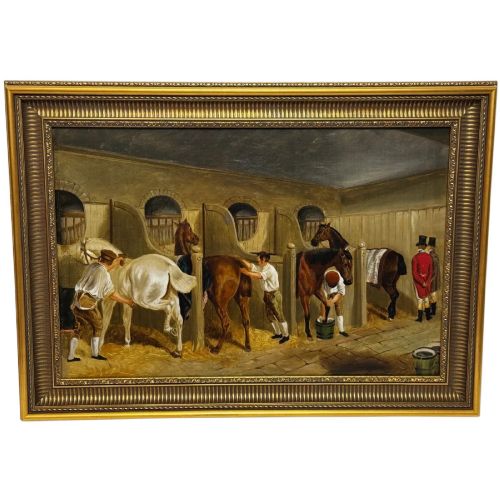
Most pieces encountered on this page originate from the nineteenth and early twentieth centuries, spanning the Victorian and Edwardian eras. The visual record shows strong representation of named horses set against pastoral landscapes, stable interiors, or turf courses.
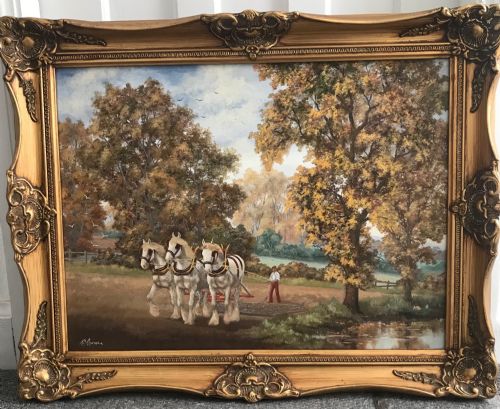
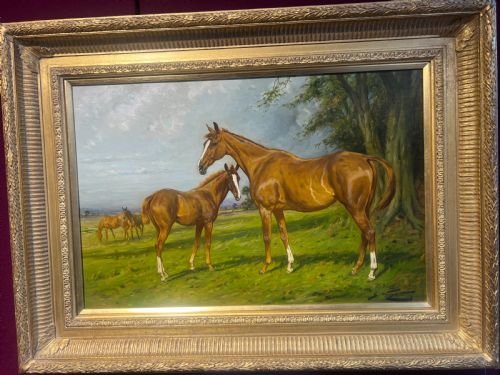
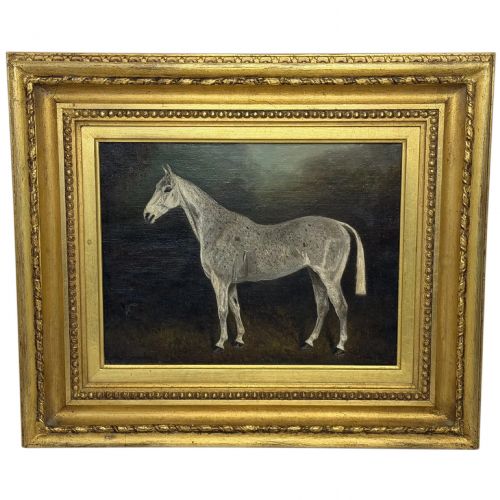
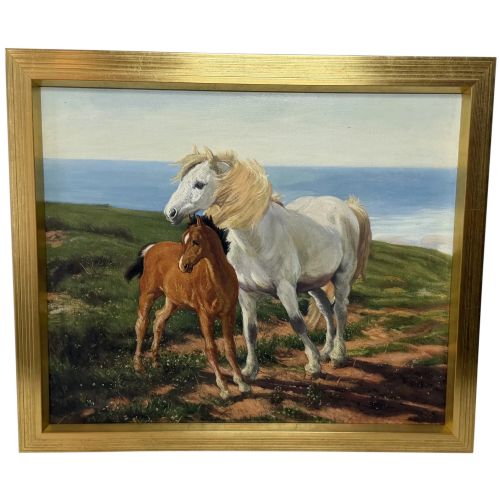
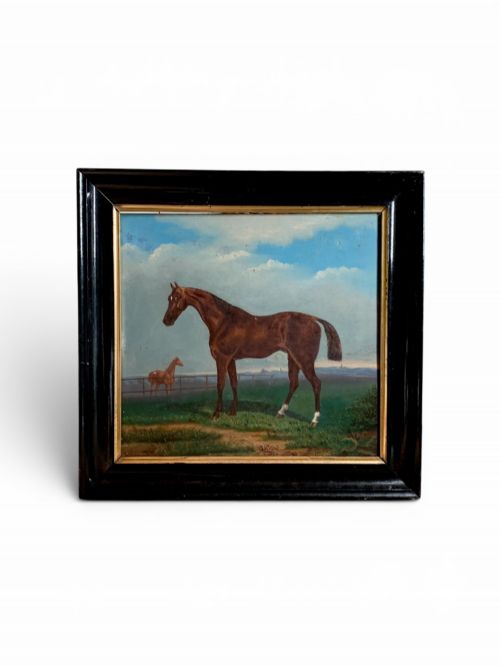
The category encompasses various mediums beyond standard canvas work, including oil on wood panel and occasional antique watercolour paintings. Subjects extend from solitary bay hunters to grey mares with foals and working shire horses.
Materials and methods
Painters typically applied oil paint onto stretched canvas or wooden pine panels, building up layers of pigment to render the muscular form, glossy coat, and distinct markings of the animal. Many surviving examples retain their original giltwood frames, which complement the tonal depth of the oils.
Subtle handling of light differentiates the treatment of coats, from dappled buckskins and strawberry grey roans to rich chestnut foals. Artists often employed fine brushes to capture the intricate details of tack, stable interiors, and distant rural backgrounds.
Traditional Horse Portrait Retail Price Guide 2026
Typical asking prices for traditional horse portrait among the pieces listed under this phrase on Sellingantiques today, from the lower quarter to the upper quarter. They describe what is for sale here now, not the wider market.
Listings feature oil paintings on canvas and wood panel alongside waterworks, spanning the Victorian, Edwardian, and mid-twentieth century periods.
Assessing quality in equine art
An accomplished traditional horse portrait demonstrates correct anatomical proportion, capturing the tension in a racehorse's stance or the solid build of a ploughing shire. The distinction between a standard record and a superior painting lies in the artist's command of light across the coat and the expressive alertness in the animal's eye.
Provenance and documentation elevate certain works, particularly when the canvas identifies a specific winner, a noted owner such as King Edward VII, or a recognised practitioner of British sporting art. The integration of the horse within its landscape, whether a stable or a racecourse, also defines the overall cohesion of the piece.
Henry Barraud·Albert Clark·John Alfred Wheeler·George Wright·Basil Nightingale
The Traditional Horse Portrait Glossary
- Bay
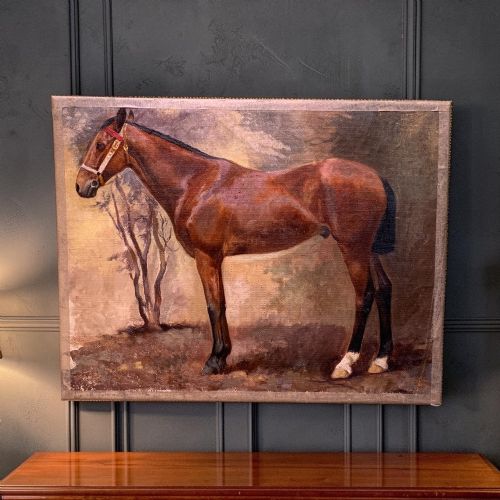
- A horse coat colour characterised by a reddish-brown body with black points on the mane, tail, and lower legs. It remains one of the most frequently recorded coat colours in Victorian equestrian painting.
- Giltwood
- Wood carved and covered with a thin layer of gold leaf or gold paint. This finish is standard for the traditional frames enclosing nineteenth-century oil paintings.
- Equestrian art
- Depictions of horses and riders, encompassing hunting scenes, racecourse studies, and formal portraits. The genre flourished significantly during the Victorian and Edwardian periods.
- Oil on canvas
- Pigment mixed with drying oil applied to a woven fabric support. This technique provides the rich texture and longevity seen in the majority of these listings.
Traditional Horse Portrait: Frequently Asked Questions
What is a traditional horse portrait?
A traditional horse portrait is a painted or drawn representation of an equine subject, created primarily during the nineteenth and early twentieth centuries. These artworks document specific animals, ranging from celebrated racehorses and hunters to working farm horses.
Artists of the period focused heavily on accurate anatomy, distinctive coat colours, and the specific environment of the stable or the sporting field, producing works that served as both personal records and pieces of fine art.
How do I identify the period of a horse painting?
Dating a horse painting relies on examining the stretcher frames, the canvas preparation, the artist's signature, and stylistic clues within the background. Victorian and Edwardian works often feature specific framing techniques and clothing styles on jockeys or handlers that anchor them to a decade.
Inscriptions on the reverse of the canvas or panel frequently provide the name of the horse, the date, and the artist, offering direct confirmation of the period in which the work was produced.
Where were these horse portraits originally displayed?
Historically, horse portraits hung in country houses, estate offices, and sporting clubs associated with horse breeding, racing, and hunting. Owners commissioned paintings of their winning racehorses or favourite hunters to celebrate estate achievements.
Today, these works transition easily into domestic interiors, fitting naturally into studies, hallways, or living rooms where traditional art provides a focal point.
What subjects besides racehorses appear in these works?
While racehorses and named hunters dominate many compositions, the genre also includes working animals such as ploughing shire horses and rural farm horses. Other pieces depict fox hunting scenes, coaching subjects, and mares with their foals in pasture settings.
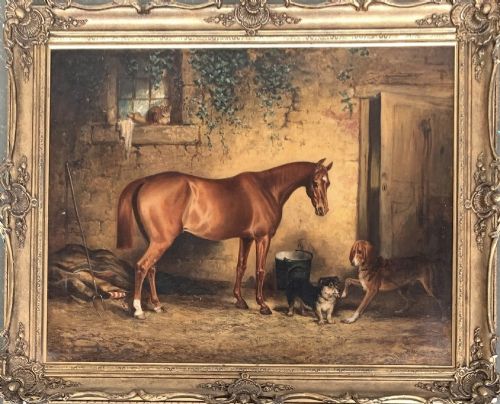
Some compositions incorporate dogs alongside the horse or place the animal within an expansive rural landscape, reflecting broader aspects of British agricultural and sporting life.