






Traditional Harbour Scene Art
Traditional harbour scene art captures coastal life through maritime paintings depicting bustling ports, fishing boats and coastal villages from the nineteenth and twentieth centuries.
Traditional Harbour Scene Art
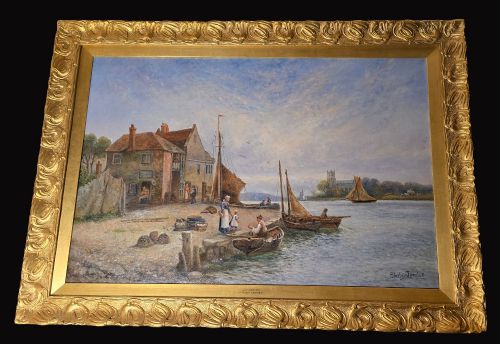
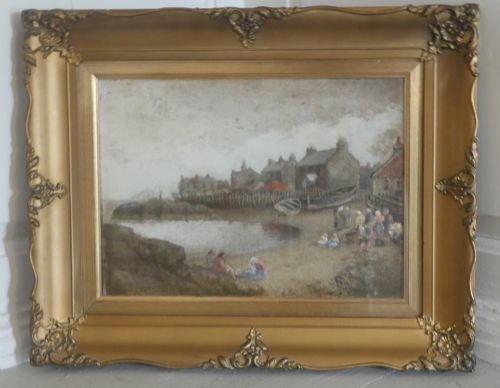
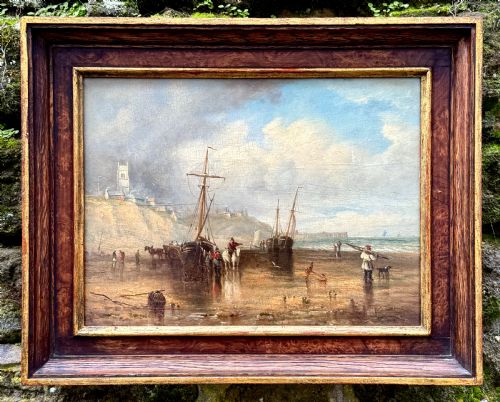
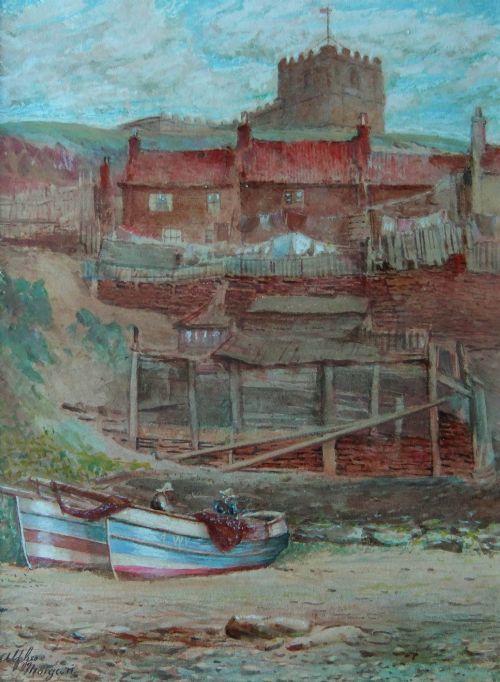
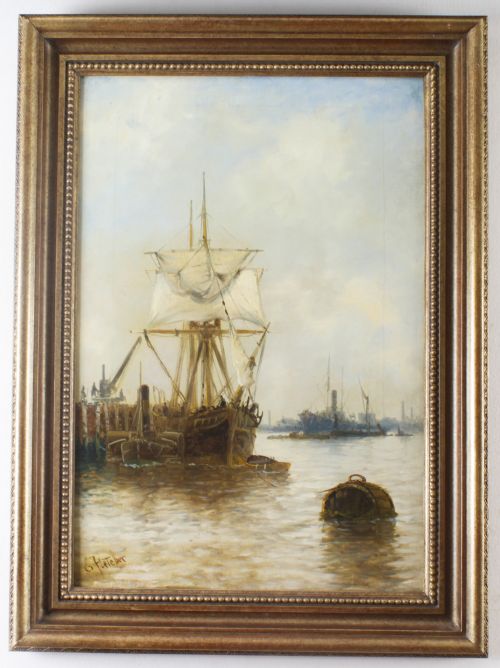
Traditional harbour scene art comprises framed paintings and watercolours depicting coastal settlements, fishing fleets and maritime architecture. These works record the working life of ports ranging from Cornish fishing villages like St Ives and Mousehole to international harbours.
Most examples date from the nineteenth and early twentieth centuries, spanning Victorian, Edwardian and Post-Impressionism styles. Buyers encounter both intimate watercolours on paper and larger oil paintings on canvas or panel.
The subjects focus on everyday maritime activity, including shipping, boat yards, packing for market and coastal figures. Scenes range from calm moorings to choppy seas featuring fishing trawlers and sailing vessels.
Materials and methods
Painters utilised oil paint on canvas, wood panels and board to achieve rich textures and deep tones for marine water and skies. Watercolours on paper provide a lighter, more translucent quality well suited to coastal light and atmospheric weather.
Many works retain their period framing, including gilt wood surrounds and hand-enamelled polychrome frames that complement the composition. Support materials vary from heavy stretched canvas to delicate paper sheets mounted under glass.
Traditional Harbour Scene Art Retail Price Guide 2026
Typical asking prices for traditional harbour scene art among the pieces listed under this phrase on Sellingantiques today, from the lower quarter to the upper quarter. They describe what is for sale here now, not the wider market.
Listings feature traditional harbour scene art executed in oil on canvas, oil on panel, and watercolour on paper, spanning the nineteenth and twentieth centuries.
Assessing quality
Quality rests upon the artist's ability to render light, movement in water and the correct rigging of vessels. Finer works demonstrate confident brushwork and precise topographical detail rather than generic compositions.
The relationship between the medium and the condition of the support dictates overall merit. Well-preserved watercolours retain their original colour without fading, whilst oil paintings show stable paint surfaces free from excessive restoration.
Edward Mills·William Banks Fortescue·Thomas Creswick·Alfred G Morgan·William Edward Webb·James Kyd·Arthur Tucker·John Bell·James Webb·John Callow·Ralph Todd·Walter Sweet·Jane Vivian·Hubert Thornley·Charles France·Robert Leslie Howey·Edward Fletcher·William Dommersen
The Traditional Harbour Scene Art Glossary
- Seascape
- A painting depicting the sea, shipping or coastal views. These works often focus on the interplay between weather, water and vessels.
- Watercolour
- A paint consisting of pigment suspended in a water-based solution, typically applied to paper. This medium allows for transparent washes of colour.
- Oil on Canvas
- Pigment mixed with drying oils applied to stretched woven fabric. This combination permits rich impasto and deep tonal layering.
- Gilt Wood
- Wood carved and coated with gold leaf or metallic paint. Antique frames finished in this manner provide traditional decorative borders for oil paintings.
- Post-Impressionism
- An art movement extending beyond Impressionism that retained vivid colours and thick application of paint. Works in this style emphasise symbolic content and distinct brushstrokes.
Traditional Harbour Scene Art: Frequently Asked Questions
What periods do these paintings cover?
The selection spans from the early nineteenth century through to the mid-twentieth century. Most pieces originate from the Victorian and Edwardian eras.
Key movements represented include Victorian fine art, marine painting, and early twentieth-century Post-Impressionism.
How should I display a watercolour painting?
Watercolours require protection behind glass to prevent atmospheric damage to the paper. Keep them away from direct sunlight to avoid fading the pigments.
Ensure stable indoor humidity levels to protect both the paper and the period frame.
What subjects appear in these scenes?
Common subjects include Cornish fishing ports, bustling quaysides, and shipping in choppy seas. Artists frequently recorded local maritime industries and daily coastal life.
Compositions range from domestic harbour views to expansive coastal landscapes and townscapes.
Are these paintings signed by the artists?
Many examples feature artist signatures, inscriptions or historical exhibition labels on the front or reverse. Some works remain unsigned whilst still displaying distinct regional characteristics and period techniques.
Signatures often help attribute works to specific locations like St Ives, Whitby or Portsmouth.