

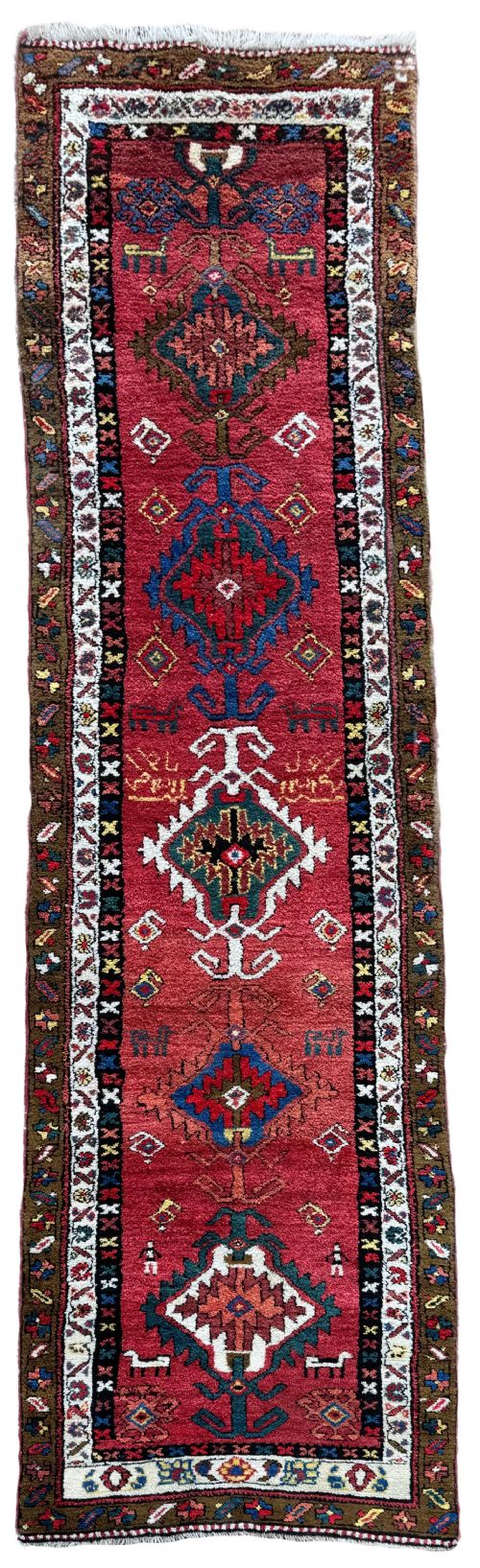
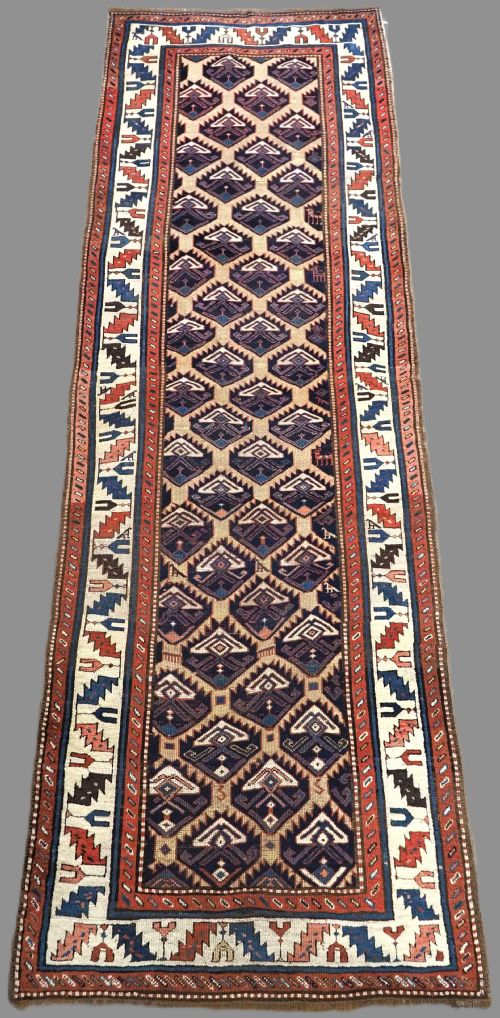
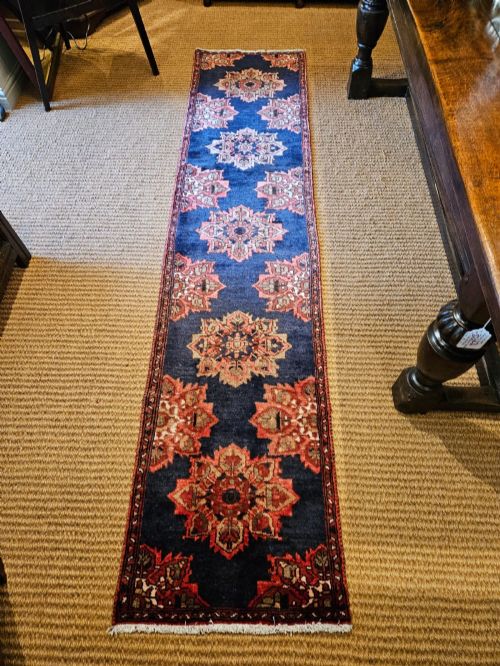
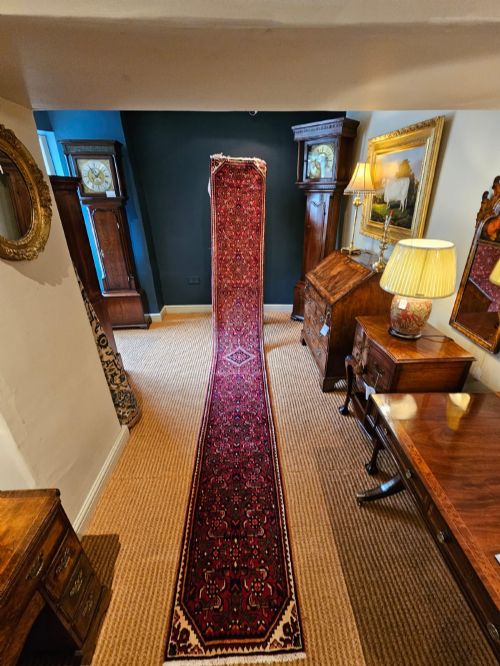
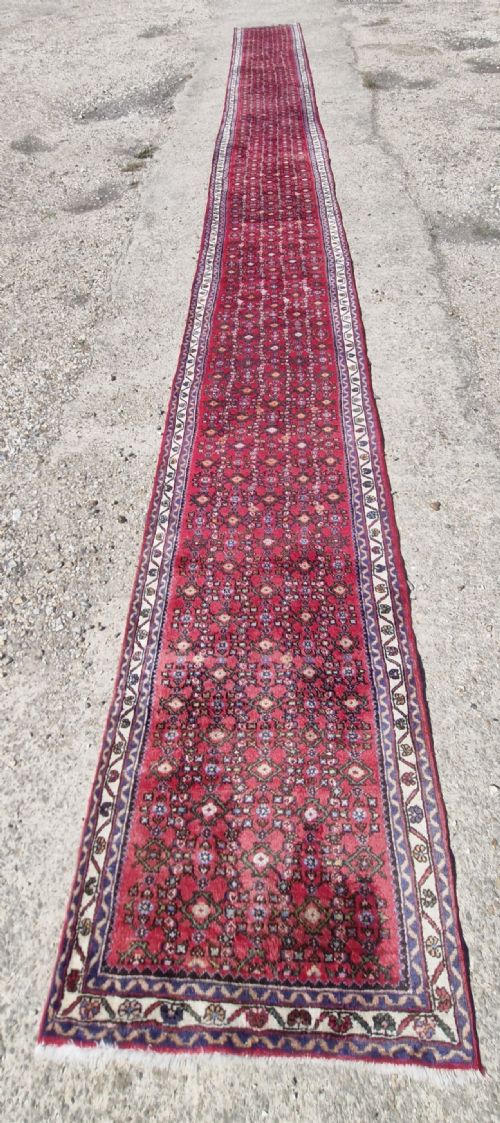
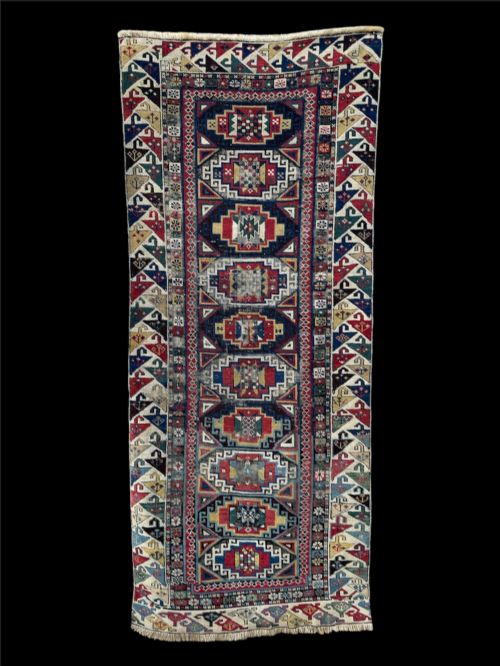
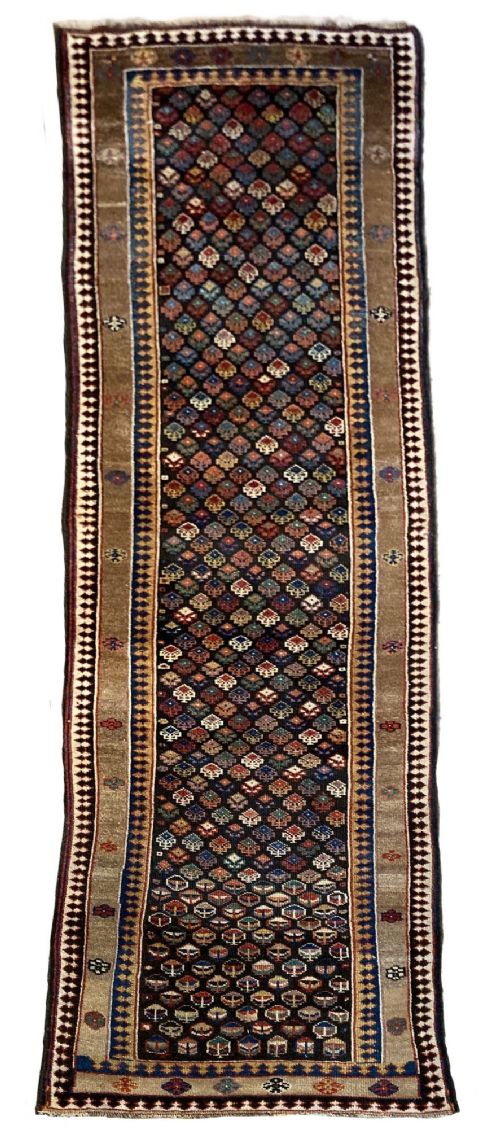


Traditional Hall Carpet Runner
A traditional hall carpet runner brings warmth, geometry and historic character to a narrow corridor.
Traditional Hall Carpet Runner
A traditional hall carpet runner is a long, narrow textile designed specifically to furnish corridors, staircases and landings. These floor coverings bridge utility and decoration, protecting heavy-traffic thoroughfares while anchoring the space visually.
The selections available here span from the late nineteenth century into the mid-twentieth century, capturing diverse regional weaving traditions. Buyers will encounter narrow formats originating from Persian, Caucasian, Turkish and Kurdish workshops.
Forms include runner rugs, hallway runners and corridor carpets measuring several metres in length. They display geometric motifs, medallion patterns and tribal designs suited to period and traditional interiors.
How They Were Made
These textiles rely predominantly on natural wool and cotton foundations, utilising hand-spun wool for the pile to ensure durability underfoot. Certain pieces incorporate camel hair alongside wool to achieve varied textural depth and natural tonal shifts without synthetic interference.
Weavers employed natural dyes extracted from plants and minerals, creating rich palettes that mellow gracefully over decades. The construction involves hand-knotting or flat-weaving techniques passed down through generations within tribal and village communities.
Materials recorded across the inventory include hand-spun wool, cotton foundations and natural camel hair.
What Varies in Quality
Quality rests upon knot density, the precision of the geometric design and the integrity of the original foundation materials. Tightly packed wool piles and crisply executed motifs distinguish master weavers from simpler village output.
The stability of natural dyes and the preservation of original selvedges and ends dictate the enduring structural merit of each piece. Superior examples maintain balanced proportions across extreme lengths, holding their straight lines without distortion.
The Traditional Hall Carpet Runner Glossary
- Runner
- A long, narrow carpet format traditionally used in hallways, corridors and on staircases. Its proportions are designed to fit transit spaces while leaving floorboards exposed on either side.
- Pile
- The vertical or diagonal loops of yarn that form the usable surface of a carpet. In these pieces, the pile is hand-knotted from wool or camel hair.
- Natural Dyes
- Colourants derived from organic sources such as plants, roots and insects rather than synthetic chemicals. They age with a characteristic softness and complexity.
- Selvedge
- The side edges of a carpet where the weft threads turn back, securing the structure against fraying. Original selvedges indicate careful preservation.
- Medallion
- A central ornamental motif woven into the field of a rug, frequently seen in Persian and Anatolian designs.
Traditional Hall Carpet Runner: Frequently Asked Questions
How do I measure for a hall runner?
Measure the clear floor space of your hallway, leaving an equal margin of exposed wood or stone around the perimeter. Ensure doors can swing freely over the pile thickness.
Account for any radiators, baseboards or architectural quirks that might restrict the straight run of the carpet.
Are these runners suitable for heavy traffic?
Hand-spun wool and dense knots make these antique textiles remarkably resilient for everyday corridors. Regular use actually helps settle the fibres and polishes the lanolin in the wool.
Pair each runner with a quality underlay to cushion footfall and prevent slipping on smooth timber floors.
How do I clean an antique wool runner?
Gentle, regular vacuuming without a rotating brush roll removes grit from the base of the pile. Professional specialist cleaning is recommended for deep maintenance.
Avoid chemical spot treatments and excessive moisture, which can disturb natural dye compounds in older wool.
How can I tell different regional styles apart?
Caucasian runners typically favour sharp geometric polygons and bold primary palettes. Persian and Kurdish pieces often incorporate intricate repeating boteh motifs, floral lattices or central medallions.
Heriz and Karaja variants display distinctive stylized floral schemes with robust architectural frameworks.