





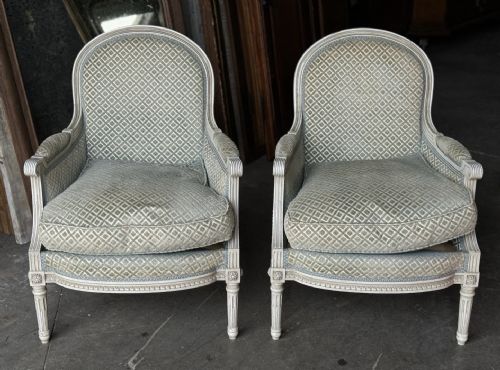


Traditional Grey Armchair
A traditional grey armchair brings understated British comfort and timeless seating forms to a room, offering deep upholstery and structural character.
Traditional Grey Armchair
When searching for a traditional grey armchair, buyers encounter nineteenth-century wing armchairs, slipper chairs, and library chairs upholstered in neutral tones. These pieces combine classic wooden frames with soft textile coverings, spanning Victorian, Queen Anne revival, and English country styles.
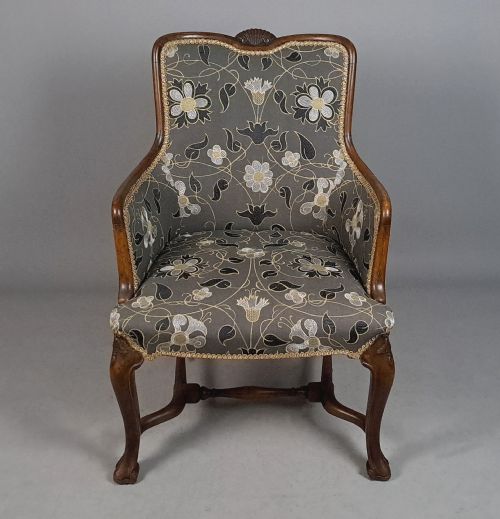
The selection on this page relies heavily on nineteenth-century examples, including walnut and mahogany frames alongside French bergere chairs and Howard style lounge pieces. Buyers frequently find wingbacks and open armchairs that suit both formal drawing rooms and quiet studies.
Makers and manufacturers from the nineteenth century and the early twentieth century provide the foundation for these seating forms. The variety ranges from compact slipper chairs to large buttonback suites and Gainsborough armchairs.
How they were made
Frames utilise sturdy timbers such as mahogany, walnut, and general wood construction, often featuring exposed polished legs or carved arm supports. Brass accents and cane work occasionally appear on specific nineteenth-century models.
Upholstery relies on traditional textiles including velvet, linen, and specialised upholstery fabric, frequently paired with buttonback detailing or kilim carpets. Cushion construction provides deep support within traditional sprung or padded frameworks.
Traditional Grey Armchair Retail Price Guide 2026
Typical asking prices for traditional grey armchair among the pieces listed under this phrase on Sellingantiques today, from the lower quarter to the upper quarter. They describe what is for sale here now, not the wider market.
Listings feature nineteenth-century and Victorian periods utilising mahogany, walnut, brass, velvet, linen, and upholstery fabric across armchairs, slipper chairs, and suites.
What varies in quality
The refinement of the wooden frame construction separates standard production from superior cabinet work, particularly in the carving of Queen Anne revival or George II style legs. Heavier timbers like walnut and mahogany provide greater structural integrity than softer woods.
Upholstery depth and the choice of surface fabric, whether heavy linen, velvet, or woven textile, dictate the tactile luxury of the seat. The proportion and sweep of the wingbacks or scroll backs determine the overall aesthetic balance.
The Traditional Grey Armchair Glossary
- Wingback
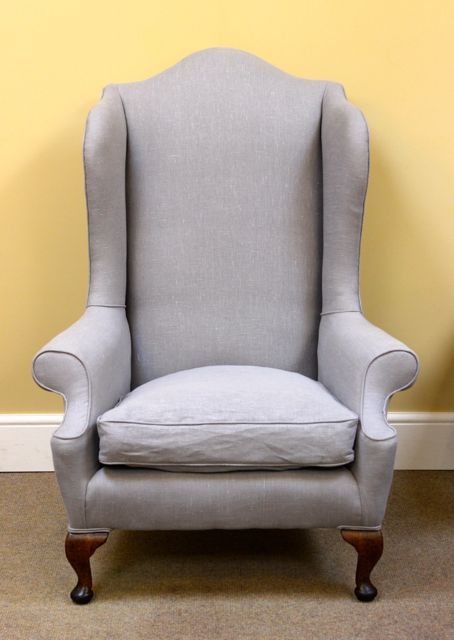
- An armchair with side panels designed to shield the sitter from draughts. These high-backed seats originate in earlier centuries and remain popular in nineteenth-century interpretations.
- Bergere
- An enclosed upholstered armchair with wooden frames developed in France. These seats often feature cane work or exposed polished wood elements.
- Slipper chair
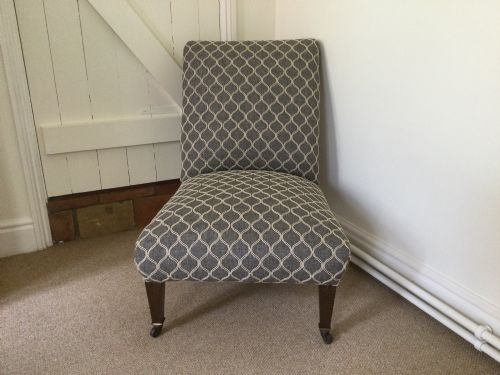
- A low-seated bedroom chair designed without arms for ease of dressing. Nineteenth-century versions sit close to the floor.
- Gainsborough chair
- A wide, open-armed desk chair with upholstered seat and back panels. George II style examples utilise mahogany frames.
- Buttonback
- An upholstery technique where buttons are pulled deep into the padding to create a diamond pattern. This method adds structural tautness and visual texture.
Traditional Grey Armchair: Frequently Asked Questions
How do I identify a Victorian armchair?
Victorian armchairs often display darker woods like walnut and mahogany alongside heavy upholstery fabrics. Common markers include buttonback tufting and turned wooden legs.
Earlier Victorian pieces lean towards revival forms while later ones introduce broader frames. Examining the underframe helps confirm the period of construction.
Are these chairs comfortable for daily use?
Most nineteenth-century armchairs were built with deep sprung interiors and substantial padding designed for prolonged sitting. Their ergonomic proportions match modern seating needs well.
Upholstery condition varies across listed items, with some pieces suited for immediate use and others offered for recovering. Buyers should check cushion fill and support levels.
What is the difference between a slipper chair and a lounge chair?
Slipper chairs sit low to the ground and lack armrests, making them traditionally useful for dressing areas. They offer a compact footprint within a room.
Lounge chairs and wingbacks provide higher seating positions and enclosed arm structures for full relaxation. Both styles utilise neutral grey fabrics across this selection.