



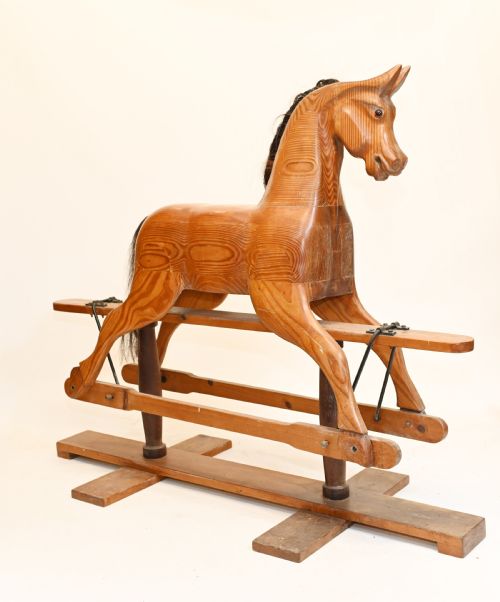

Traditional Glider Horse
A traditional glider horse brings the timeless charm of Victorian and early twentieth-century playrooms straight into modern homes.
Traditional Glider Horse
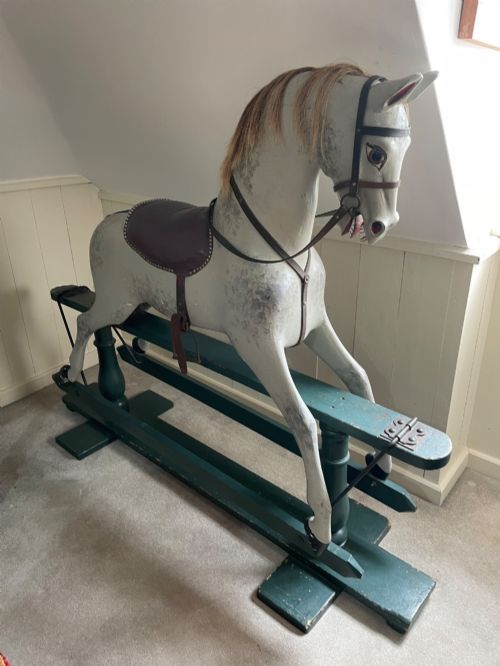
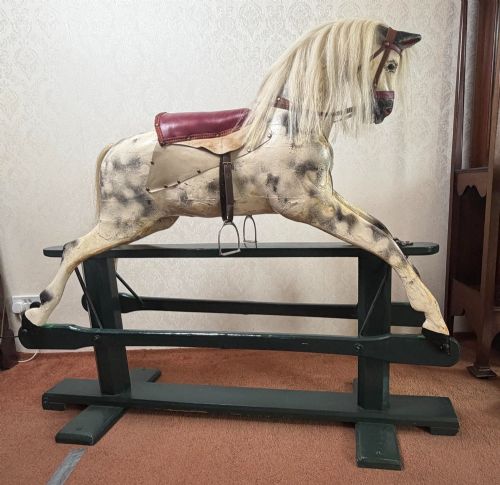
When you search for a traditional glider horse, you are looking at classic children's toys that span from the late nineteenth century through to the interwar period and the 1940s. These pieces include substantial rocking horses and carved wooden examples originating from Victorian, Edwardian, and later twentieth-century workshops.
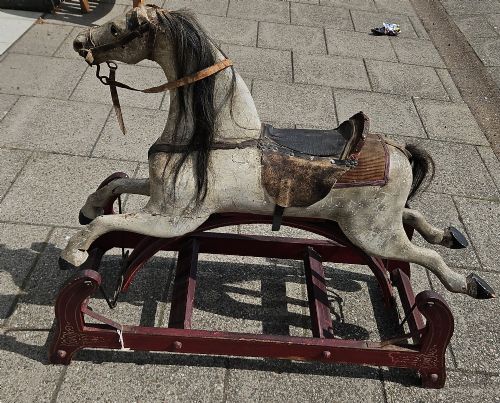
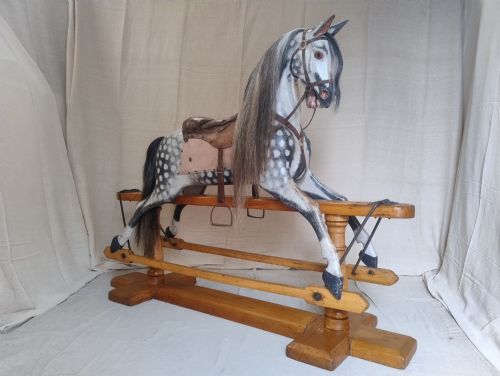
The most common versions met on this page are carved wooden rocking horses, often presented with original paint, leather tack, and horsehair details. They reflect the folk art and traditional craftsmanship of their respective periods, from the eighteen-eighties up to nineteen-fifty.
Materials and construction
Makers fashioned these traditional glider horse examples primarily from carved wood and pine, building robust structures designed to withstand decades of childhood play. Structural rigidity relied on internal metal, iron, and steel reinforcements concealed within the wooden frames.
Authentic finishing touches involved genuine horsehair manes and tails, fitted leather saddles and bridles, and glass eyes. Artisans applied hand-painted dappling over gesso and wood to complete the lifelike appearance of the toy.
Traditional Glider Horse Retail Price Guide 2026
Typical asking prices for traditional glider horse among the pieces listed under this phrase on Sellingantiques today, from the lower quarter to the upper quarter. They describe what is for sale here now, not the wider market.
Many of these wooden steeds still possess their original glass eyes, keeping a watchful, glassy gaze over the modern playroom.
Assessing quality in a traditional glider horse
Superior examples of a traditional glider horse retain their original painted surfaces and unaltered structural components, whereas lesser pieces suffer from unsympathetic modern repainting or heavy structural replacement. The clarity of the hand-carving in the head and shoulders distinguishes finer workshop output from simpler production.
The presence of original maker fittings, such as marked metal mounts and unaltered leather tack, elevates an example. Pieces retaining their original rocking stands or bow frames demonstrate a higher degree of preservation.
F.H. Ayres·Lines Bros Sportiboy·Collinsons
The Traditional Glider Horse Glossary
- Dappling
- The painted spots or rosettes applied to the body of a rocking horse to mimic a grey or apple-dappled coat. This traditional finish was built up in layers over a primed wooden base.
- Tack
- The harness, bridle, reins, and saddle fitted to the horse. Original leather tack is a key indicator of period authenticity.
- Bow rocker
- The curved wooden floor rails upon which the horse mounts, allowing it to glide back and forth. These stands were often constructed from heavy pine or oak.
Traditional Glider Horse: Frequently Asked Questions
How do I date a rocking horse?
Dating relies on examining the carving style of the head, the construction methods of the body, and the materials used for the mane and eyes. Earlier nineteenth-century examples often feature deep, spirited carving and heavy pine construction.
Later twentieth-century pieces shift toward simpler forms and different mechanical joints. Comparing the paint layers and any maker stamps helps narrow down the decade of manufacture.
What is original paint condition?
Original paint condition means the surface coating applied by the maker remains largely untouched by modern restoration. This includes the natural patina, wear from use, and the original dappling pattern.
Pieces retaining this finish show authentic ageing that collectors prize above newly applied decorative paintwork.
Are these horses safe for children?
While these pieces were originally built as children's toys, antique examples are generally treated as decorative items or collector pieces today. The materials, including aged wood, iron fixings, and old leather, require careful handling.
Modern safety standards for toys differ significantly from those of the Victorian and Edwardian eras.
How should I clean the wood and leather?
Cleaning requires gentle methods that preserve the historic patina and original paint surfaces. Dusting with a dry, soft cloth prevents particulate buildup without introducing moisture.
Harsh chemical cleaners or modern polishes should be avoided entirely to protect the aged finish and horsehair elements.