



Vintage Toy Horse
A vintage toy horse brings the charm of nineteenth and early twentieth century playrooms straight into a modern interior.
Vintage Toy Horse
When you search for a vintage toy horse, you encounter sturdy wooden rocking horses, pull-along toys, and hand-carved sculptural models from the nineteenth and early twentieth centuries. These objects served as children's playthings before transitioning into decorative folk art pieces collected for character and history.
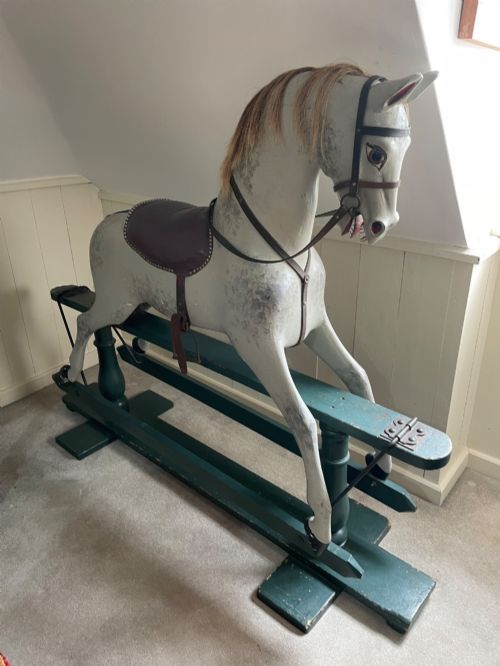
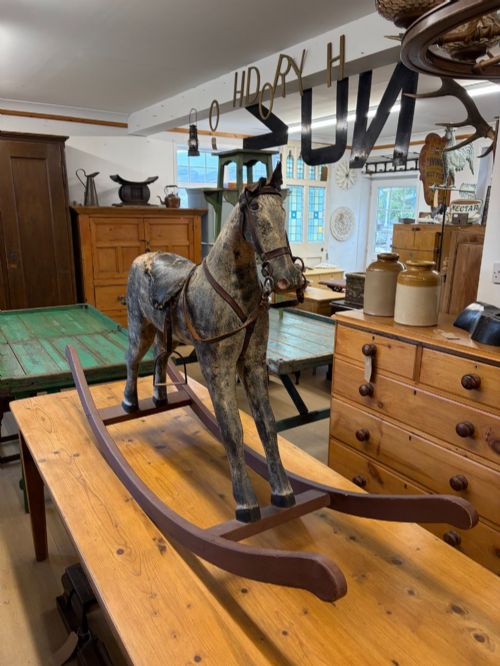
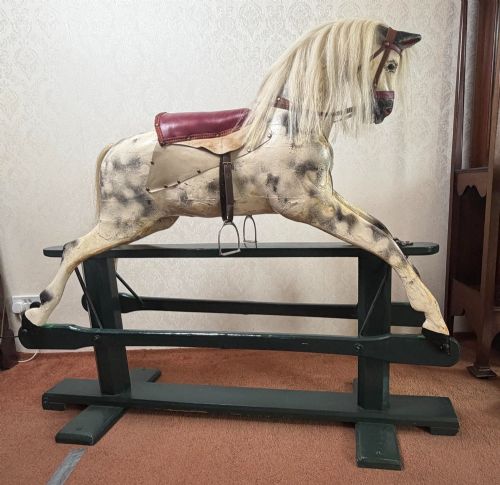
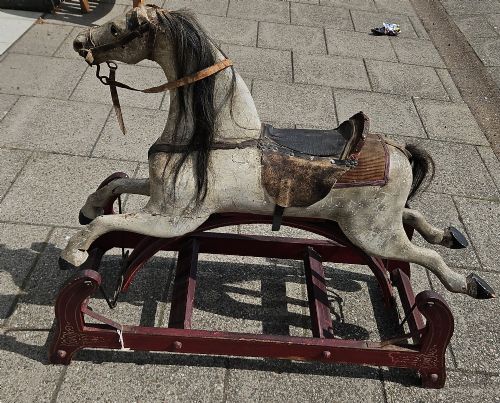
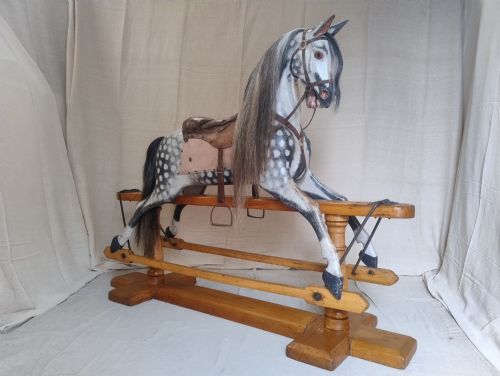
The version you are most likely to meet on this page is the traditional wooden rocking horse, often mounted on a bow rocker or safety stand. These domestic companions date from Victorian times through the interwar period, reflecting both commercial production and naive folk craftsmanship.
How they were made
Carved wood forms the structural core of these pieces, utilising solid timbers such as pine alongside layered or turned components. Makers shaped the bodies with hand tools, applying leather tack, horsehair manes, and iron bracing to provide realism and durability.
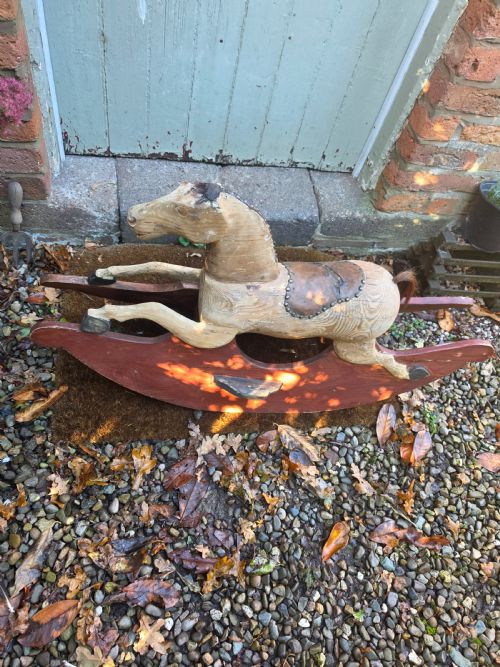
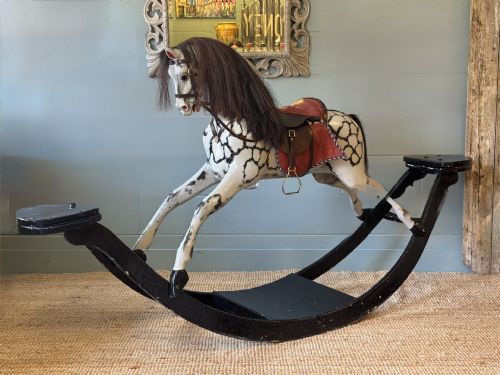
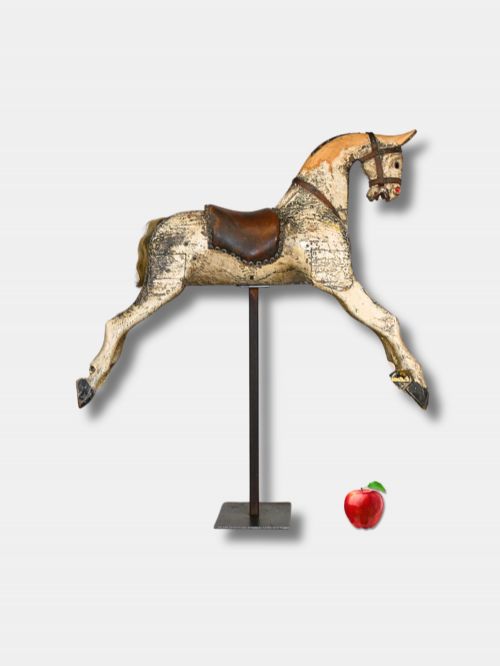
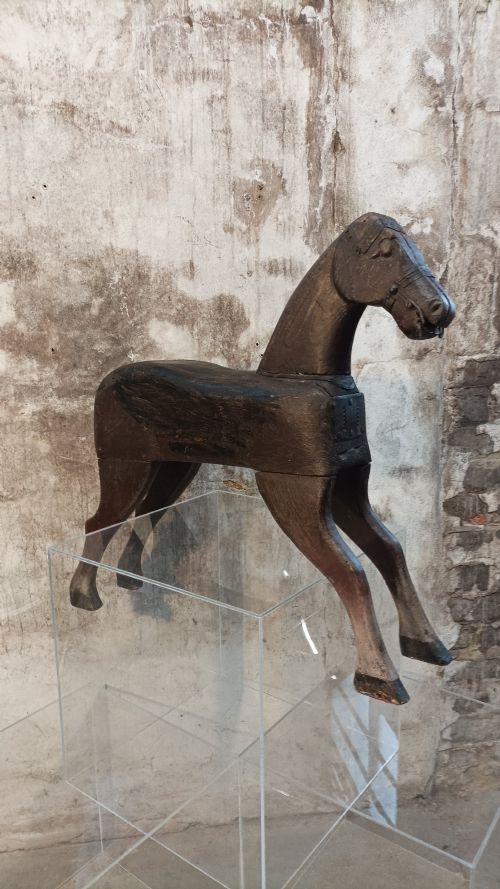
Surfaces received layers of gesso and paint, sometimes finished with dapple patterns or left in an unpainted primitive state. Scratched builds and folk carvings relied on simple joinery and household pigments to bring each animal to life.
Vintage Toy Horse Retail Price Guide 2026
Typical asking prices for vintage toy horse among the pieces listed under this phrase on Sellingantiques today, from the lower quarter to the upper quarter. They describe what is for sale here now, not the wider market.
Listings feature wooden horses constructed from pine and carved timber, finished with horsehair and leather.
What varies in quality
The distinction between ordinary and exceptional examples rests in the depth of the carving and the preservation of original surfaces. Master workshops invested great skill in the anatomical expression of the head and the stance of the legs, whilst naive makers achieved charm through rustic simplicity.
A piece retains higher standing when its early paint, leather elements, and tack remain intact rather than heavily restored. The integrity of the rocker frame and the balance of the carved body also dictate the distinction.
G and J Lines·F H Ayres·Lines Bros Sportiboy·Collinsons
The Vintage Toy Horse Glossary
- Bow rocker
- A curved wooden base that allows the toy to rock back and forth. These floor-standing rockers represent an earlier form before safety stands became common.
- Dappled
- A painted spotted pattern applied to the body of a horse. This traditional finish mimics the coat of certain grey horses using layered brushwork.
- Folk art
- Objects created by self-taught makers outside formal academic traditions. These pieces prioritise expressive character and regional utility over factory standardisation.
- Tack
- The harness, saddle, and stirrups fitted to a riding toy. Original leather tack adds considerable context to historical children's objects.
Vintage Toy Horse: Frequently Asked Questions
How do I date a wooden rocking horse?
Dating relies on construction methods, timber choices, and mounting styles. Nineteenth-century examples often feature separate laminated body blocks and bow rockers, whereas later twentieth-century models transitioned to factory safety stands and distinct ironwork.
Paint layers and wear patterns offer further clues. Original gesso finishes and early tack help narrow the decade of manufacture when compared against known maker outputs.
What is the difference between folk art and factory horses?
Factory pieces emerged from established London workshops with standardised carving techniques and maker stamps. Folk art horses were shaped by local craftsmen or anonymous makers using whatever timber was available.
Factory models display refined anatomical proportions and commercial branding. Folk art versions lean towards naive charm, simpler joinery, and unpretentious regional character.
How were these toys used historically?
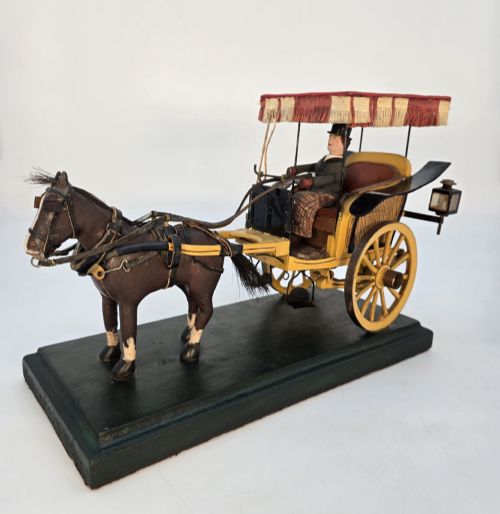
Children rode large wooden horses for indoor exercise and imaginative play during the Victorian and Edwardian eras. Smaller pull-along versions with iron wheels were towed across nursery floors on strings.
These objects occupied a central place in the Victorian nursery. They taught balance to young riders before enduring decades of quiet storage.
Where is the best place to display one?
Large rocking horses require adequate floor space to serve as sculptural focal points in hallways or living rooms. Smaller pull-along models and naive carvings sit comfortably on sturdy sideboards or mantelpieces.
Keeping them away from direct heat sources protects the old wood and painted surfaces. Stable placement ensures the balanced weight of the horse rests safely.