
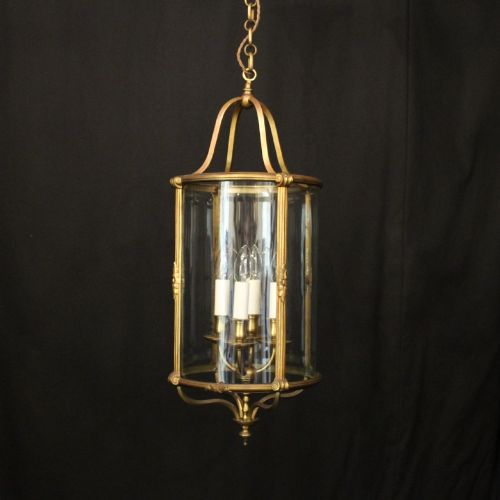
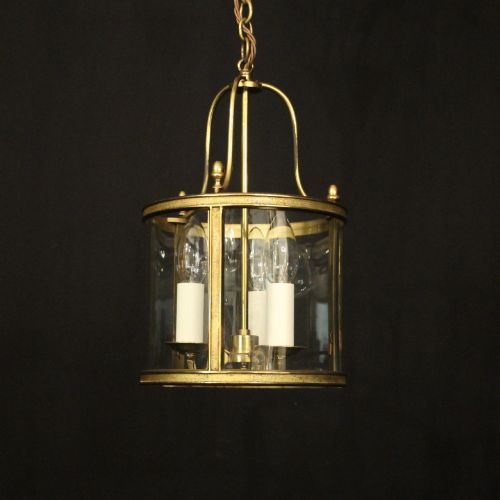
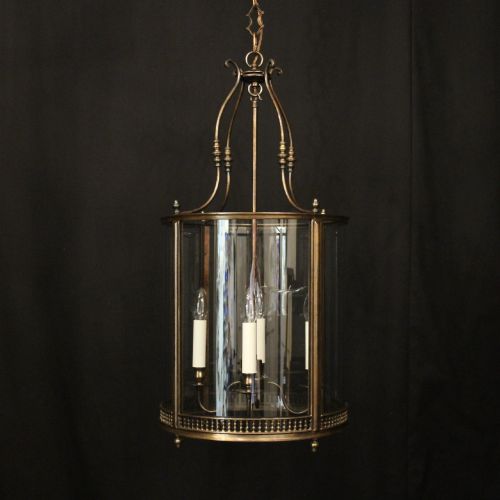
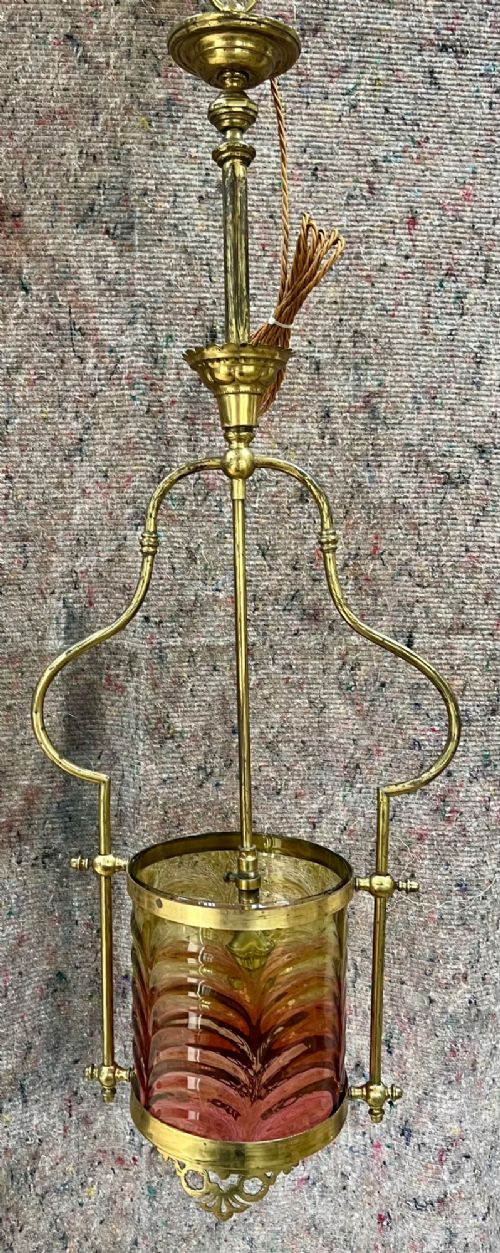
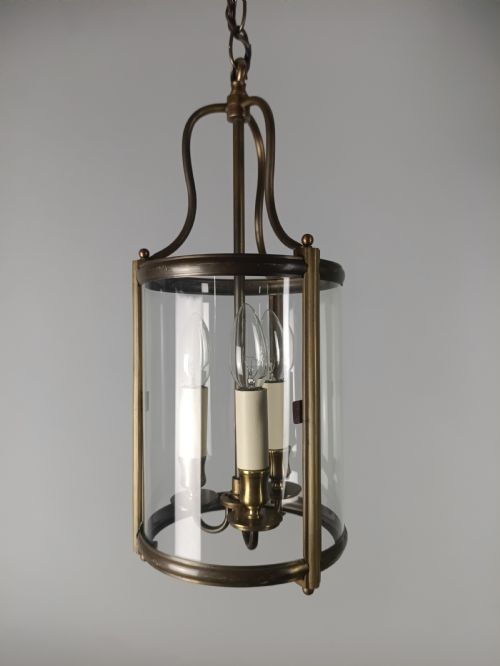
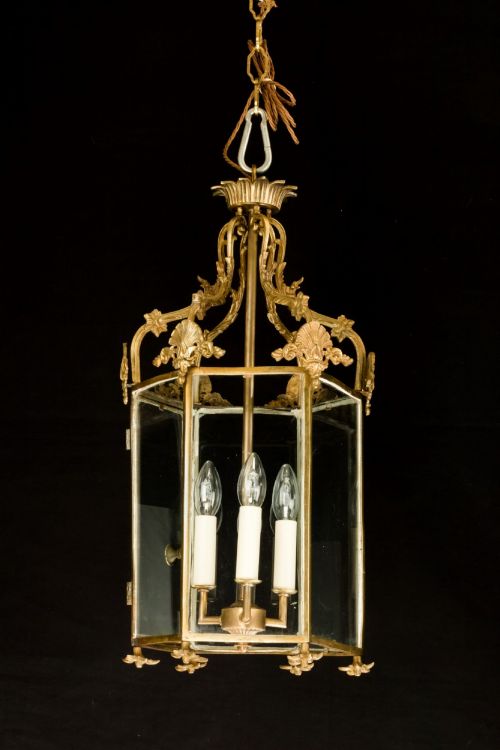
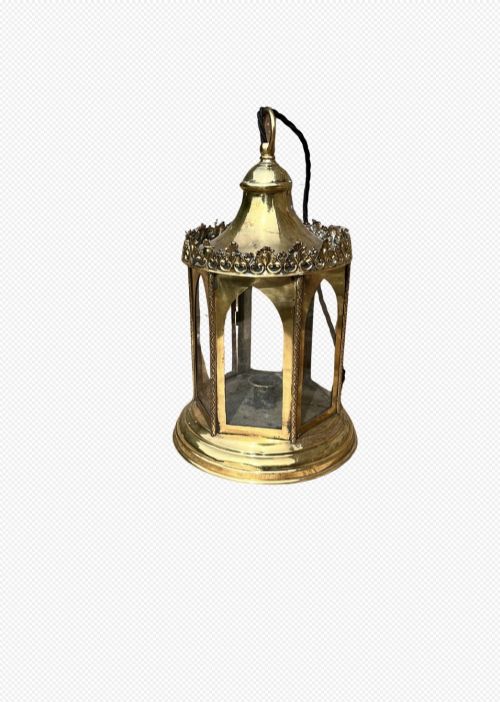
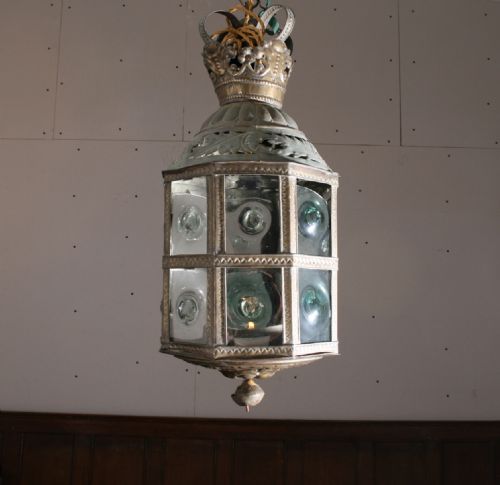
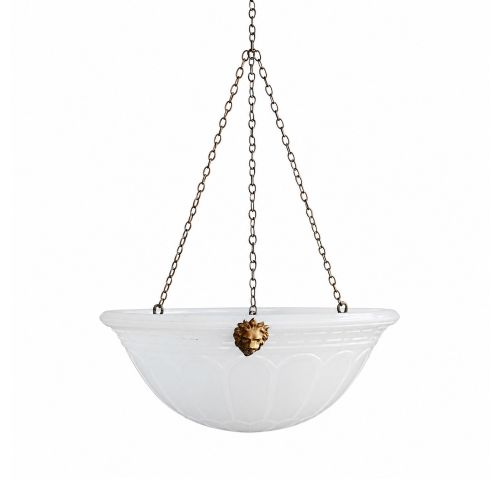
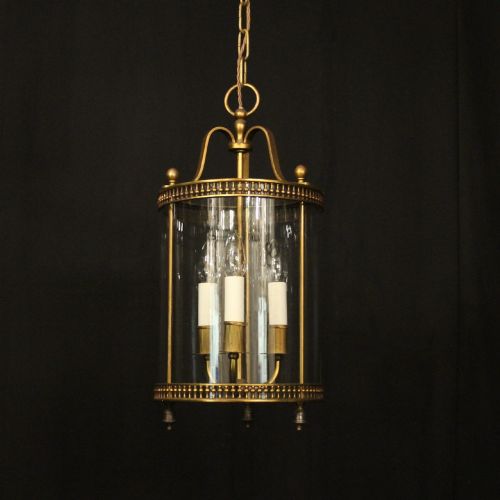
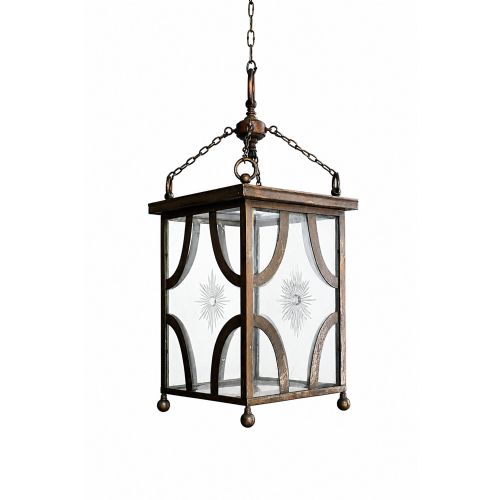
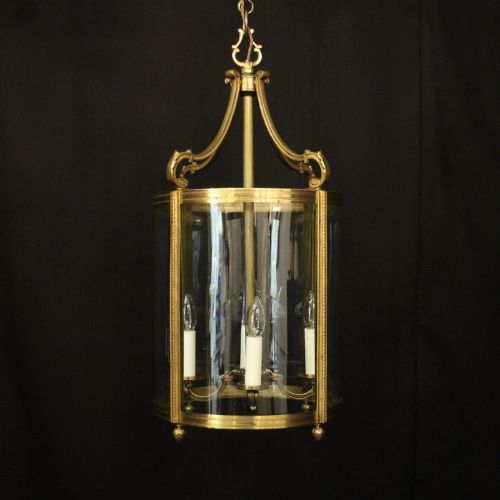
Traditional Glass Hall Lantern
Traditional glass hall lanterns command an entryway with period weight, casting a bright and welcoming spread of light through leaded or bevelled panes.
Traditional Glass Hall Lantern
A traditional glass hall lantern is an overhead hanging light designed specifically to illuminate entrance halls, corridors and stairwells in period properties. These fixtures provide vertical illumination while serving as a prominent architectural feature upon entering a home.
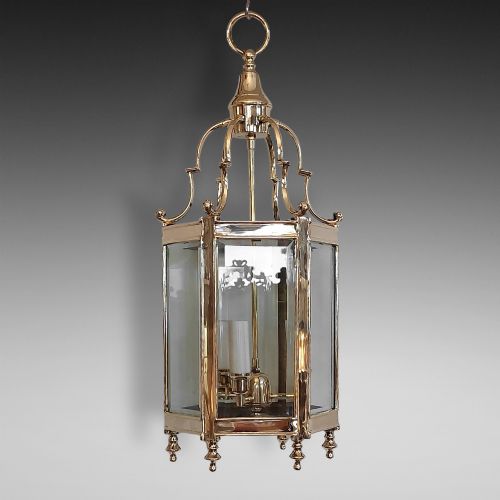
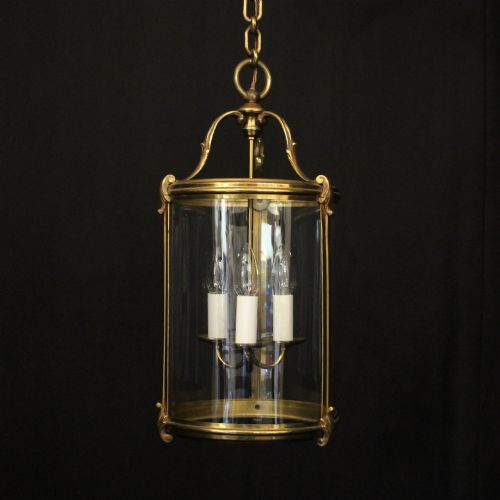
The pieces you encounter span from the late nineteenth century through to the interwar decades of the 1930s. Edwardian brass hexagonal frames and French gilded convex models appear with regularity across the selection.
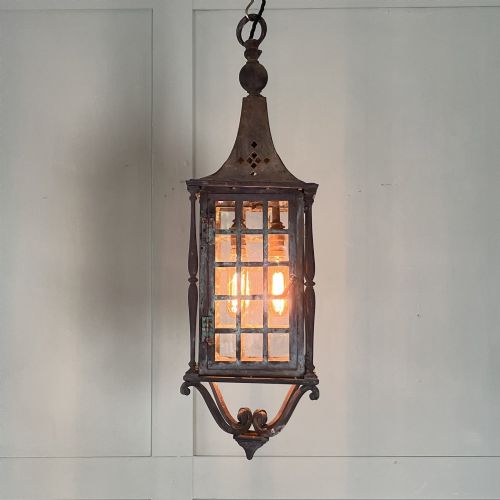
Makers and designers produced these hanging fixtures in various scales, from compact single-bulb vestibule pendants to large multi-light lanterns intended for high ceilings. Styles range from restrained Arts and Crafts brass designs to elaborate French Neoclassical and Gothic Revival examples.
How they were made
Metalwork forms the skeletal structure of these lanterns, utilising cast brass, gilded bronze, gilt brass and wrought iron to create sturdy frames capable of supporting heavy glass panels. Foundries shaped these metals through casting and forging before applying mercury gilding or polished finishes.
Glazing techniques dictate the character of the light emitted, employing hand-blown bullseye glass, moonstone panes, and thick bevelled or cut glass. Craftsmen secured these panels tightly into metal channels, often using lead cames or decorative brass glazing bars.
Early electricians cleverly converted candle sockets by dropping tiny brass sleeves over wiring pipes, hoping visitors would not notice the trick.
What varies in quality
The thickness and clarity of the glass panels separate standard fixtures from superior examples, particularly where heavy bevels or hand-blown distortions catch the illumination. Superior frames utilise cast bronze or heavy gauge brass rather than pressed sheet metal, providing structural rigidity and crispness to decorative mouldings.
Casting detail on the metal mounts reveals the hand of the original maker, with finer pieces displaying chased enrichment and robust suspension loops. The integration of multi-light internal clusters and original ceiling plates further distinguishes the ambition of the manufacture.
The Traditional Glass Hall Lantern Glossary
- Convex glass
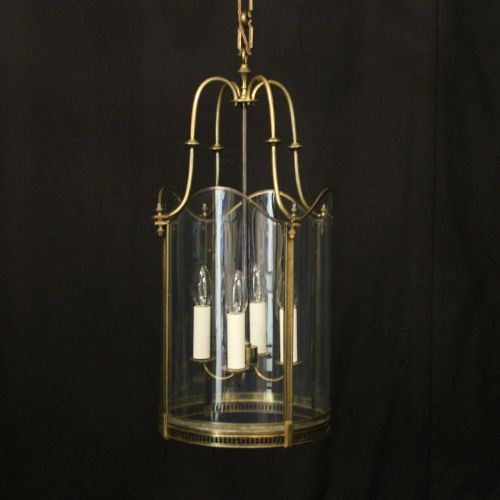
- Curved glass panels that project outward to diffuse light across a wider angle. This technique softens harsh interior bulbs.
- Bevelled glass
- Glass panes with angled edges ground and polished to create prismatic light effects. These edges catch and refract illumination.
- Bullseye glass
- Circular blown glass panes featuring a prominent central pontil mark from the glassblower's iron. They add historic texture to simpler frames.
- Hexagonal lantern
- A six-sided hanging light fixture that provides symmetrical illumination. This geometry suits narrow Victorian and Edwardian hallways.
Traditional Glass Hall Lantern: Frequently Asked Questions
How do I hang a hall lantern safely?
Suspension requires fixing directly into ceiling joists using a heavy-duty steel hook and chain rated to support the weight of cast metal and glass. Wiring should be inspected and updated by a qualified electrician to meet current standards.
Ensure the hanging height clears tall family members while positioning the fixture to flood the entryway with balanced illumination.
How do I clean delicate glass panels?
Remove dust using a soft dry microfiber cloth before applying a mild glass cleaner directly to the cloth rather than the fixture. This prevents moisture from seeping into aged metal joints or electrical components.
Exercise caution around gilded surfaces to preserve the original patination and delicate metal finishes.
What ceiling height suits a large lantern?
Grand multi-light lanterns require ceiling heights of three metres or more to hang correctly without dominating the circulation space. Standard entrance halls benefit from more compact single-bulb hexagonal or round pendants.
Allow sufficient clearance beneath the lowest point of the fixture for door swings and passage.