
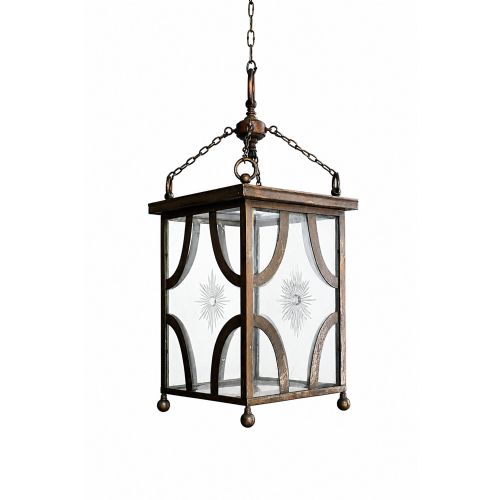


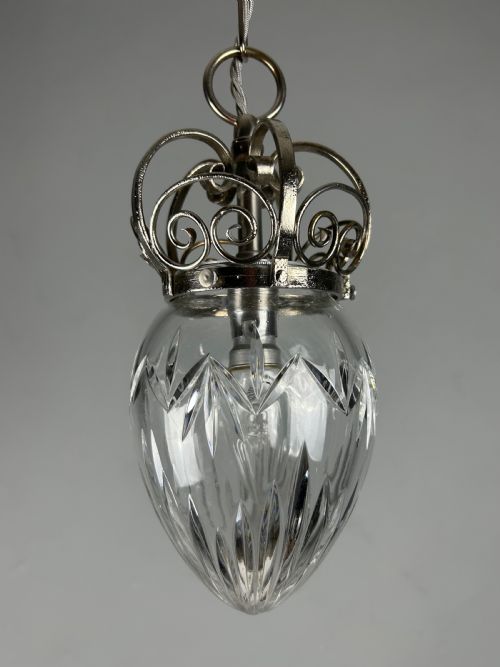


Cut Glass Hallway Light
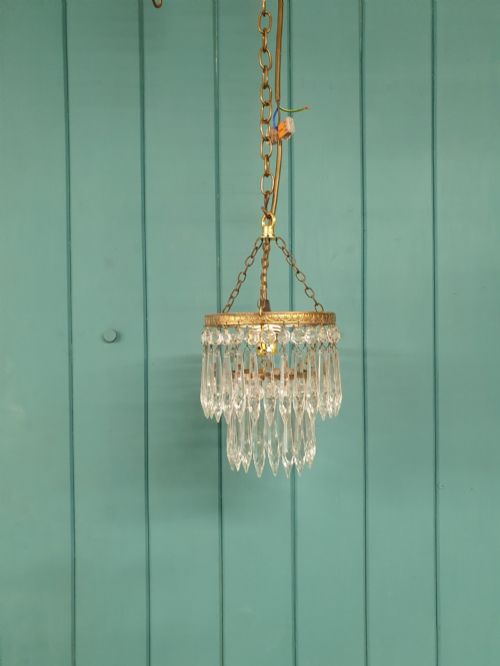
These cut glass hallway light fittings catch the light and command an entrance, offering brilliant illumination from the Edwardian era down to the nineteen-thirties.
Cut Glass Hallway Light
A cut glass hallway light spans styles from French Neoclassical and Empire to Art Deco, Edwardian, and Art Nouveau. Buyers searching this phrase meet pendant lights, ceiling lanterns, bag chandeliers, and bell jar lanterns designed to hang in vestibules and corridors.
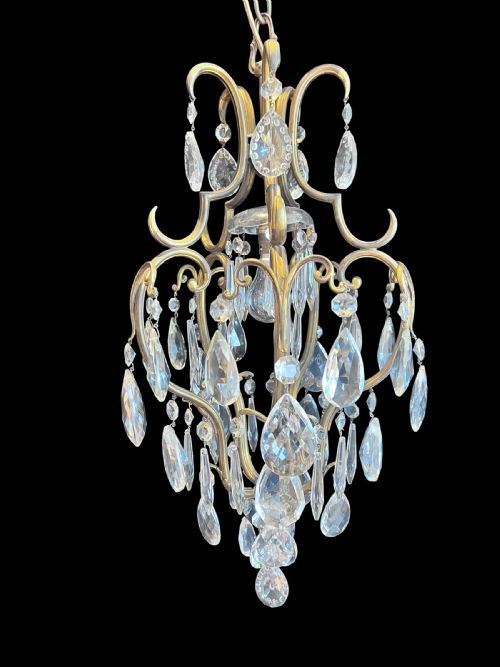
The material vocabulary of these pieces draws heavily upon brass, bronze, gilt bronze, copper, and chrome settings holding hand-blown and moulded crystal. English, French, and Bohemian workshops produced these fixtures across the nineteenth and twentieth centuries.
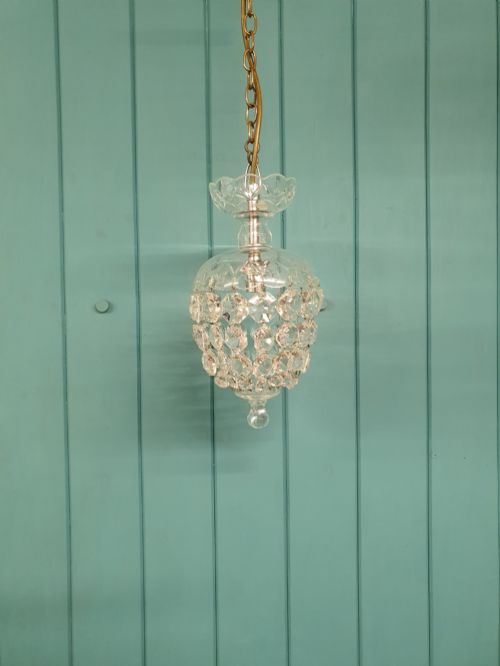
The most frequent examples seen on this page date from the Edwardian period and the nineteen-twenties, incorporating beaded fringes, crystal spikes, or acorn plafonnier forms. They range from small porch lanterns measuring a few inches to large chandeliers.
How they were made
Makers built these lanterns and chandeliers around metal armatures of cast brass, bronze, or chrome, attaching individual glass components with wire or pins. Metal frames provided the structural skeleton for heavy glass bell jars, panels, and frames.
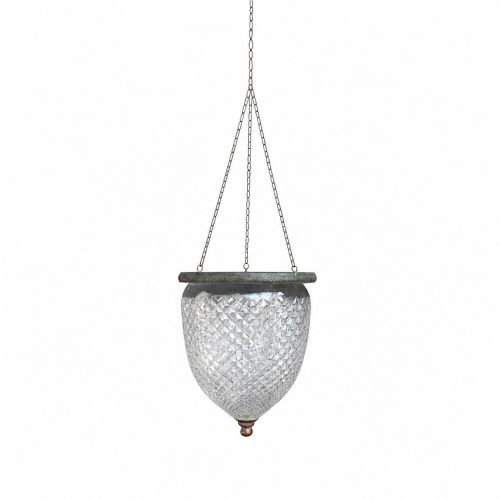
The glass elements combined hand-blown bell jars with diamond-cut crystal drops, prisms, and moulded shades. Craftsmen cut geometric patterns into the surface of the glass to refract light in multiple directions.
Mounts and fixings frequently employed gilt bronze or polished brass to complement the brilliance of the crystal and glass drops. Some fixtures incorporated delicate beaded strings or red glass drips for decorative effect.
Some Edwardian chandeliers hide tiny red glass drips among the crystal drops, adding a sudden splash of colour when the lamps are lit.
What varies in quality
The distinction between ordinary and exceptional lanterns rests upon the crispness of the glass cutting and the weight of the metal mount. Heavier cast brass and gilt bronze frames with deeply faceted crystal prisms represent the higher tiers of production.
Proportion and integrity of the original glass components dictate the character of each piece. Fixtures retaining matching sets of hand-cut drops, bezels, and blown glass bells display a visual harmony absent in mixed or later replacements.
F and C Osler
The Cut Glass Hallway Light Glossary
- Plafonnier
- A ceiling-mounted bowl light or flush-fitting pendant. This form sits close to the ceiling of a hallway.
- Bag chandelier
- A light fixture featuring a flattened or bag-shaped mass of cascading crystal drops suspended from a metal ring. These refract light densely within confined spaces.
- Bell jar lantern
- A hanging light enclosed by a bell-shaped glass jar, often diamond cut and bound in metal mounts. It protected the burner or bulb from draughts in corridors.
- Prism
- A cut glass pendant designed to break white light into spectral colours. Prisms hang from the metal frames of chandeliers and lanterns.
- Gilt bronze
- Bronze coated with a thin layer of gold, frequently used in French style mountings. This technique adds a warm metallic lustre to the fixture.
Cut Glass Hallway Light: Frequently Asked Questions
How do I hang a heavy hallway lantern?
These fixtures require secure anchoring to a ceiling joist or a heavy-duty electrical box capable of supporting the combined weight of metal and crystal. Professional installation ensures the hanging chain and wiring bear the load safely.
Ceiling height dictates the drop of the chain or rod. A hallway light should hang high enough to clear foot traffic and door swings while remaining in proportion to the volume of the space.
How do I clean cut glass?
Remove loose dust with a soft brush before washing glass components with warm water and mild soap. Support dangling drops carefully to prevent strain on the connecting wire.
Dry each crystal prism and glass panel with a lint-free cloth to restore maximum brilliance. Avoid harsh chemical cleaners that can damage the antique brass or bronze metalwork surrounding the glass.
Are these lights rewired for modern use?
Many period fixtures arrive with updated electrical wiring suitable for standard domestic supply. Rewiring preserves the historic frame while meeting current safety standards.
Buyers should consult a qualified electrician to verify that the lampholders and internal circuits match modern voltage requirements. This step guarantees safe operation in daily use.
How do I date an Edwardian hallway light?
Edwardian light fittings often display characteristic motifs such as floral brass castings, delicate beaded crystal fringes, and restrained Neo-Georgian lines. Construction details like threaded brass screws and early textile-wrapped wiring help confirm the era.
Comparing the proportion of the brass gallery to the cut glass shade provides further clues to the period. Edwardian pieces balance decorative presence with functional proportion for townhouses and suburban villas.