
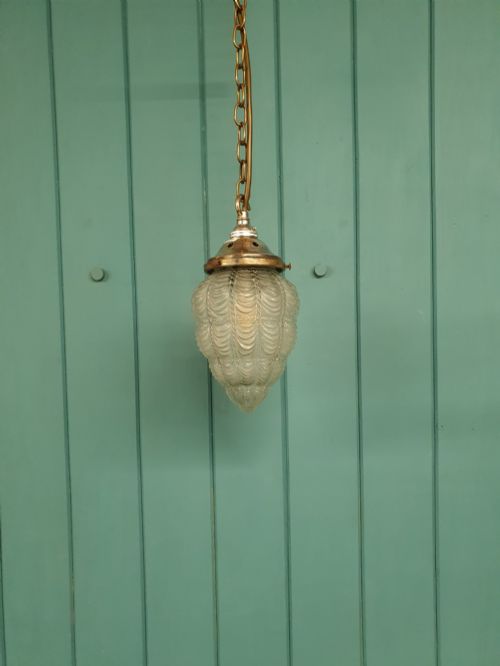


Clear Glass Hall Lantern
These clear glass hall lanterns hang in entranceways to catch and diffuse the light.
Clear Glass Hall Lantern
A clear glass hall lantern offers practical illumination for corridors and entranceways while bringing period character to a property. Buyers searching for a clear glass hall lantern will find pieces ranging from late Victorian examples to 1930s designs.
The selection on this page centres primarily on 19th-century and early 20th-century pieces, including Edwardian and 1920s variants. These light fittings frequently take the form of pendant lanterns, bell jar lanterns and hanging lamps.
Origins span English and French workshops, encompassing styles from Regency and Neoclassical to Louis XIV and French Chateau. Most examples combine glass bodies with brass, gilt bronze or metal frames.
Materials and construction
Makers constructed these hanging lanterns using brass, gilt bronze and metal frames to house various forms of glass. The glass components appear as cut glass, pressed glass, moulded glass, crystal and hand-blown diamond-cut crystal.
Workshops employed metalworking techniques to cast and shape the structural mounts, securing individual glass panels or blown bell jars within the metal framework. Surface decoration on the frames draws on Neoclassical and French design traditions.
One recorded piece comes after Versailles.
Assessing quality
The standard of a clear glass hall lantern depends heavily on the clarity and cut of the glass itself, alongside the weight and casting quality of the brass or gilt bronze frame. Hand-blown and diamond-cut crystal elements demonstrate superior craftsmanship compared to standard pressed panels.
Proportion and decorative detail also distinguish finer examples, particularly where frames incorporate intricate French Neoclassical or Louis XIV style ornamentation rather than plain industrial metalwork.
The Clear Glass Hall Lantern Glossary
- Bell jar lantern
- A hanging light featuring a curved bell-shaped glass body enclosed in a metal frame, often associated with 19th-century hallways.
- Cut glass
- Glass decorated by grinding and polishing facets onto the surface, creating enhanced light refraction.
- Gilt bronze
- Bronze coated with a thin layer of gold, providing a rich metallic finish seen on finer period mounts.
- Pressed glass
- Glass shaped by pressing molten material into a mould, common in later production pieces.
- Hexagonal lantern
- A hanging light fixture featuring six distinct glass panels set within a six-sided metal framework.
Clear Glass Hall Lantern: Frequently Asked Questions
Where should I hang a hall lantern?
These lanterns suit entrance halls, vestibules and corridors where ceiling height allows for a hanging pendant.
Their primary function is to provide welcoming ambient illumination near an entryway.
How do I date a brass and glass lantern?
Dating relies on examining the style of the metal mount, the manufacturing method of the glass, and construction details such as fixings.
Edwardian and Victorian pieces often display heavier cast brass and hand-finished glass panels.
Can these antique lanterns take modern wiring?
Most period hanging lanterns accept standard contemporary lamp fittings and bulbs when installed by a professional electrician.
Rewiring preserves the historic exterior while meeting current safety standards.