

Antique Glass Ceiling Fitting
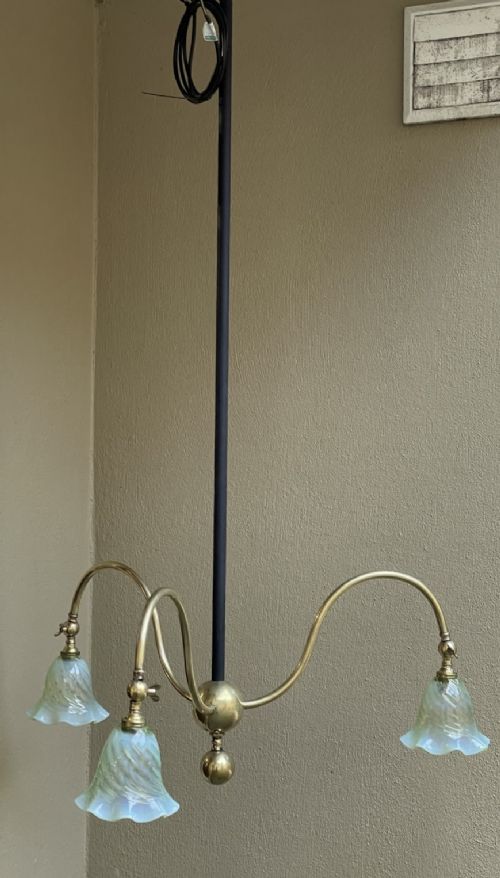
These antique glass ceiling fitting examples bring period character overhead, spanning Edwardian designs and mid-century styles.
Antique Glass Ceiling Fitting
An antique glass ceiling fitting provides illumination while anchoring a room's decorative scheme. Buyers searching this phrase encounter hanging fixtures designed to mount directly against the ceiling or suspend on chains.
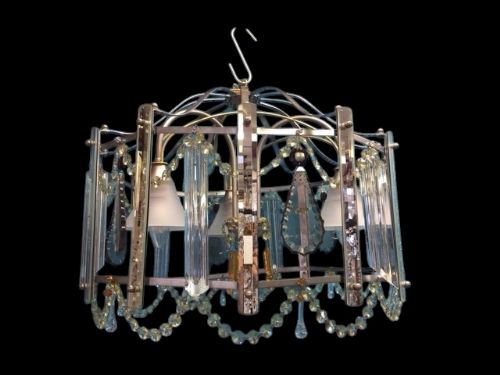
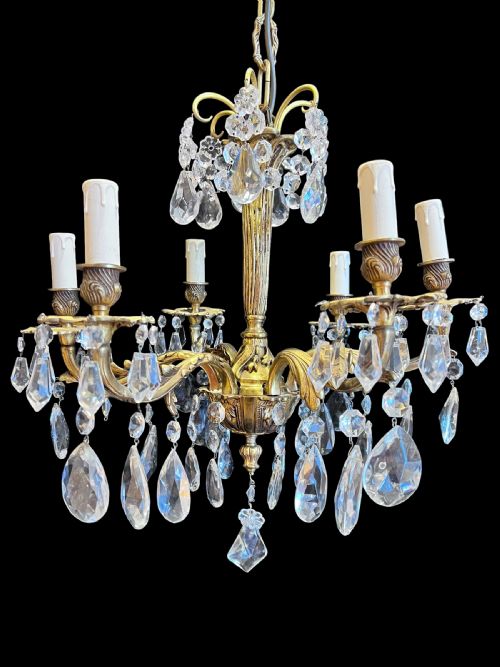
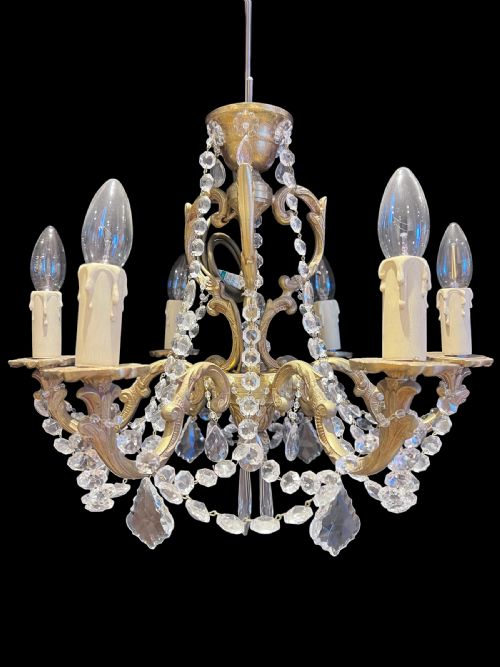
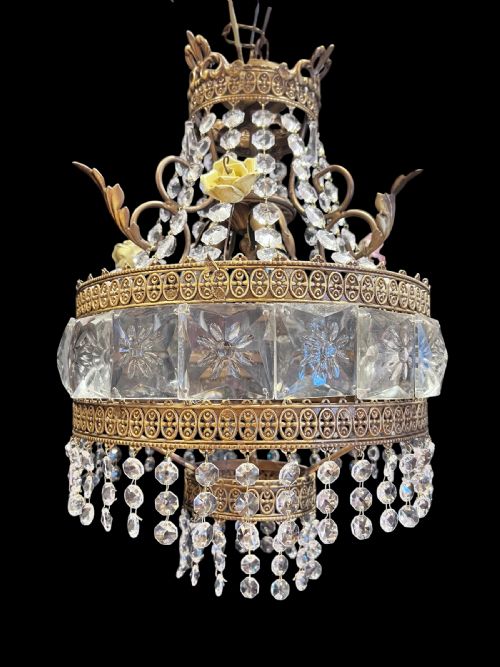
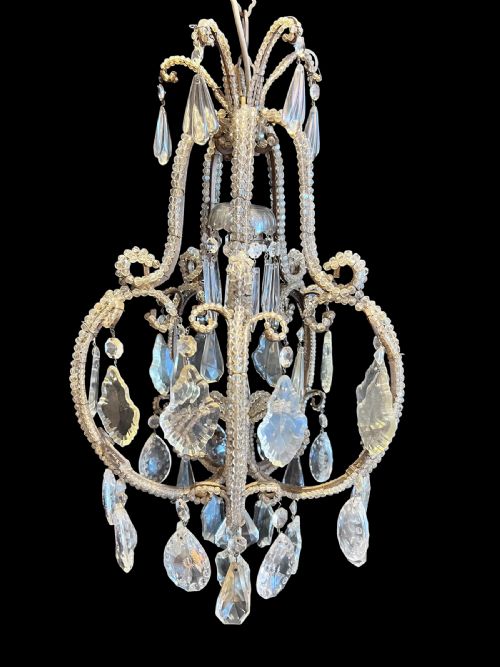
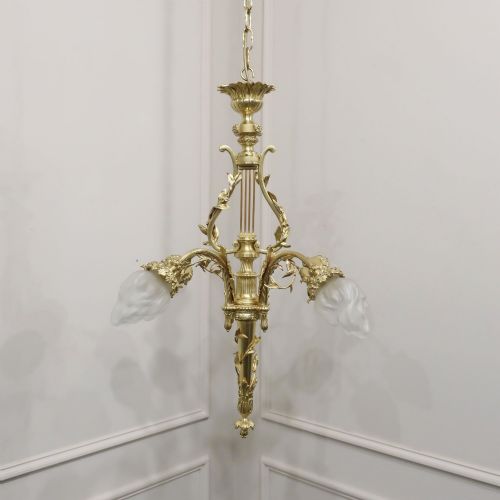
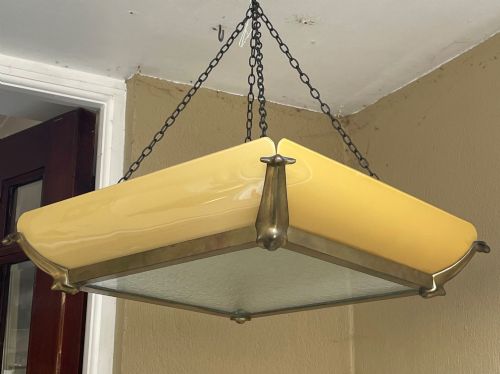
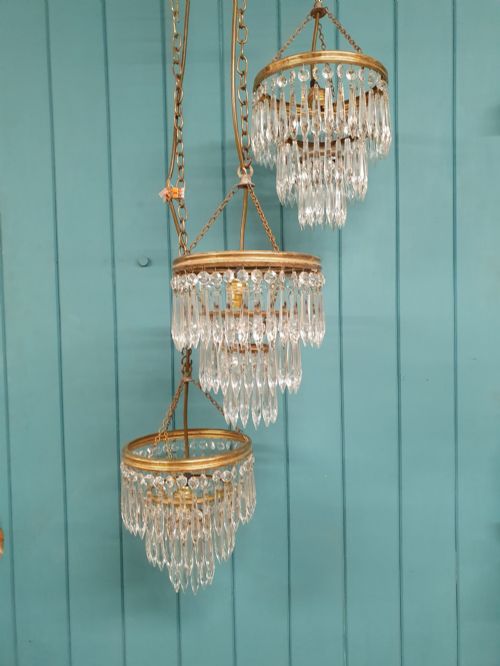
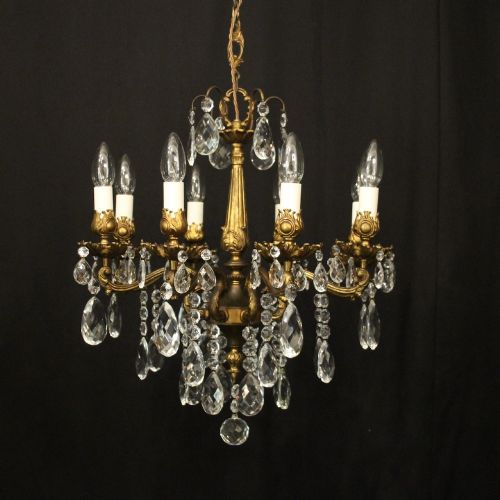
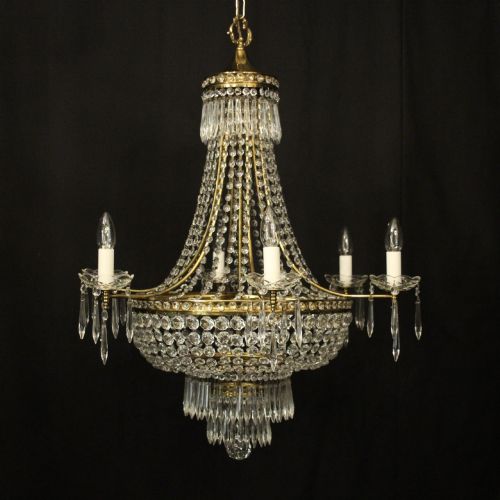
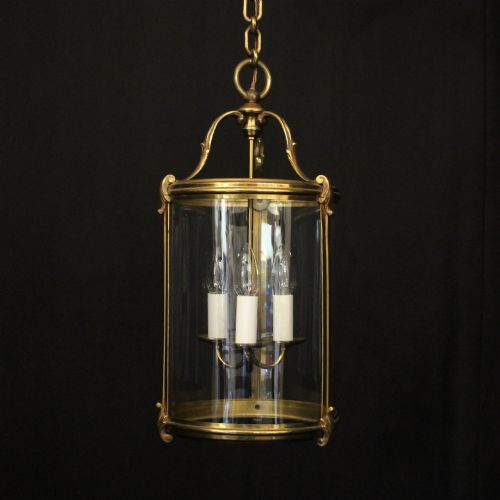
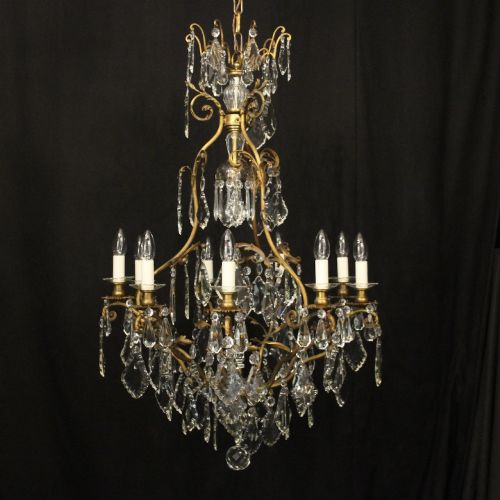
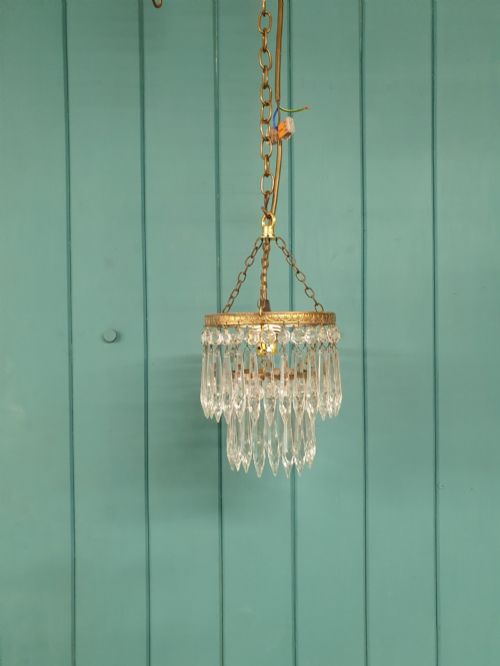
The selections on this page lean heavily toward French gilded bronze, brass, and cut glass configurations alongside Edwardian and industrial pendant lights. Common forms include multi-light tent and waterfall chandeliers, hall lanterns, and compact dome fixtures.
Originating across the late nineteenth and early twentieth centuries, these lights draw upon styles from French Rococo and Empire to Art Deco and Arts and Crafts. Pieces range from modest single-light fixtures to grand multi-branched chandeliers suitable for large spaces.
How they were made
Mounts and frames typically utilise cast brass, gilt bronze, or spelter, providing a sturdy metallic armature for the glass elements. Artisans assembled these frameworks to support the significant weight of hanging crystals and shades.
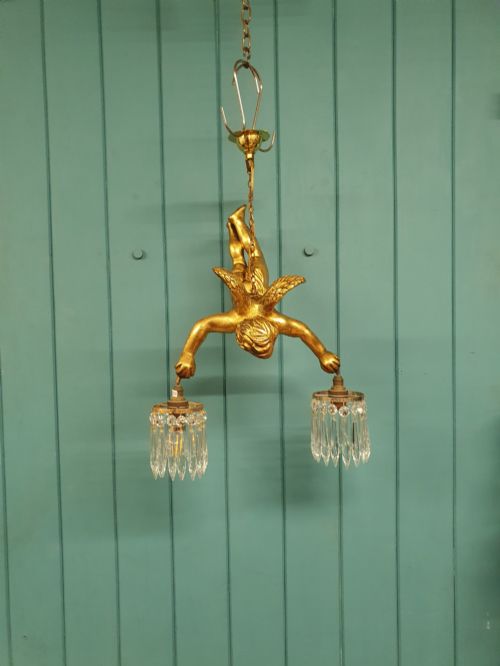
Glass components combine mould-blown shades, pressed crystal prisms, and cut glass drops secured by wire pins. Specialised metalworking techniques allowed makers to fashion intricate decorative details like flying cherubs, leaf designs, and porcelain flowers.
The listings encompass items spanning from the nineteenth century through the 1940s, utilising brass, bronze, crystal, and metal.
What varies in quality
The refinement of the metal casting and the precision of the glass cutting dictate the standard of an antique glass ceiling fitting. Finer examples display crisp chasing on gilt bronze mounts and deeply faceted crystals that refract light cleanly.
Structural integrity and the retention of matching original components, such as specific prism types and coloured crystals, elevate a piece. Coherent stylistic execution across both the metal armature and glass drops marks the distinction between standard and superior production.
The Antique Glass Ceiling Fitting Glossary
- Crystal
- High-lead content glass used in lighting to maximise light refraction and brilliance. It is cut and polished into various shapes for hanging prisms.
- Tent and waterfall
- A chandelier configuration featuring a gathered upper canopy of glass beads forming a tent shape above a cascading lower tier of crystals. This design became popular during the nineteenth and early twentieth centuries.
- Spike chandelier
- A compact hanging light fixture characterised by a central vertical spike surrounded by glass prisms and metal work. These pieces often measure compactly for lower ceiling heights.
- Gilt bronze
- Metalwork finished with a thin layer of gold or gold-coloured alloy applied to bronze, also known as ormolu. It offers a warm, durable metallic sheen on decorative mounts.
- Plafonniere
- A ceiling-mounted bowl or shallow shade fixture positioned close to the plaster. This form suits rooms with restricted vertical clearance.
Antique Glass Ceiling Fitting: Frequently Asked Questions
How do I choose the right size ceiling light?
Consider the room dimensions and ceiling height carefully before selecting a fixture. Compact dome chandeliers or downlight pendants suit lower spaces, whereas multi-light tent configurations require adequate vertical drop.
Proportion matters in relation to surrounding furniture and floor space. Larger multi-branch pieces anchor expansive rooms, while smaller six-inch fixtures fit narrower hallways or intimate areas.
How do I clean an antique glass chandelier?
Regular dusting with a soft microfibre cloth prevents grime accumulation on delicate metal and glass surfaces. For deeper cleaning, remove individual crystals carefully and wash them in warm soapy water.
Avoid harsh chemical cleaners that might strip gilding or damage patinated brass frames. Ensure the fitting remains disconnected from the electrical supply throughout any maintenance.
What styles are common in these antique fittings?
The inventory reflects diverse aesthetic movements spanning the Victorian era through the mid-twentieth century. French Empire and Rococo Revival styles feature prominently alongside Edwardian, Art Deco, and industrial designs.
Materials range from ornate gilt metal and coloured crystals to functional Holophane glass and simpler brass frames. Each style mirrors the architectural preferences of its period.