

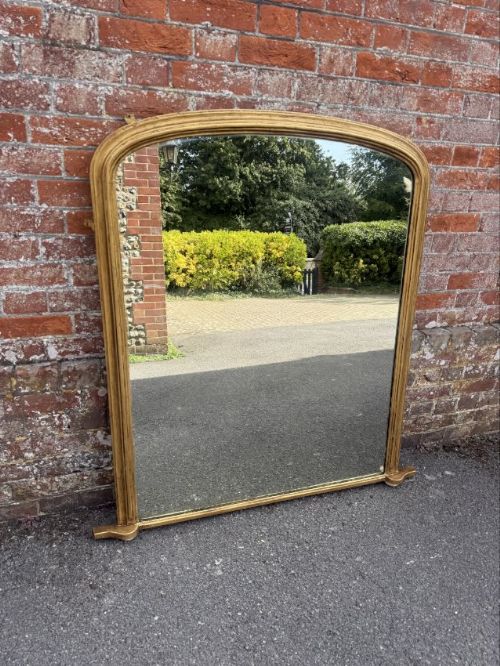
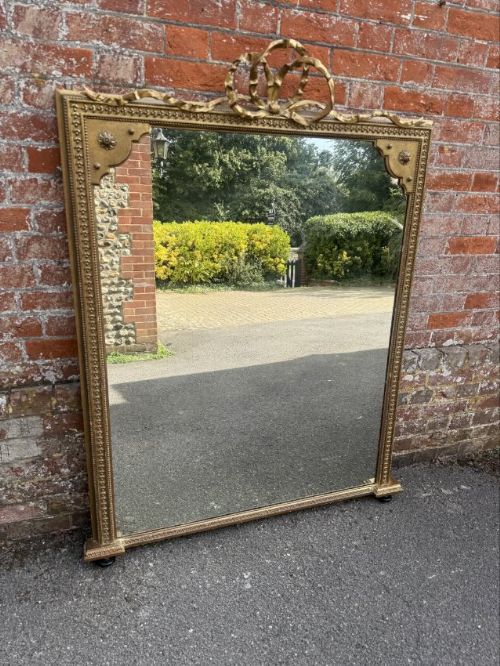
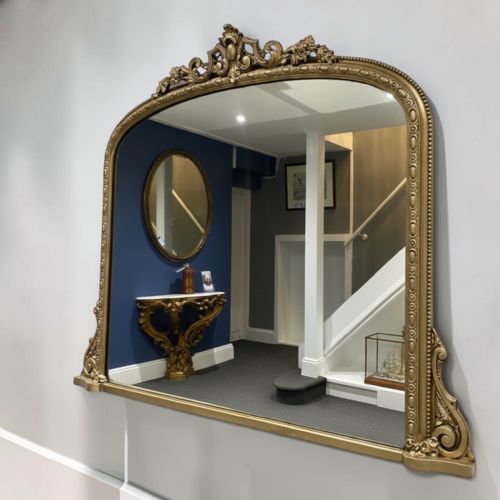
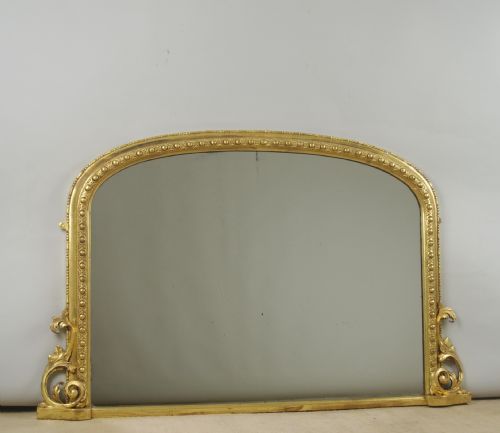

Traditional Gilt Mantle Mirror
A traditional gilt mantle mirror brings grand nineteenth-century presence and reflective light to a room.
Traditional Gilt Mantle Mirror
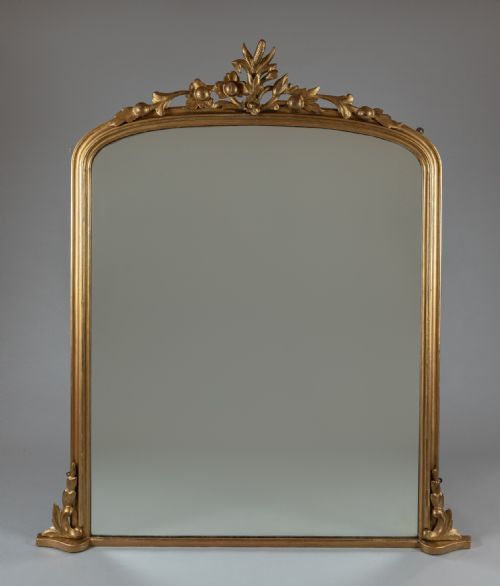
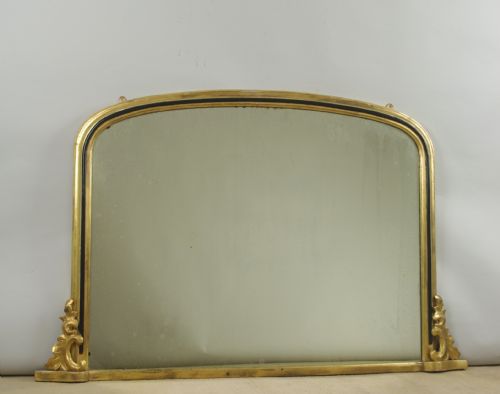
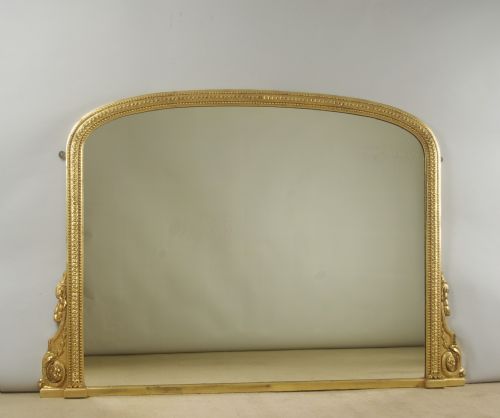
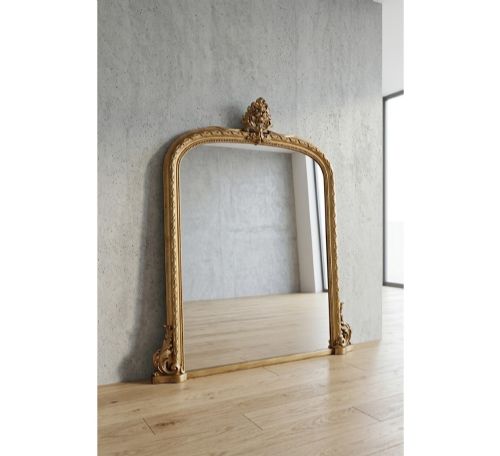
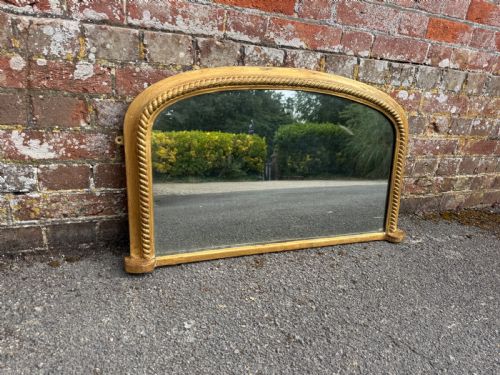
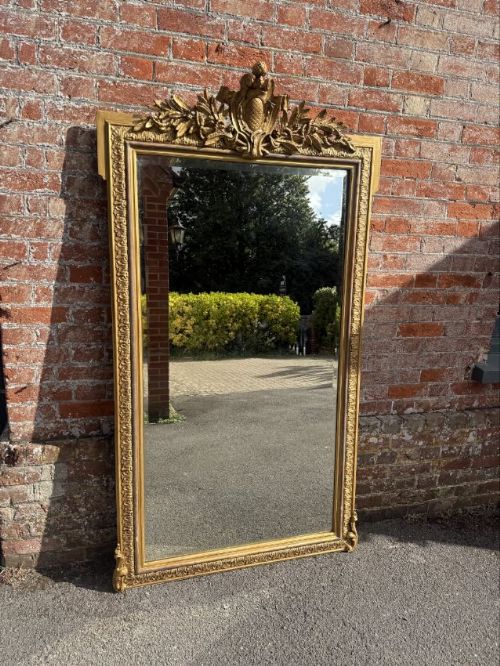
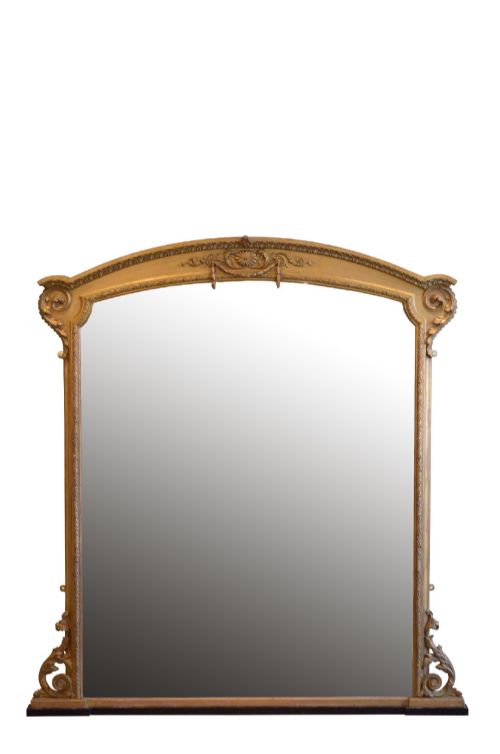
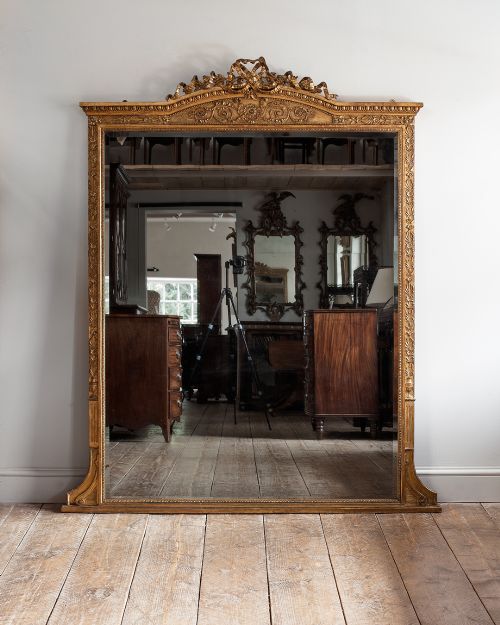
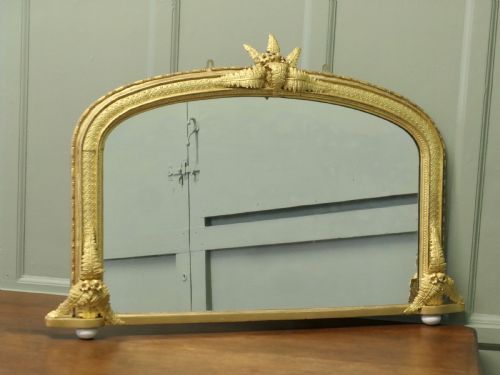
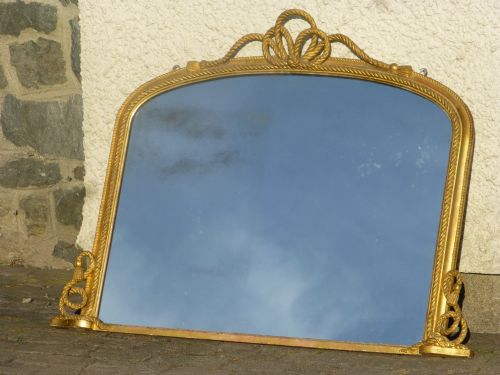
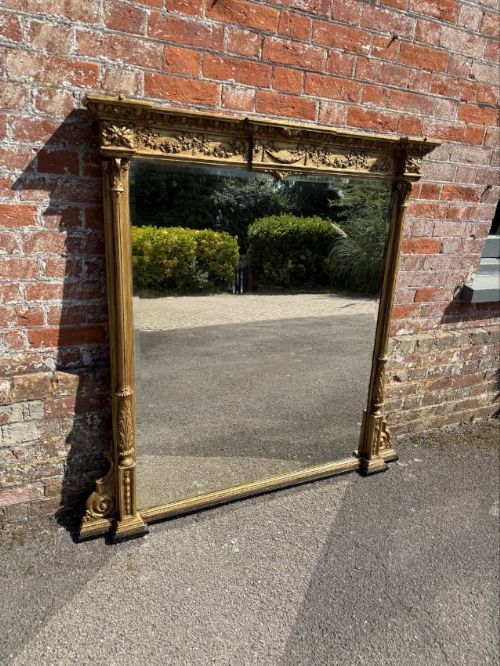
A traditional gilt mantle mirror is typically a large, arched overmantel piece designed to sit above a fireplace. The pieces seen here span the Victorian era, the nineteenth century generally, and into the early twentieth century.
Most examples found on this page take the form of overmantel mirrors with prominent arch tops or rectangular proportions suited to period chimneys. Makers of these pieces drew upon styles such as French Rococo Revival, Regency, and Georgian influences.
English and French origins dominate the inventory, built specifically to anchor large drawing rooms and parlours with substantial architectural scale.
How they were made
Carved wooden foundations of pine or oak provide the sturdy internal framework for these heavy glass assemblies. Artisans then applied layers of gesso, a fine plaster mixture, to the wood to build up ornate surface reliefs.
Gilding involved the application of delicate gold leaf or gold paint over the prepared gesso and carved details. Many frames also incorporate composition ornaments, a moulded paste pressed into shape and applied to the wooden carcase for intricate decoration.
Traditional Gilt Mantle Mirror Retail Price Guide 2026
Typical asking prices for traditional gilt mantle mirror among the pieces listed under this phrase on Sellingantiques today, from the lower quarter to the upper quarter. They describe what is for sale here now, not the wider market.
What varies in quality
The depth and crispness of the hand-carved wood and moulded gesso ornamentation dictate the refinement of the piece. Surfaces with sharper botanical or architectural motifs display superior artisan skill compared to softer, more uniform castings.
The integrity of the original gilding and the preservation of the antique mirror glass itself mark the distinction between ordinary and exceptional examples. Frames retaining their original gold leaf finish and authentic reflective plates hold greater integrity.
The Traditional Gilt Mantle Mirror Glossary
- Overmantel mirror
- A large mirror specifically proportioned to hang on the wall directly above a fireplace mantelpiece. These frames often feature lower feet or horizontal bases designed to rest safely on the shelf itself.
- Gesso
- A mixture of chalk, gypsum, and binder applied to wooden mirror frames to create a smooth surface for gilding. This material allows artisans to carve or impress intricate relief patterns before applying gold leaf.
- Giltwood
- Timber that has been gilded with a thin layer of gold leaf or powder. It forms the primary luminous finish for nineteenth-century decorative frames.
- Composition
- A mouldable mixture of whiting, resin, linseed oil, and glue used to form decorative reliefs on picture and mirror frames. Often abbreviated as compa, it offered a cost-effective alternative to deep hand-carving.
- Arch top
- A curved upper frame profile characteristic of nineteenth-century wall and mantle mirrors. This silhouette softens the rigid lines of a traditional fireplace surround.
Traditional Gilt Mantle Mirror: Frequently Asked Questions
Where should I hang a mantle mirror?
These large pieces find their natural home directly above a fireplace mantelpiece, where their proportions balance the hearth below. They also function effectively on main reception room walls to bounce natural daylight across the space.
Ensure the wall construction and fixings can support substantial weight, as nineteenth-century wooden frames combined with thick glass are remarkably heavy.
How do I clean a gilt frame?
Dust the ornate carved and gesso surfaces gently using a very soft dry brush or a feather duster. Avoid liquid cleaners, moisture, and chemical sprays, which can strip away fragile historic gold leaf.
Keep the glass plate clean with a standard glass cleaner applied to a cloth rather than sprayed directly near the delicate gilt wooden border.
Are these mirrors original antique pieces?
The inventory on this page consists of authentic nineteenth-century and early twentieth-century items dating from periods like the Victorian era. Materials such as old mirror glass, gesso, and carved wood reflect genuine historical manufacture.
Examine the backboards, fixings, and the oxidation on the glass plate to understand the age and original construction of each individual mirror.
What does rope twist mean?
Rope twist refers to a carved or moulded decorative pattern winding around the frame in a helical spiral resembling twisted cord. This nautical-inspired motif adds textural movement to the rectilinear or arched borders.
Found on several Victorian examples, this detail breaks up flat wooden surfaces and showcases the precision of the woodworker.