
Traditional Genre Oil Painting
Traditional genre oil painting captures domestic scenes and everyday narratives, offering a glimpse into past lives through meticulous brushwork.
Traditional Genre Oil Painting
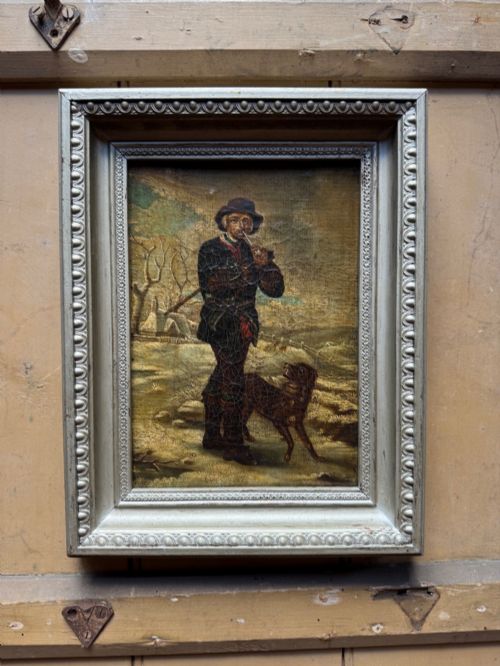
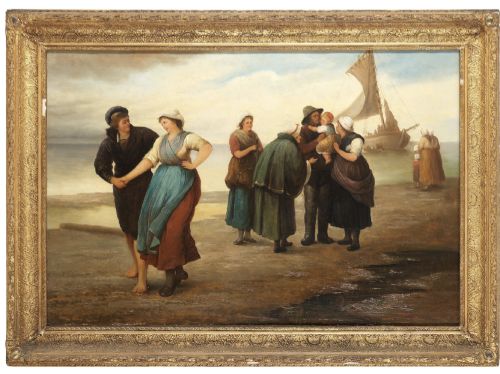
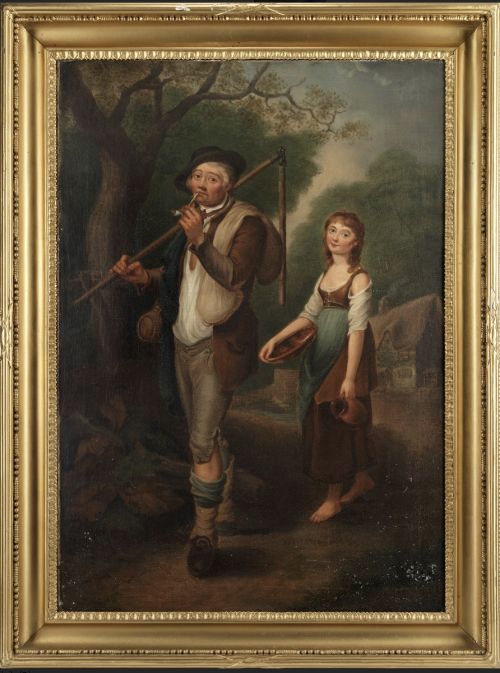
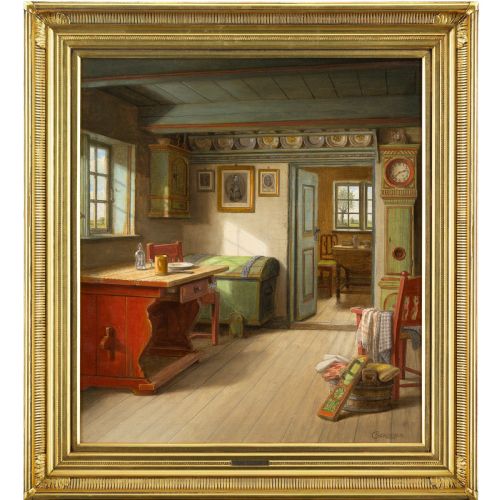
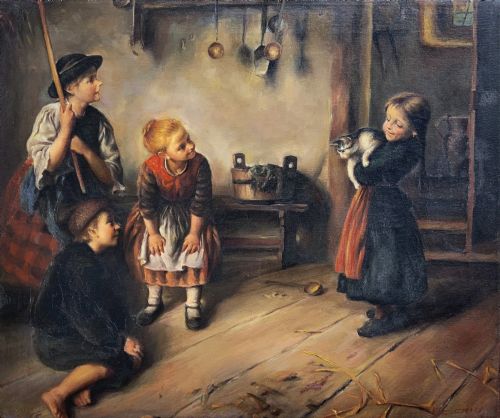
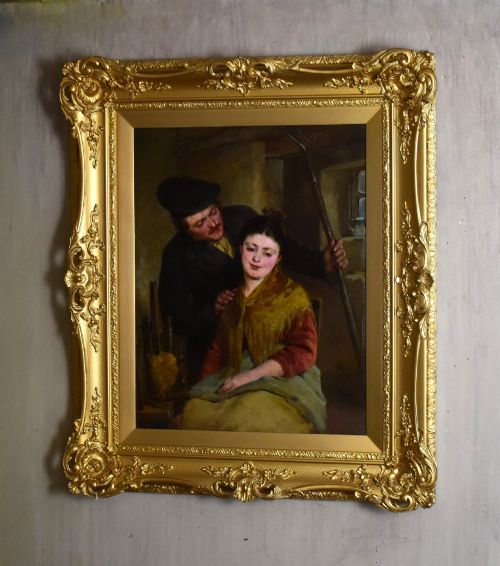
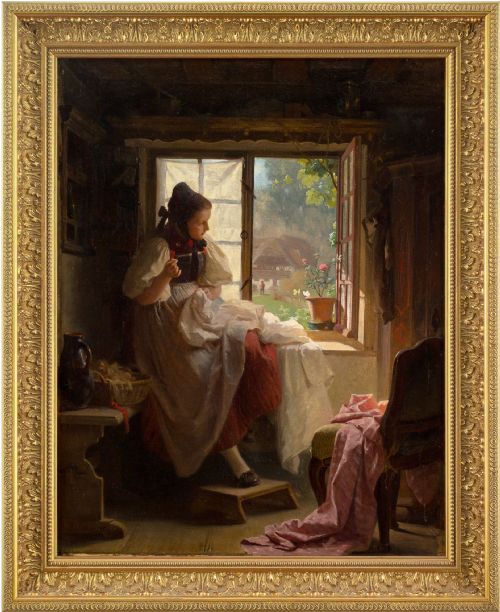
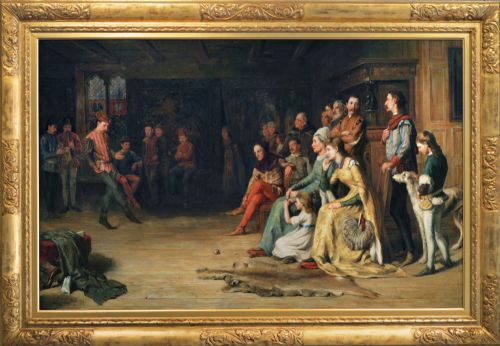
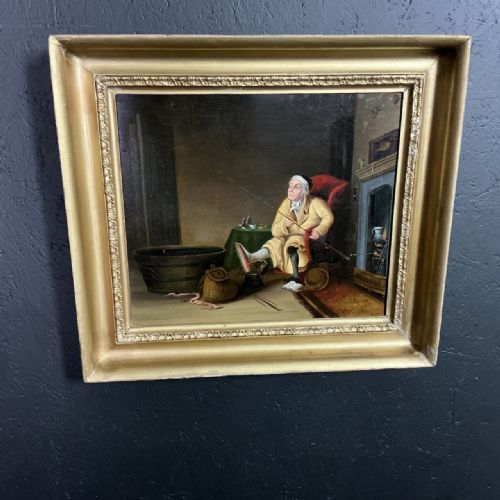
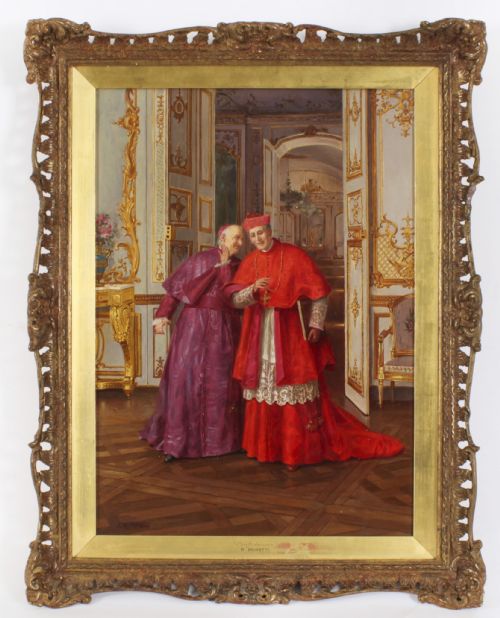
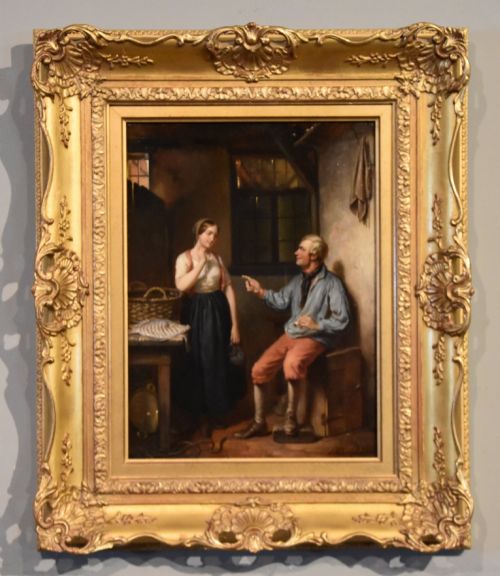
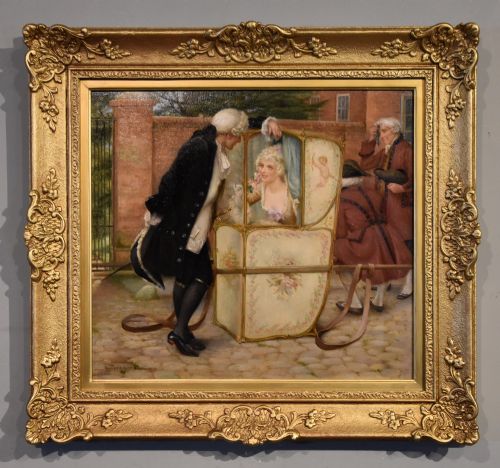
A traditional genre oil painting depicts scenes of everyday life, domestic interiors, and human narratives rather than grand historical events or formal portraits. These works frequently show figures engaged in routine activities, such as children playing, card players, or domestic workers in cottage settings.
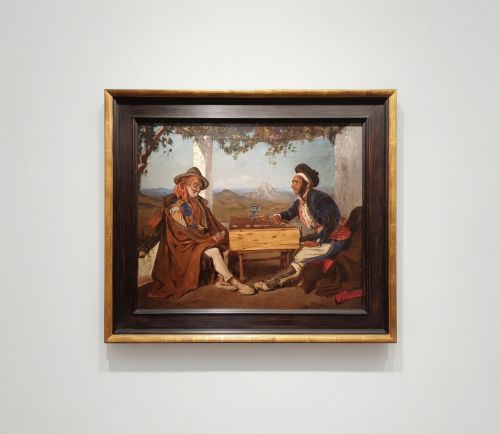
The pieces available here stem largely from the nineteenth century, including Victorian and Edwardian examples, alongside French, Dutch, and Scottish school representations. Subjects range from tavern interiors and card players to quiet moments by a window or fireside.
Many items present signed compositions by listed artists or originate from distinct European traditions, spanning panels, canvases, and boards enclosed in period frames.
Materials and technique
These works rely fundamentally on oil paint applied to prepared supports such as canvas, wood panel, or board. Artists built compositions using layered pigments to achieve depth in interior lighting and fabric textures.
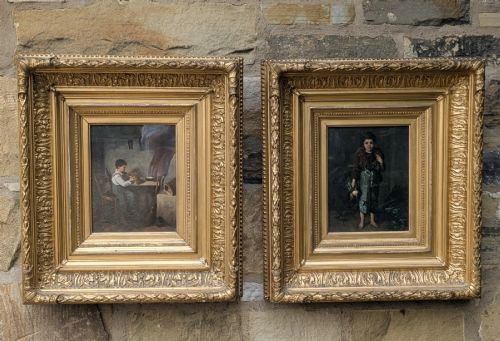
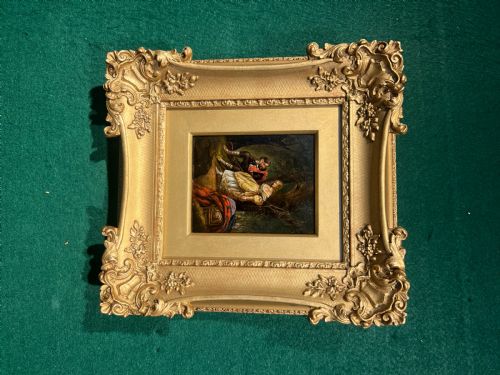
Many pieces retain their original or period framing, constructed from wood with gesso ornamentation and finished in gold leaf or giltwood highlights. The interaction between the oil medium and the wooden support dictates the preservation and tactile quality of each surface.
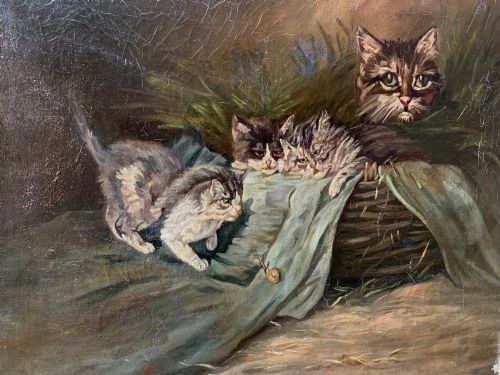
Snails, kittens, chimney sweeps, and card-playing Spaniards all share domestic canvas space in this gathering.
Distinctions in execution
The cohesion of the composition and the preservation of the original paint layer distinguish superior examples. Furthermore, the craftsmanship of the accompanying giltwood or gesso frame contributes to the overall integrity of the piece.
Thomas Barker of Bath·Howard Helmick·James Hamilton·Max Kaltenmoser·Jacob Akkersdijk·Delapoer Downing·Thomas Kent Pelham·Harry Brooker·David Teniers·John Arthur Lomax·Charles Haigh Wood·Frank Moss Bennett·Haynes King·John Sanderson Wells·James Kyd·David Teniers II·Henry John Yeend King·Friedrich von Kaulbach·John Robert Dicksee·Ferruccio Vitale·Arthur Longley Vernon
The Traditional Genre Oil Painting Glossary
- Genre painting
- Artwork depicting scenes from everyday life, ordinary people, and domestic interiors. This category forms the core of the selection.
- Gesso
- A plaster-like mixture applied to wooden frames or panels to prepare the surface for gilding or painting. It provides a smooth base for gold leaf application.
- Oil on Canvas
- Pigments bound in an oil medium spread across a stretched woven fabric support. This combination dominates nineteenth-century production.
- Giltwood
- Wood carved and coated with gold leaf or metallic paint. It frequently forms the decorative frames enclosing these paintings.
Traditional Genre Oil Painting: Frequently Asked Questions
What defines a traditional genre oil painting?
These works portray scenes of daily life, domestic interiors, and human interaction rather than official portraits or historical narratives. They capture moments like cottage gatherings, tavern scenes, and quiet domestic chores.
Created primarily in the nineteenth and early twentieth centuries, they reflect the social settings and artistic conventions of their respective periods across European schools.
How should I display an oil painting at home?
Displaying these works involves placing them away from direct sunlight and excessive moisture to protect the oil paint and wooden supports. Adequate wall space allows the composition and period frame to be viewed clearly.
Matching the frame to the surrounding interior helps integrate the piece, while stable room temperatures ensure the longevity of the canvas and gesso.
How can I identify the period of a painting?
Dating relies on stylistic clues, costume details, the preparation of the canvas or board, and the construction of the frame. Signatures, inscriptions, and recorded artist lifespans provide precise chronological markers.
Examinations of the stretcher frames and backing materials offer further physical evidence regarding the age of the piece.
What subjects are most common in these works?
Common subjects include cottage interiors, children at play, card players, musicians, and workers performing daily tasks. Painters focused on realistic portrayals of ordinary people within familiar environments.
These narratives often emphasise mood, lighting, and storytelling elements characteristic of Victorian and continental European art schools.