




Traditional Fusee Wall Clock
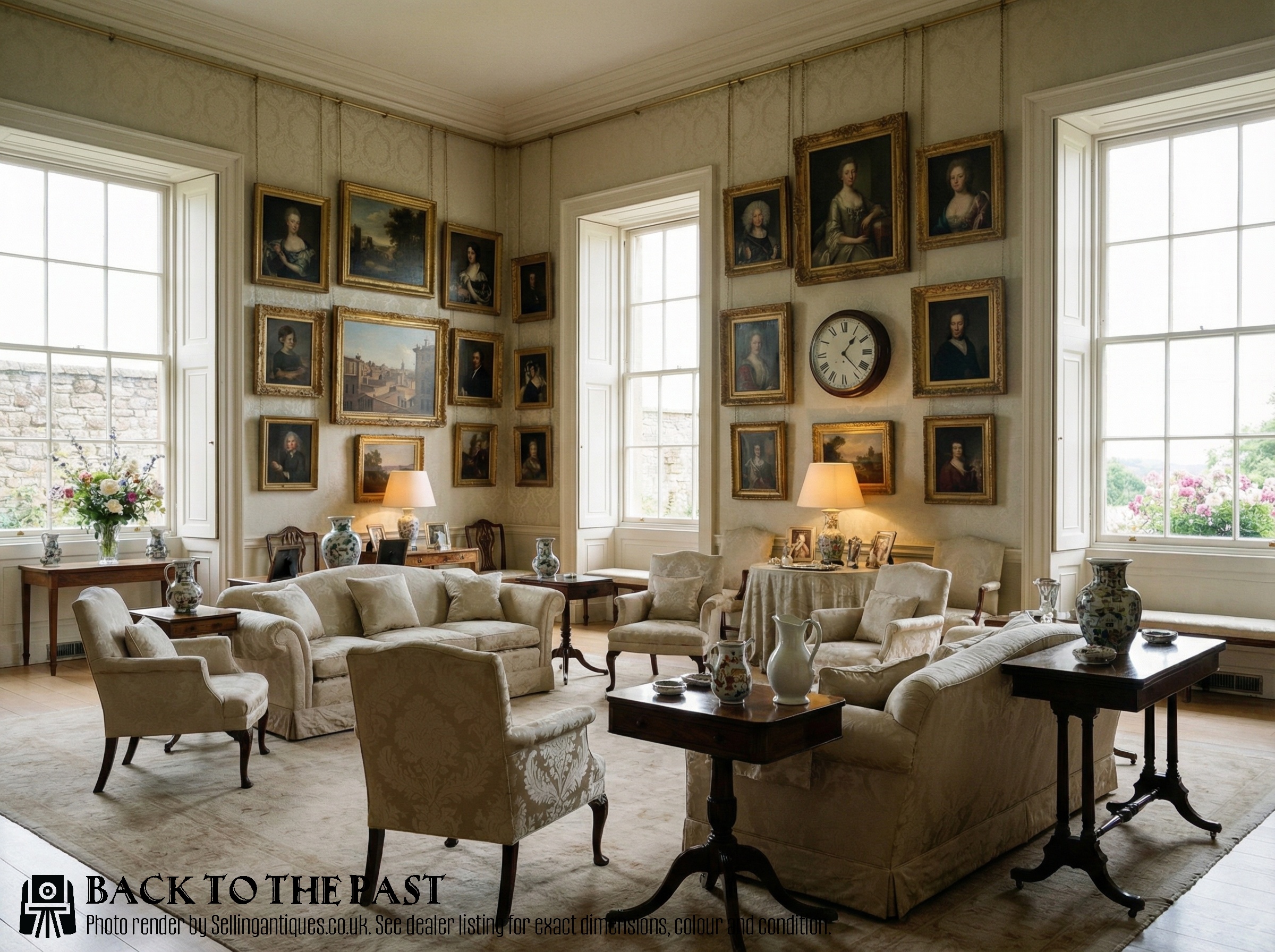
A traditional fusee wall clock brings precise mechanical movement and clean architectural presence to a room.
Traditional Fusee Wall Clock
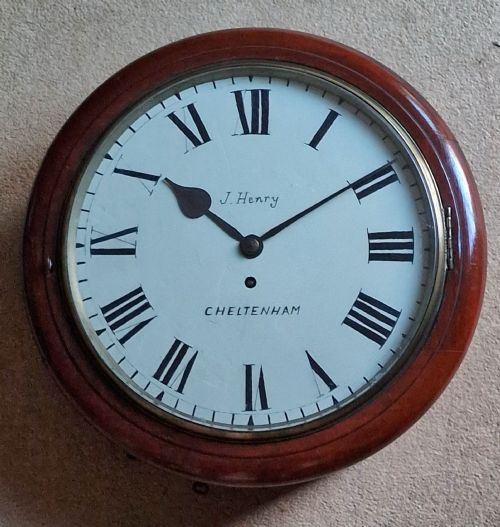
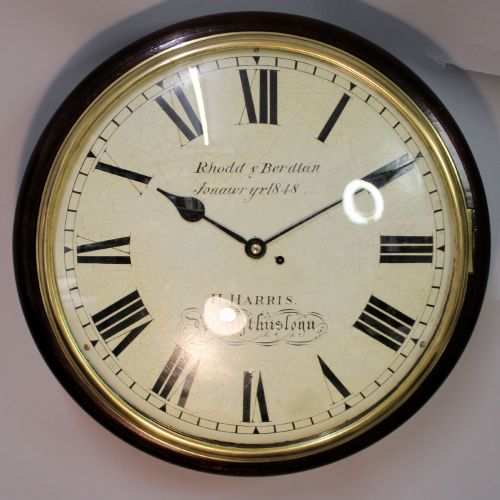
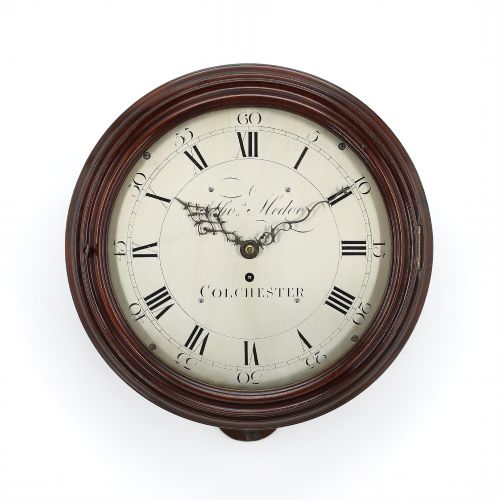
A traditional fusee wall clock is a dependable timepiece designed to hang on a wall, driven by a weight or spring through a cone-shaped pulley that equalises the power as the mainspring unwinds. These instruments span the Georgian, Regency and Victorian eras, often bearing the painted signature of the maker and the town where they worked on the dial face.
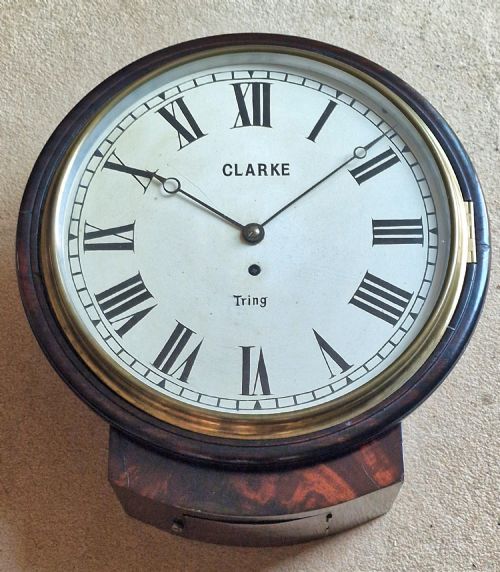
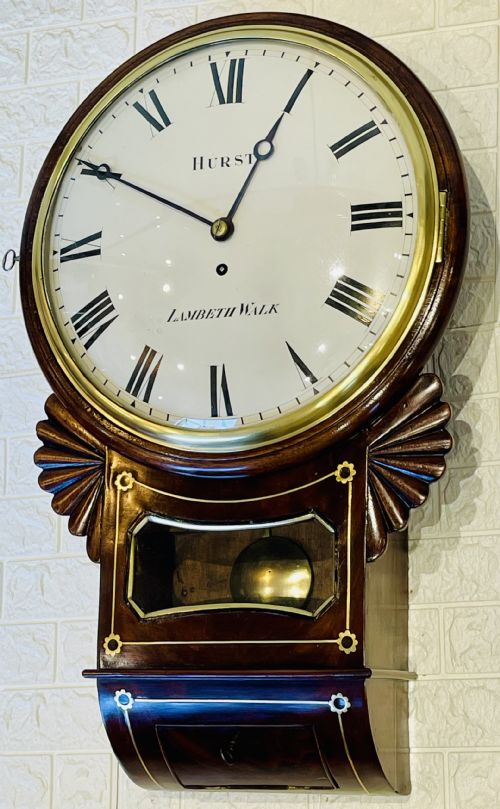
The version most commonly met on this page is the mahogany or oak drop-dial clock, frequently housed in a round wooden case with a short trunk below to accommodate the pendulum. Many examples hail from railway companies, provincial workshops or London makers, moving from simple timepieces to twin-fusee models with bell-striking mechanisms.
How they were made
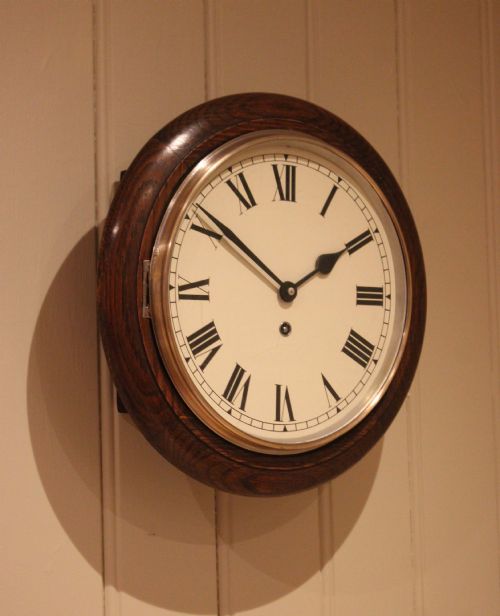
Clockmakers utilised dense timbers such as mahogany, rosewood and oak for the robust cases, framing circular glassbezels in brass or polished wood to protect the dial. Movements were constructed from brass and iron, featuring hand-cut wheels and the signature conical fusee drum grooved to hold the fine chain or cord.
Dials were typically painted metal or convex iron, lettered with Roman numerals and signed by the maker, while the drop-down bottom cases often incorporated side inspection doors for easy access to the pendulum bob.
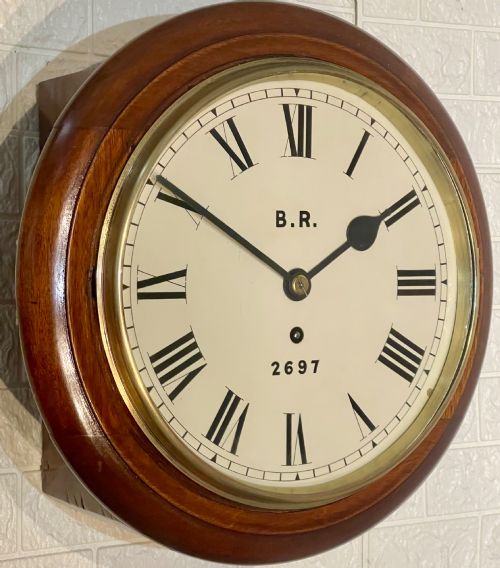
Some railway clocks bear the initials of bygone transport networks, quietly ticking away a century after the last steam train left the platform.
What varies in quality
Quality in a traditional fusee wall clock rests upon the crispness of the movement components and the originality of the case timber. Finer examples display hand-finished brass plates and engraved wheel work inside, alongside well-proportioned timber housings with minimal replacement wood or dial repainting.
Simpler provincial office clocks prioritize utilitarian legibility over elaborate cabinetwork, whereas metropolitan pieces by notable makers often feature heavier bezels, bell-striking trains, and richly figured veneers that elevate the piece beyond a mere functional utility.
Henry Harris of Monytuslwyn·Joseph Bird of Stroud·Thomas Hedge of Colchester·John Walker·John Thwaites
The Traditional Fusee Wall Clock Glossary
- Fusee
- A conical pulley connected to the mainspring by a chain or cord, designed to equalise the torque as the spring unwinds and ensure even timekeeping.
- Drop dial
- A clock case featuring a circular dial at the top and an extended lower wooden trunk designed to house the swing of the pendulum.
- Verge escapement
- An early and simple escapement mechanism using a crown wheel and pallets to control the release of power in the gear train.
- Twin fusee
- A movement incorporating two separate fusees, typically dividing the timekeeping train from the striking train.
- Convex dial
- A clock face that curves outward toward the viewer, commonly made of painted metal or iron behind a protective glass door.
Traditional Fusee Wall Clock: Frequently Asked Questions
How does a fusee movement work?
A fusee uses a conical drum and a fine chain to regulate the pull of the mainspring. When the spring is fully wound, the chain pulls on the narrow top of the cone; as the spring relaxes, the chain moves to the wider base to maintain steady force.
This clever mechanical compensation prevents the clock from losing or gaining speed as the power diminishes between windings.
Where were these clocks used originally?
Traditional fusee wall clocks were the standard timekeepers for public buildings, railway stations, offices and grand domestic hallways. Their clear dials and reliable movements made them essential for keeping synchronized time.
Railway companies such as the N.E.R and LMS relied heavily on them for operational punctuality across the network.
How do I wind a fusee wall clock?
Winding requires a matching key inserted into the dial hole to turn the arbour clockwise until resistance is felt. Care must be taken not to overwind the mechanism.
Most traditional eight-day models need attention once a week, keeping the movement in a steady rhythm.
How can I tell the period of a dial clock?
Dating relies on examining the timber species, the style of the case framing, and the construction of the brass movement inside. Georgian and Regency examples often show finer mahogany grain and delicate bracket integration, while Victorian pieces can be heavier and include railway markings.
The signature of the maker on the dial provides a direct link to historical trade directories.
Are these clocks suitable for daily living?
These robust timepieces sit comfortably in modern hallways, kitchens or studies, provided they are hung securely on a solid wall. A plumb pendulum ensures the beat remains even.
Their classic aesthetic complements both traditional interiors and minimalist spaces.