
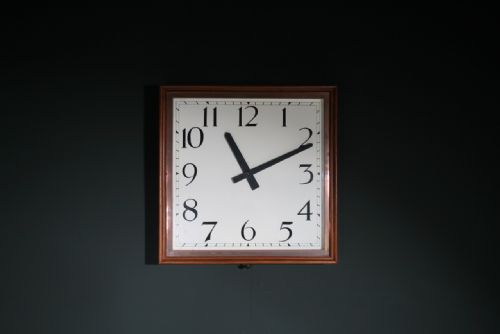


Antique Office Wall Clock
An antique office wall clock combines dependable timekeeping with utilitarian form, offering a functional centrepiece for a workspace or study.
Antique Office Wall Clock
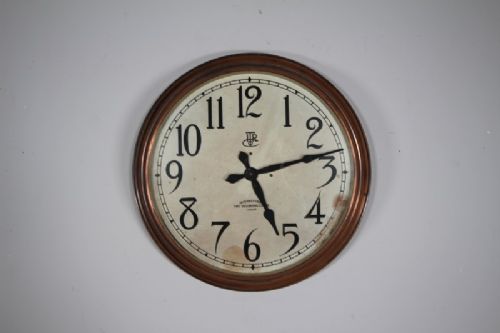
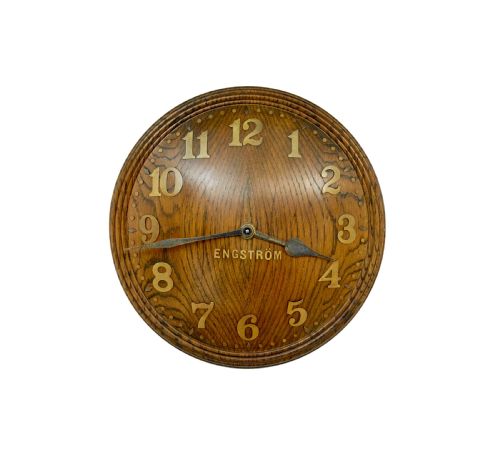
An antique office wall clock encompasses robust timepieces designed for public and professional spaces during the nineteenth and twentieth centuries. The selection available here includes styles originating from the Victorian and Edwardian eras, through to Art Deco and mid-century British utilitarian designs.
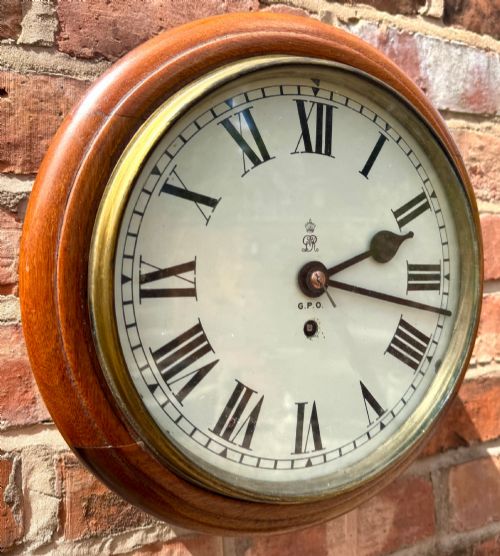
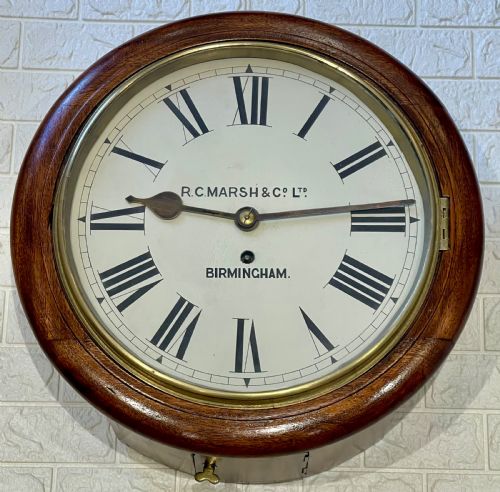
Buyers will encounter various distinct configurations, ranging from railway and post office pieces to school clocks and large factory wall clocks. Materials span traditional timbers like mahogany, oak, and walnut, alongside metal, copper, iron, and glass.
What varies in quality
The distinction between standard utility models and finer examples often lies in the sophistication of the internal movement, such as the inclusion of a fusee mechanism rather than a standard spring drive. Superior pieces display crisp dial lettering, well-maintained timber cases with original patination, and stamped numbered cases indicating official institutional service.
Cabinetry execution also differentiates the range, from plain industrial oak surrounds to carefully selected figured mahogany and walnut veneers. The clarity of the convex glass and the integrity of the original brass bezels further define the overall execution of the piece.
Some post office wall clocks bear official stamped numbers on their cases, whispering of telegraph offices and sorting rooms long past.
Zenith·John Walker·J C Ralls
The Antique Office Wall Clock Glossary
- Fusee
- A conical pulley connected to the mainspring by a chain or cord, designed to equalise the torque as the spring unwinds. This mechanism improves timekeeping accuracy across the power reserve.
- Drop dial
- A clock case featuring an extended lower portion, often enclosed by a glazed door, designed to house a pendulum below the main dial. This form was common in offices and railway stations.
- School clock
- A straightforward wall timepiece featuring a clean, legible dial and a plain timber surround, originally produced for classrooms and municipal buildings. They prioritise legibility and reliability over ornate decoration.
- Bezel
- The metal ring, often hinged and glazed, that holds the glass face in position over the clock dial. It provides access to the hands while protecting the face from dust and damage.
- Convex dial
- A clock face that curves outward toward the viewer, reducing glare from overhead light sources. This feature was particularly useful in large public offices and industrial settings.
Antique Office Wall Clock: Frequently Asked Questions
How do fusee wall clocks work?
A fusee clock uses a conical pulley and chain to regulate the pull of the mainspring. As the spring runs down, the chain moves to a wider part of the cone to maintain consistent power.
This clever mechanical arrangement ensures the movement receives steady force from full wind to empty, resulting in superior timekeeping accuracy compared to standard spring-driven alternatives.
Where were these office clocks used?
These timepieces originally served in railways, post offices, schools, and municipal offices where reliable timekeeping was essential for daily operations. Their clear dials and robust construction suited busy public spaces.
Today, buyers place them in home studies, kitchens, and hallways to add utilitarian character and historic presence to an interior space.
How do I hang a heavy wall clock?
Due to the dense timber cases and heavy glass bezels, these clocks require secure mounting directly into wall studs or masonry using appropriate heavy-duty fixings. Hanging them from a standard picture hook is not recommended.
Ensuring the clock hangs level is also vital for the pendulum to beat evenly and keep correct time.
How do I date an antique wall clock?
Dating relies on examining the timber species, case design, dial materials, and the style of the numerals. Victorian and Edwardian examples often feature mahogany cases and fusee movements, while Art Deco and mid-century pieces display simpler oak or metal surrounds.
Maker signatures on the dial or stamped numbers on the case can also help narrow down the period of production.