
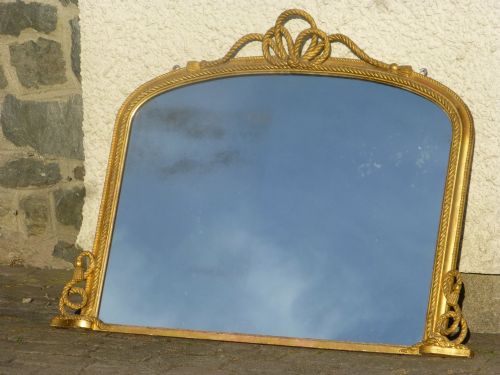
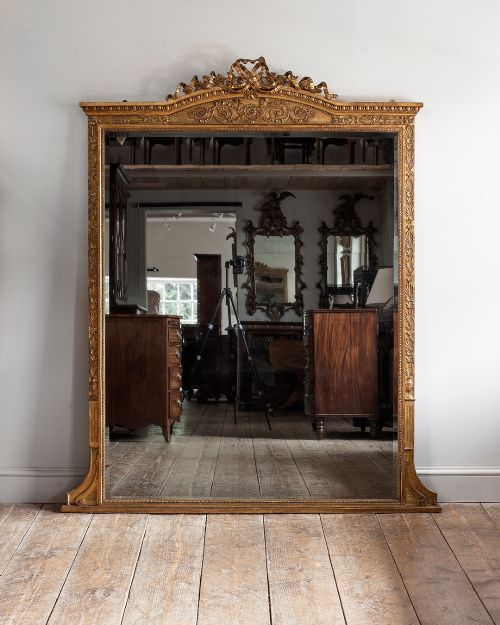

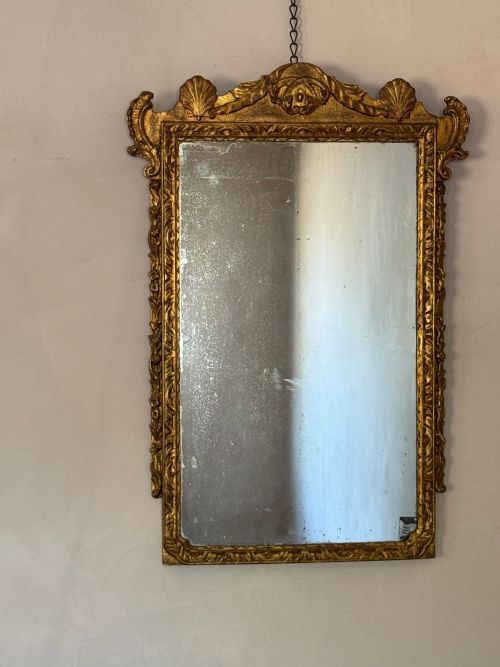
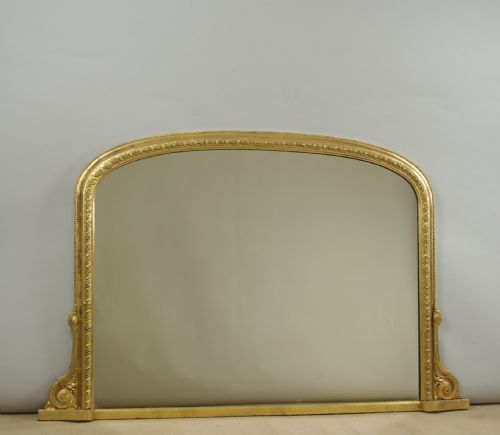
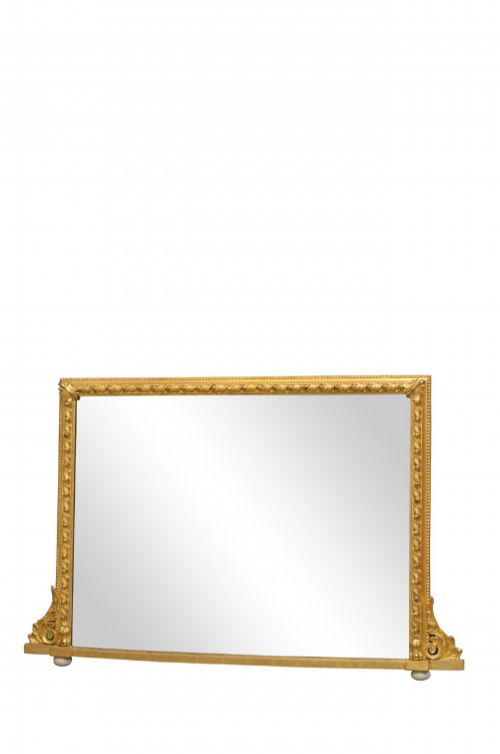


Traditional French Mantle Mirror
A traditional french mantle mirror brings grand nineteenth-century proportions and gilded framing to a fireplace, reflecting light across a room.
Traditional French Mantle Mirror
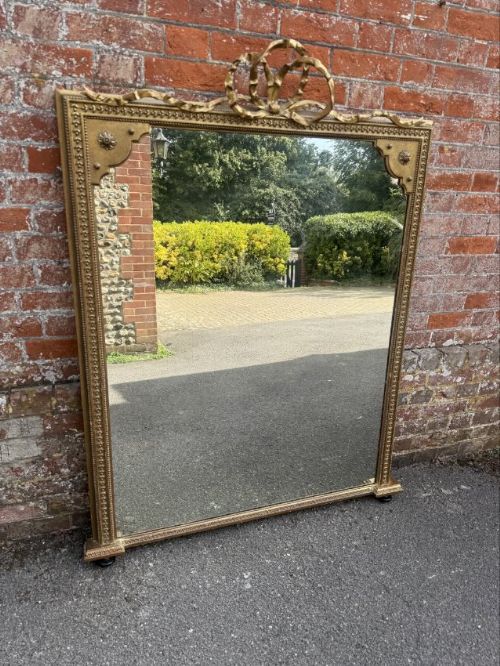
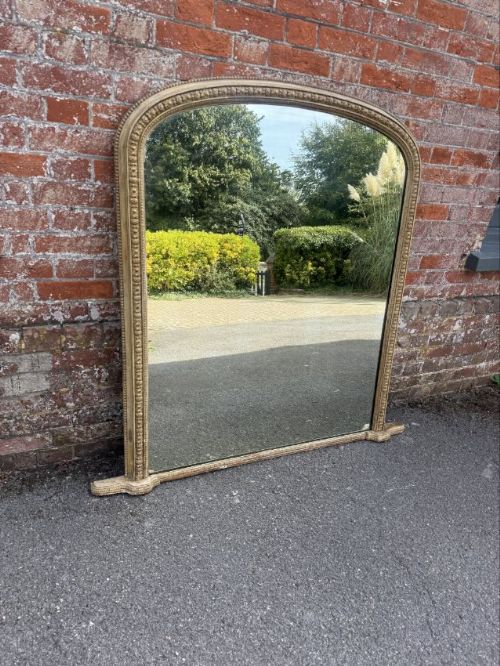
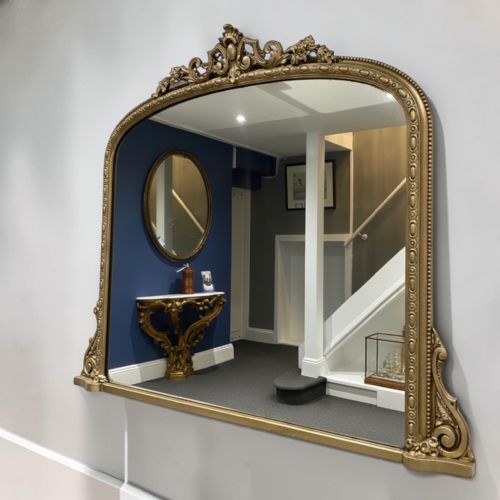
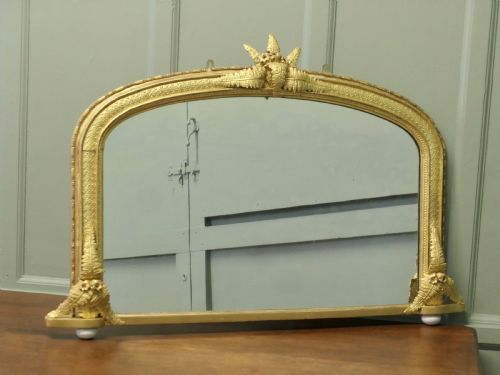
A traditional french mantle mirror sits low and wide above a fireplace, designed specifically to command the space of a chimney breast. These pieces primarily date from the nineteenth century, encompassing Victorian interpretations, Louis Philippe designs, and Rococo Revival influences.
The form is dominated by overmantel mirrors with arched or shaped tops, though rectangular wall formats also appear. Such mirrors function to amplify natural daylight and create an illusion of depth within nineteenth-century interiors.
Most examples meet on this page rely on substantial wooden frames finished in gleaming gold leaf or painted surfaces. Their scale ranges from compact hall variants to large decorative statements spanning considerable wall space.
How they were made
Makers constructed the foundational frames using timber such as carved wood, upon which plaster and composition were applied to build up ornate decorative relief. Gesso layers provided a smooth, absorbent bed for subsequent gilding techniques.
Surface decoration frequently involved gold leaf or water gilding, alongside silvered finishes and over-painted treatments. Original mirror glass is often retained within these heavy frames, showing the slight imperfections characteristic of nineteenth-century production.
Listings span the nineteenth century, featuring Victorian, Regency, and Louis Philippe periods executed in giltwood, gesso, and glass.
What varies in quality
The standard of a traditional french mantle mirror depends heavily on the crispness of the carved wood and gesso ornamentation. Finer examples display deep, deliberate relief work rather than softened composition mouldings.
Originality of surface finish and the retention of early mirror glass distinguish superior pieces from later restorations. The integrity of the frame construction dictates how well the heavy structure holds its form over decades.
The Traditional French Mantle Mirror Glossary
- Gesso
- A plaster-like mixture applied to wooden frame foundations to create a smooth surface for gilding. It allows for intricate moulded and carved relief details.
- Overmantel
- A large mirror specifically proportioned to hang on the wall directly above a fireplace mantelpiece. These pieces often feature an arched top to follow architectural lines.
- Louis Philippe
- A nineteenth-century French style characterised by restrained elegance, simple architectural lines, and often a gently rounded upper frame corner.
- Rococo Revival
- A decorative nineteenth-century style drawing on eighteenth-century motifs with flowing curves, naturalistic scrollwork, and asymmetrical ornamentation.
- Water Gilding
- A traditional technique applying thin gold leaf onto a wet gesso and clay base, allowing the metal to be burnished to a high gloss.
Traditional French Mantle Mirror: Frequently Asked Questions
How do I hang a heavy overmantel mirror?
These substantial frames require secure attachment directly into wall studs or masonry using heavy-duty brackets. Professional installation is strongly recommended due to the combined weight of wood, gesso, and thick glass.
Ensure the hanging wire or fixings distribute the load evenly across the frame structure to prevent warping over time.
Are the mirror plates original?
Many nineteenth-century frames retain their original mercury or early silvered glass, which often exhibits characteristic foxing, light speckling, and soft reflections.
Replacement glass is sometimes fitted during the lifetime of the piece if the original silvering degraded significantly.
Can I place these mirrors on a mantelpiece?
While traditionally termed overmantel mirrors, many pieces were designed to rest directly on the slate or wooden shelf of a fireplace while anchored safely to the wall above.
Checking the depth of the base frame helps determine whether it sits securely without wall support.
How do I clean a gilded frame?
Dusting gently with a soft, dry brush prevents the accumulation of dirt without disturbing fragile gold leaf or composition mouldings. Avoid liquid cleaners and chemical solvents entirely.
Water and commercial polish can strip delicate water gilding and ruin the historic surface finish.