
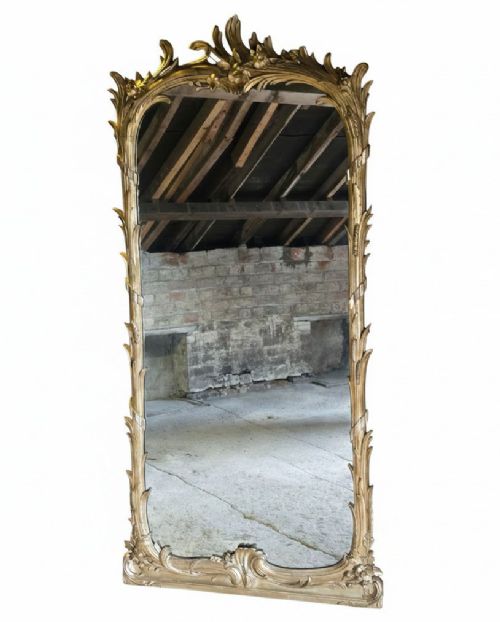
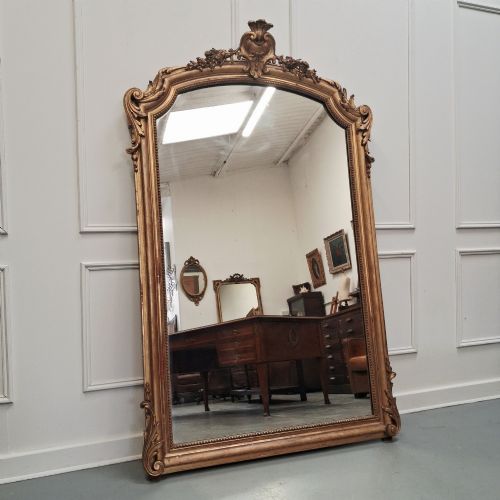
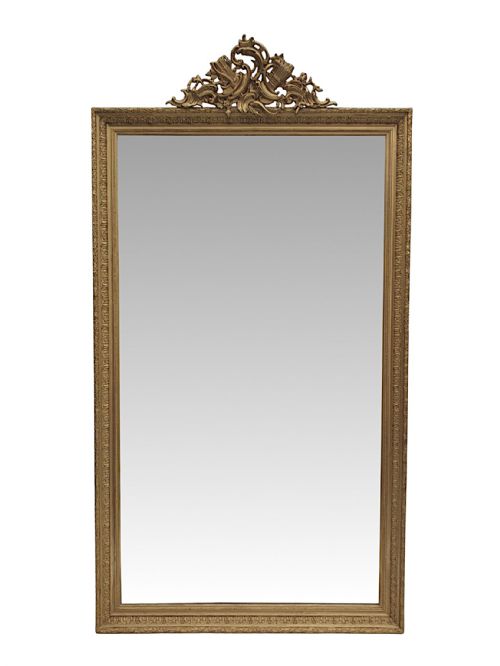
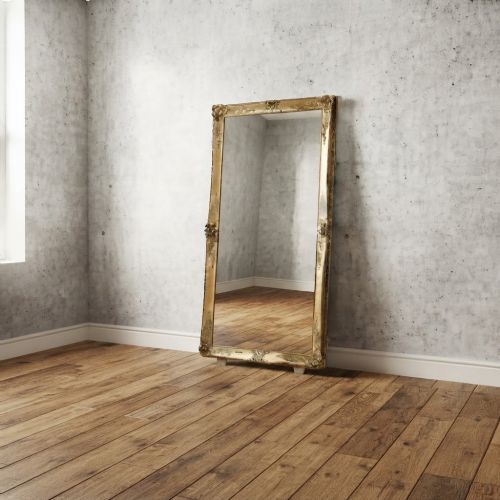




Large Gilded Floor Mirror
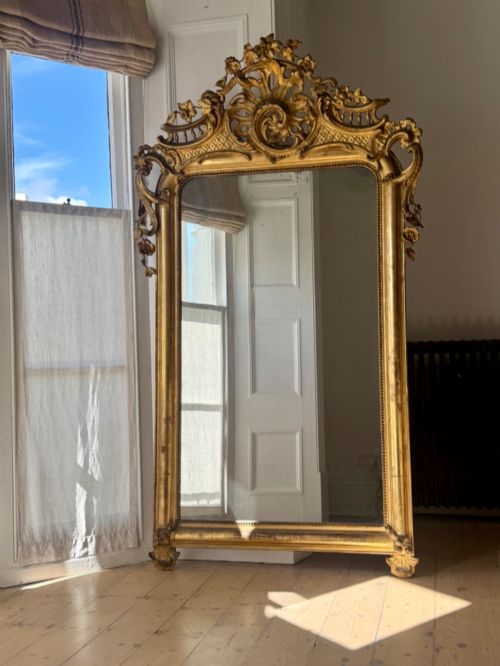
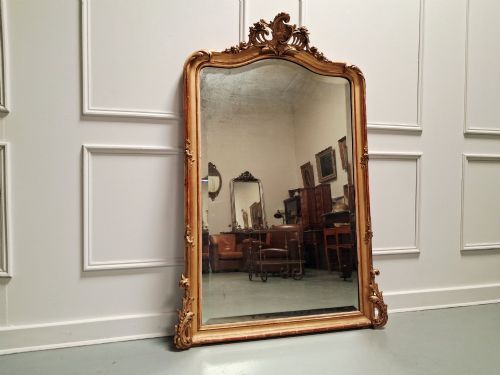
A large gilded floor mirror brings scale and reflected light to a room, drawing the eye upwards through tall giltwood and gesso frames.
Large Gilded Floor Mirror
A large gilded floor mirror functions as a commanding architectural element, designed to stand freely as a leaner or anchor a wall with substantial height. These pieces bring light deep into a room while doubling the visual space.
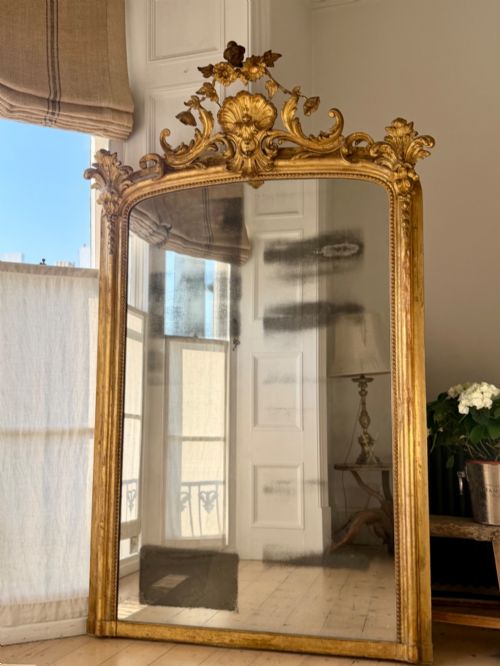
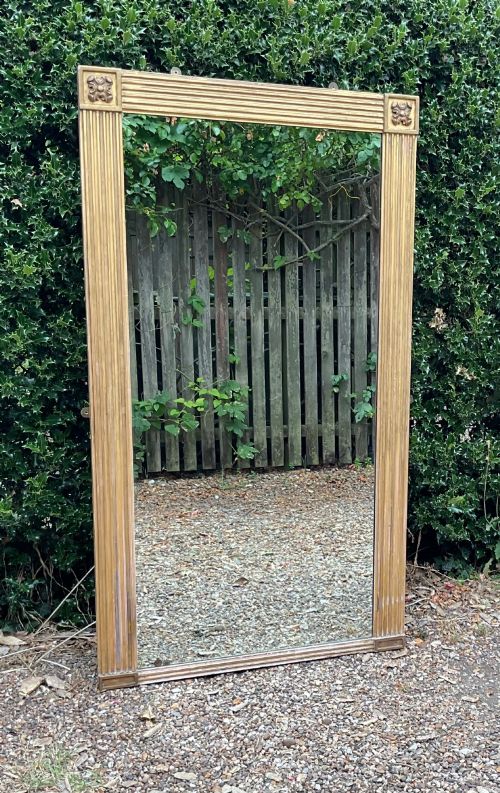
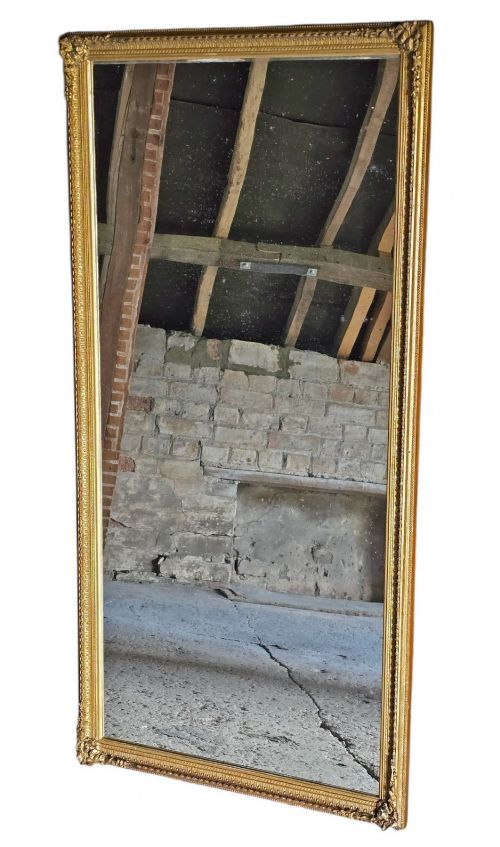
The selections available here lean heavily toward nineteenth-century English and French craftsmanship. Pieces span styles from ornate French Rococo and Louis Philippe to classical Regency and Victorian forms, often reaching full human height.
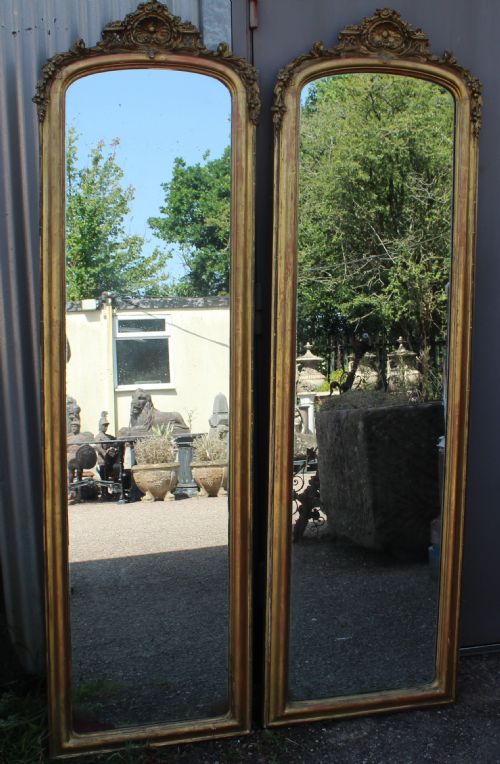
Makers and workshops utilised various formats including overmantel mirrors, pier glasses, and dedicated leaner mirrors. Frames range from simple shaped tops to deeply carved arched designs with elaborate crestings.
Materials and Construction
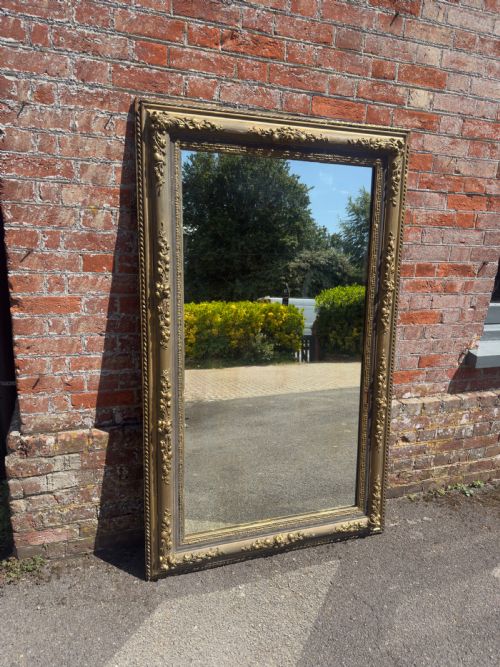
Makers constructed the core structures primarily from solid wood, often layering carved wood with applied gesso and plaster to build up intricate relief ornament. This composite surface provided a smooth base for subsequent gilding.
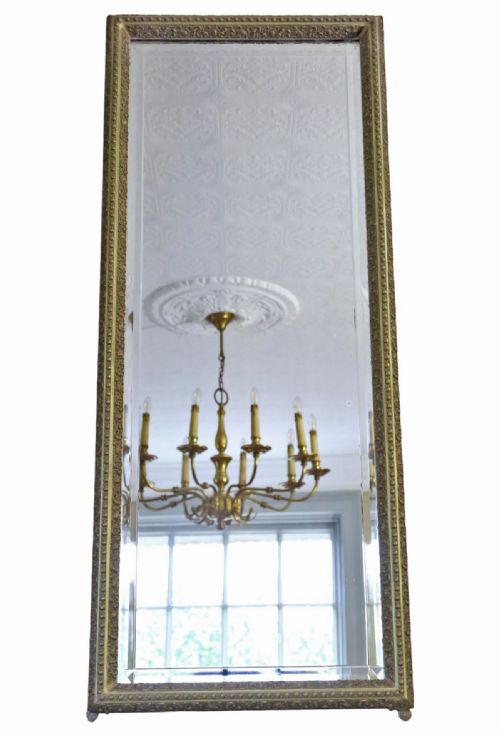
Gilding was executed using gold leaf or silver leaf applied over the prepared ground. Many examples also incorporate period mirror glass, including traditional mercury glass that develops distinctive foxed spotting over time.
Some nineteenth-century mirrors retain faint chalk inscriptions on their rear timbers, left by anonymous gilders marking out their workshop patterns.
Evaluating Quality
The distinction between ordinary and exceptional examples lies in the depth and crispness of the carving within the wood and gesso. Hand-chased relief work retains sharp edges and intricate detail, whereas lesser items rely on heavy, flat moulding.
The integrity of the original gilt surface and the character of the glass plate dictate desirability. Original mercury glass with natural foxing holds greater depth than later plate replacements.
The Large Gilded Floor Mirror Glossary
- Giltwood
- Wood that has been coated with gold leaf. This finish creates a warm, reflective surface characteristic of formal antique furniture.
- Gesso
- A mixture of gypsum, chalk, and size used as a preparation layer on wood. It allows craftsmen to carve intricate relief details before gilding.
- Mercury Glass
- Silvered glass produced by applying a mercury amalgam behind the pane. It creates a dark, shimmering reflection prone to age spots.
- Overmantel Mirror
- A large mirror specifically proportioned to hang above a fireplace mantel. These pieces frequently share the grand scale of floor mirrors.
- Pier Glass
- A tall mirror designed to hang on the narrow wall space between windows. They often paired with matching console tables in formal reception rooms.
Large Gilded Floor Mirror: Frequently Asked Questions
How do I secure a floor leaner mirror?
Large mirrors resting directly on the floor require anchoring to the wall to prevent accidental tipping. Brackets attached to the upper frame secure the piece safely against structural studs.
Positioning the base slightly away from the skirting board helps distribute the weight evenly against the wall surface.
What is mercury glass?
Mercury glass describes double-walled or silvered glass produced in the nineteenth century using a liquid metal amalgam. This technique produces a deep, clouded reflection that differs from modern silvered mirrors.
Over decades, moisture reacts with the backing to create dark spots known as foxing, which collectors prize for authenticity.
How do I tell Louis Philippe mirrors apart?
Louis Philippe mirrors typically feature restrained classical proportions with gently rounded top corners. The frames rely on simple beaded or cavetto moulding rather than exuberant rococo carving.
This understated French aesthetic dates predominantly from the mid nineteenth century and suits both traditional and modern interiors.
Can these mirrors be used in hallways?
Hallways and transitional spaces benefit greatly from tall mirrors because they bounce natural light through narrow areas. Pier glasses and narrow floor mirrors fit well into wall recesses without obstructing passage.
Ensure the hanging height or floor space accommodates the heavy wooden frame securely.