





French Leaning Mirror
These large French leaning mirror examples bring architectural scale and period presence to a room, offering both practical reflection and decorative light.
French Leaning Mirror
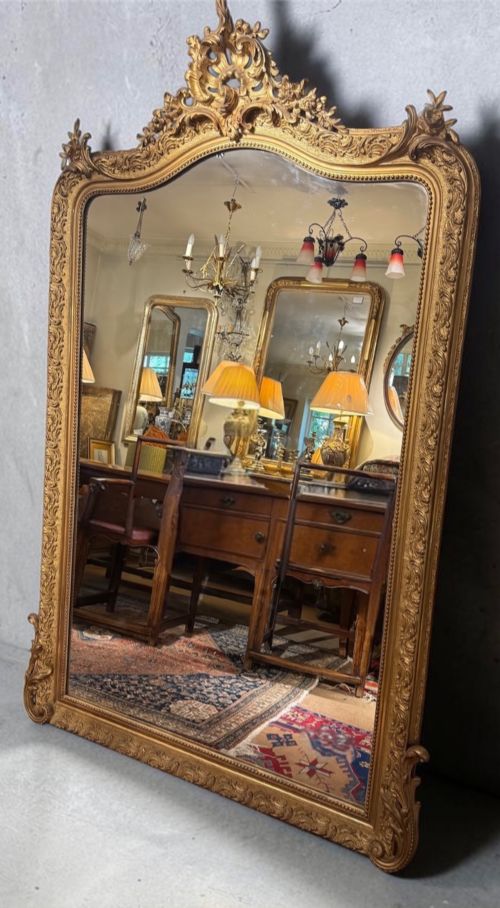
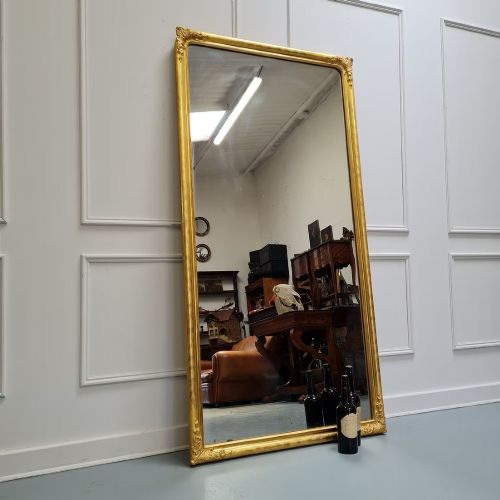
A french leaning mirror stands tall against a wall, designed to rest upon the floor or a mantel rather than hang from fixed brackets. These large glass plates stretch upwards in heights often exceeding six feet, creating the illusion of extended space within a room.
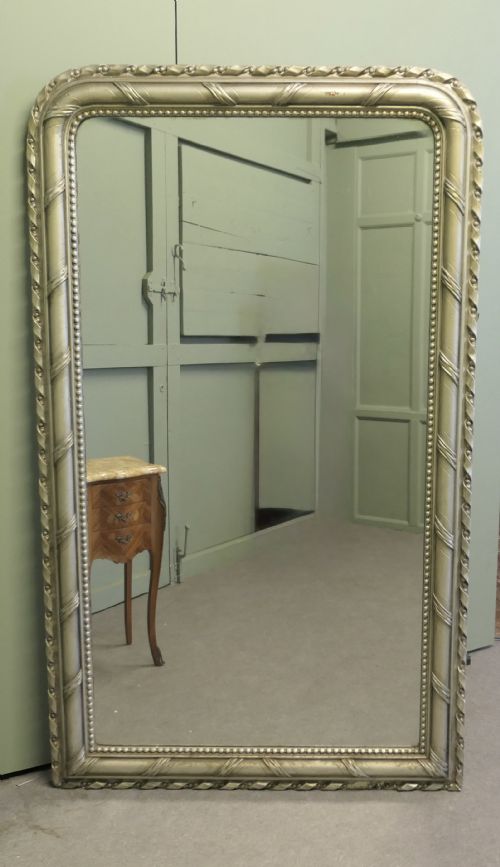
The selections span the nineteenth and early twentieth centuries, encompassing styles from Louis Philippe simplicity to ornate Rococo Revival and Second Empire grandeur. Many examples present architectural arched or shaped tops designed to draw the eye upward.
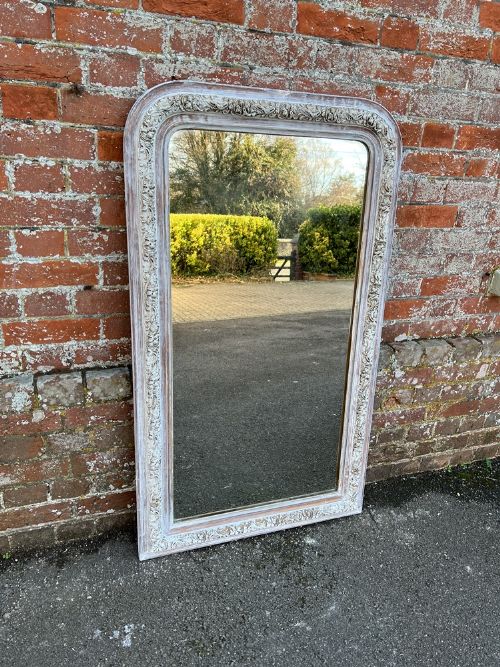
Origins divide between provincial workshops producing simpler painted frames and urban centres crafting heavily gilded or silvered surfaces. The primary function remains that of a full height dressing or wall mirror capable of shifting the balance of natural light.
How they were made
Frames rely upon a foundation of carved wood and pine, providing a stable structure for the considerable weight of large glass plates. Artisans applied layers of gesso to the carved timber base to create a smooth surface for subsequent decoration.
Gilding techniques involved applying thin sheets of gold or silver leaf over prepared grounds, often burnished to catch the light. Alternatively, makers finished the timber with simple coats of paint or left surfaces in original distressed tones.
Current listings feature pieces spanning the nineteenth century through to the early twentieth century, utilising materials such as gesso, giltwood, and silver leaf.
What varies in quality
The depth and crispness of the carved wood and gesso ornamentation dictate the visual distinction of the piece, with finer examples displaying sharp relief and careful proportion. The integrity of the original silver or gilt finish determines whether the surface retains its intended character.
Subtleties in the glass plate, including thickness and the presence of early silvering imperfections, contribute to the authenticity of the period. The structural robustness of the wooden frame remains crucial for supporting tall glass safely against a wall.
The French Leaning Mirror Glossary
- Gesso
- A plaster mixture applied to carved wood frames to provide a smooth ground for gilding or painting. This preparation allows fine detail in mouldings and ornament.
- Giltwood
- Timber coated with gold leaf or metallic powder. It reflects candlelight and daylight with a warm hue.
- Overmantle
- A large mirror designed to sit directly above a fireplace mantel. These pieces often feature arched or shaped tops to match architectural proportions.
- Louis Philippe
- A mid-nineteenth century French style characterised by understated elegance, gentle curves, and restrained ornamentation. It avoids the heavy extravagance of earlier Rococo revivals.
- Silver Leaf
- Thin sheets of beaten silver applied to frames for a bright, reflective metallic finish. It ages with a distinctive darker patina compared to gold.
French Leaning Mirror: Frequently Asked Questions
How do I secure a leaning mirror safely?
Large mirrors resting against a wall require proper anchoring to prevent tipping, particularly in rooms with heavy foot traffic.
Discreet brackets attached to the upper frame and secured into wall studs provide stability while allowing the piece to retain its characteristic leaned angle.
What defines a Louis Philippe mirror?
Louis Philippe examples typically feature simple geometric frames with subtle rounded upper corners rather than heavy carvings.
This aesthetic offers a clean silhouette that suits both contemporary interiors and traditional period settings.
Can these mirrors be hung on a wall?
While designed primarily to lean against a surface, many possess the structural capacity for wall mounting if fitted with appropriate hardware.
Given the substantial weight of wood, gesso, and thick glass, professional installation is generally required for hanging.
How do I care for original gilt surfaces?
Original giltwood and silver leaf surfaces require gentle dusting with a soft dry cloth to avoid disturbing fragile metallic layers.
Moisture and modern chemical cleaners must be kept away from the exposed metal and the edges of the glass plate.