
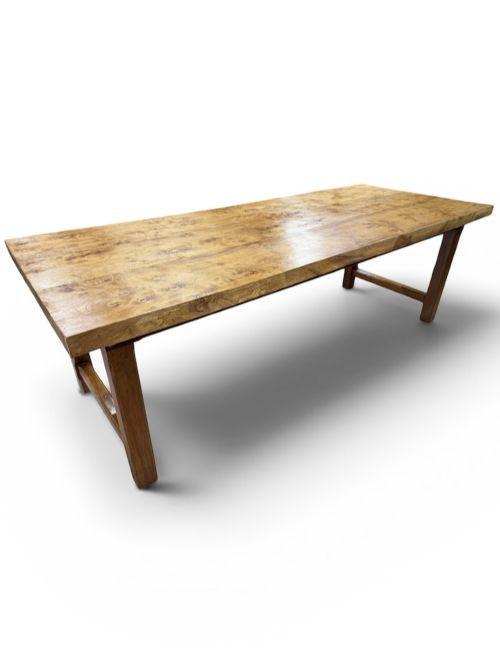
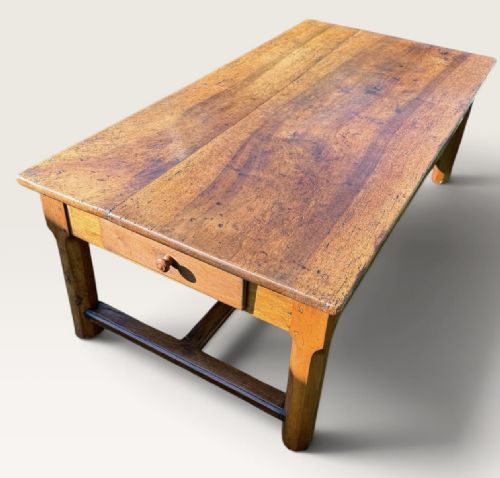
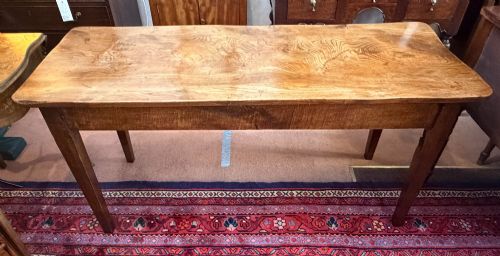
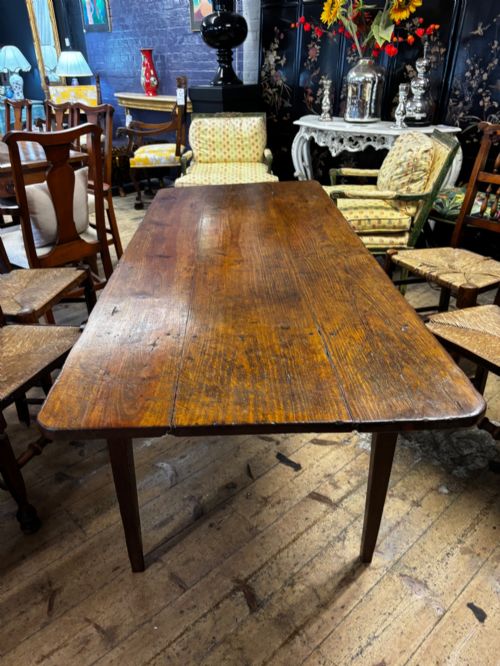
Traditional French Country Table
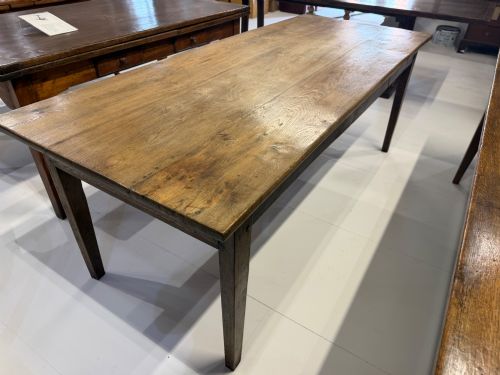
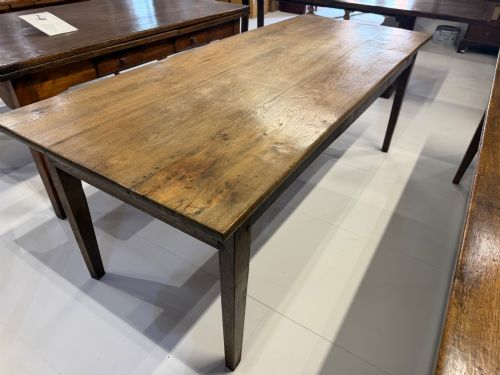
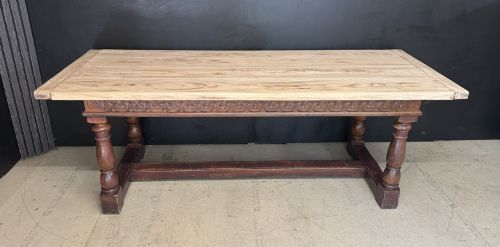
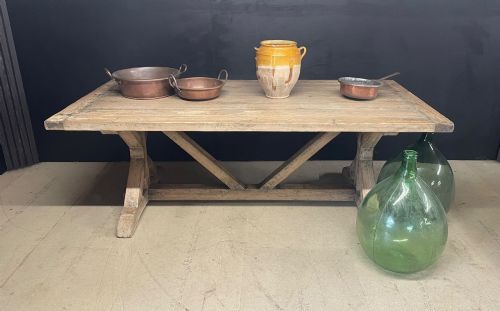
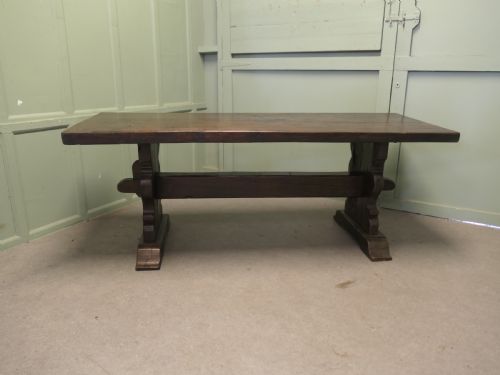
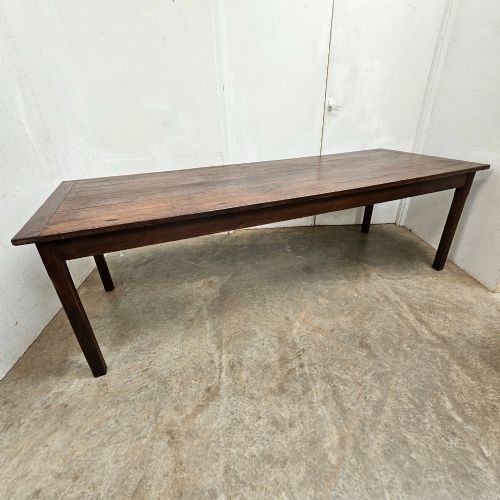
A traditional french country table anchors a room with rustic character, offering generous proportions and sturdy timber construction built for daily gatherings.
Traditional French Country Table
A traditional french country table brings practical domestic utility and regional character into a home through robust construction and time-worn timber surfaces. Buyers searching this phrase typically encounter sturdy dining tables, refectory pieces, and kitchen work surfaces designed for heavy daily use.
Materials originate primarily from solid woods like oak, fruitwood, pine, walnut, and cherrywood, sometimes accented with iron. Stylistic traits lean towards rustic farmhouse, French provincial, and occasional rococo revival details.
What Varies in Quality
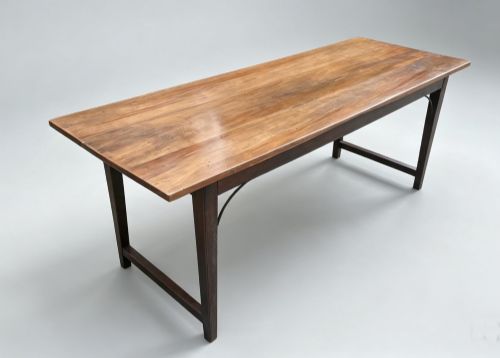
The choice of primary timber dictates the baseline quality and visual depth of each piece, with dense hardwoods like oak and walnut commanding greater presence than softer pine. Grain variation, natural patination from age, and the selection of matching timber boards across large surfaces influence the overall finish.
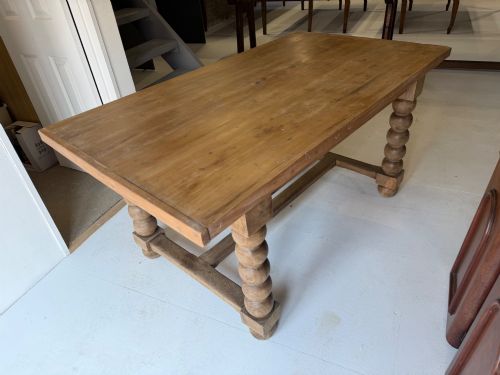
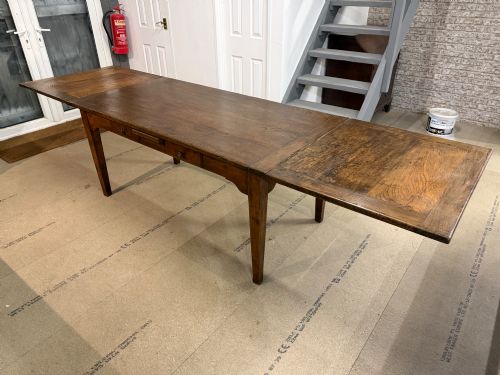
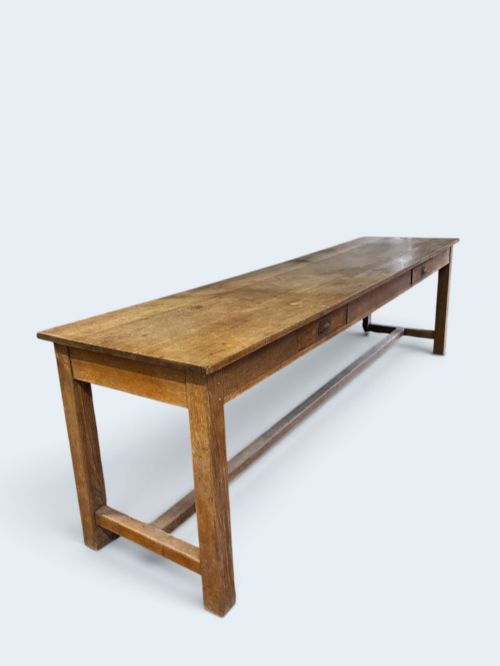
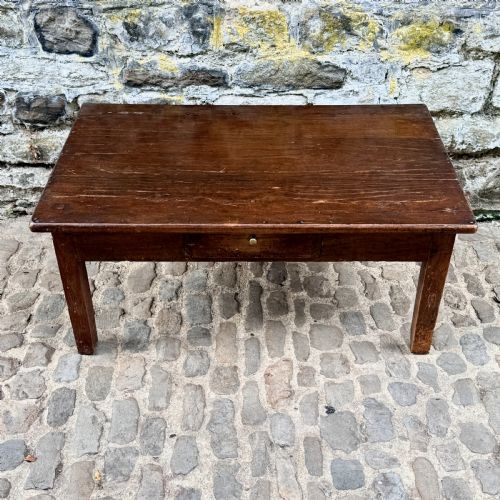
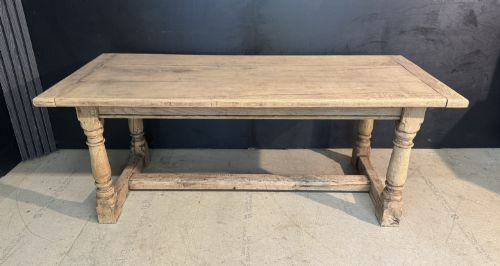
Structural integrity depends upon the execution of the frame, from the solidity of end stretcher assemblies to the turning precision of legs such as bobbin or tapered supports. Tables featuring operational elements like extending mechanisms or integrated drawers rely upon precise joinery to maintain smooth function.
Period origins span nineteenth century examples alongside pieces dated from nineteen hundred to nineteen twenty.
The Traditional French Country Table Glossary
- Refectory table
- A long, narrow dining table historically used for communal meals in monastic or large domestic settings. These pieces often feature prominent side stretchers and robust wooden tops.
- Fruitwood
- Timber sourced from fruit-bearing trees such as cherry or pear, prized for a warm tone and smooth grain. This material appears frequently in regional European furniture.
- Stretcher
- A horizontal wooden brace connecting the legs of a table to provide lateral structural support. End stretchers run specifically between the legs at each end of the frame.
- Monastery table
- A heavy, imposing dining table style typically constructed from solid oak or walnut with substantial framing. They are built to accommodate large gatherings.
- Ormolu
- Gilded bronze ornamentation applied to decorative objects and furniture fittings. This technique gives metal components a bright, golden surface finish.
Traditional French Country Table: Frequently Asked Questions
How do I clean a wooden table top?
Wipe surfaces gently using a slightly damp cloth to remove dust and daily debris without saturating the timber.
Avoid harsh chemical cleaning agents that strip the natural wax finish and dull the patina accumulated over decades.
Can these tables be used daily?
These tables were originally built for hard domestic work, making them exceptionally well suited for modern family dining and daily gatherings.
Using protective mats under hot dishes helps preserve the antique wood surface from heat rings and moisture damage.
What rooms suit a refectory table?
Long refectory pieces fit comfortably into spacious dining rooms or open-plan kitchens where their substantial length and depth can be fully appreciated.
Ensure adequate clearance around the perimeter of the table to allow comfortable movement for chairs and guests.
How do I identify fruitwood timber?
Fruitwood displays a fine, tight grain and a warm, honey-like coloration that deepens gracefully with age and exposure to light.
Unlike coarse-grained oak, fruitwood offers a smoother visual texture often utilised in provincial French cabinet making.