
Provincial Refectory Table
A provincial refectory table brings heavy timber, honest joinery and centuries of domestic use straight into a modern dining room.
Provincial Refectory Table
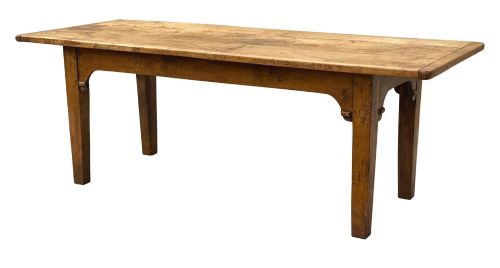
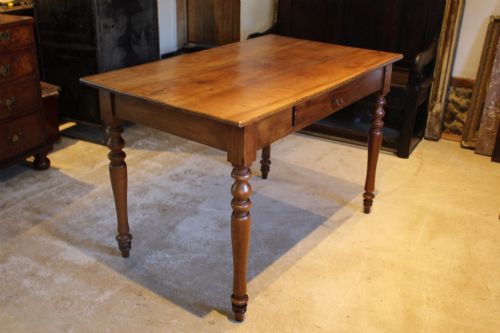
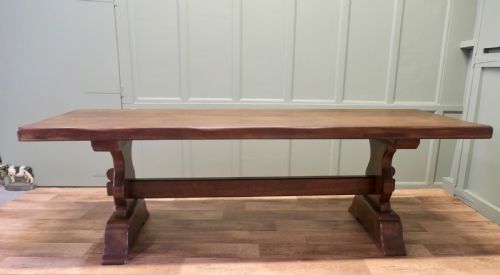
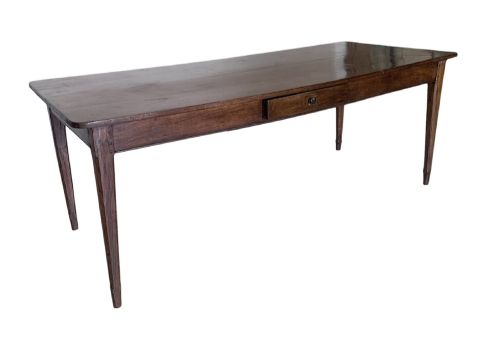
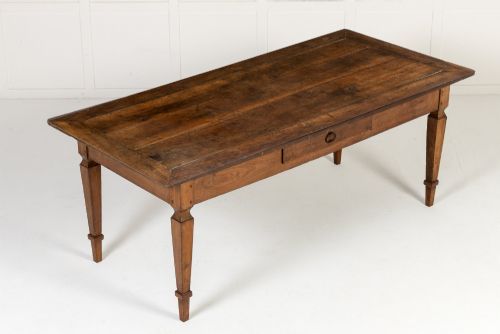
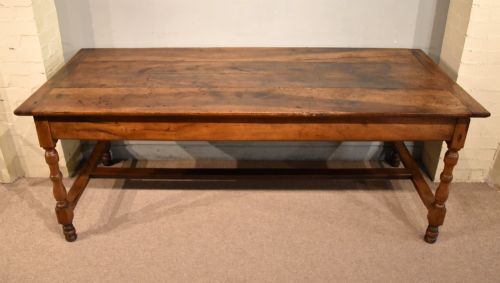
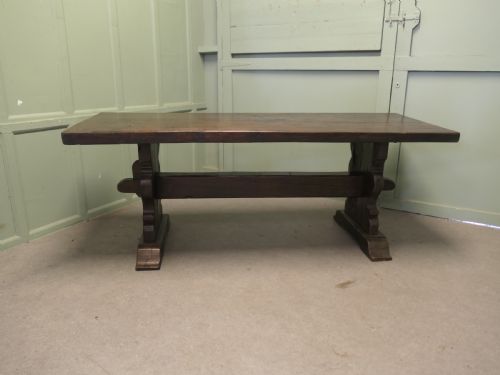
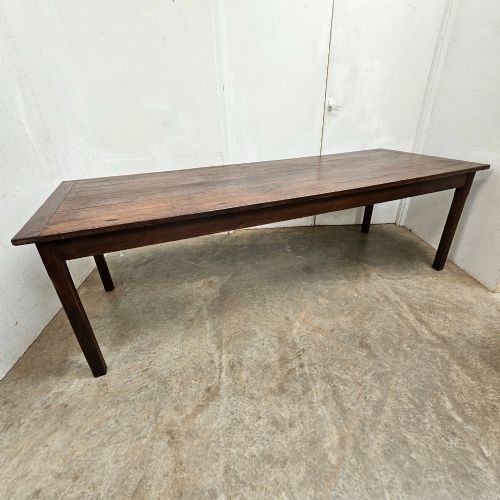
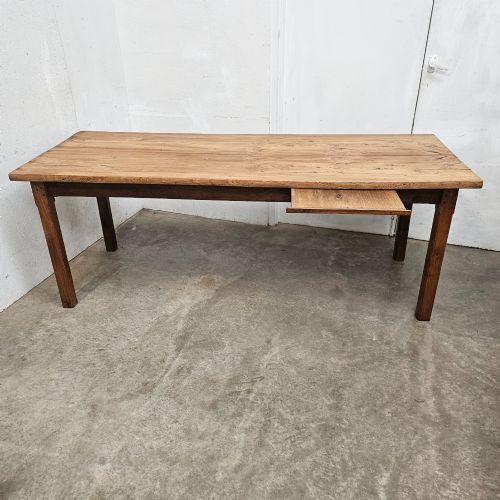
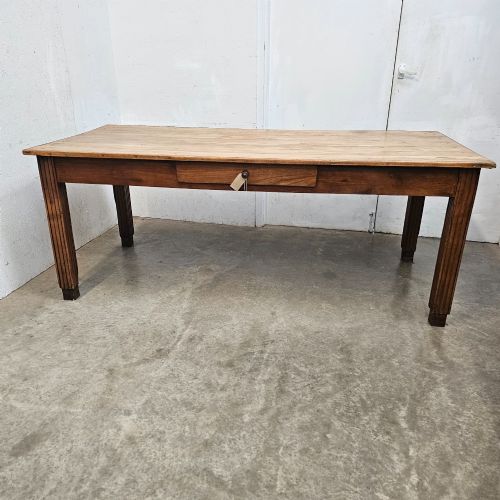
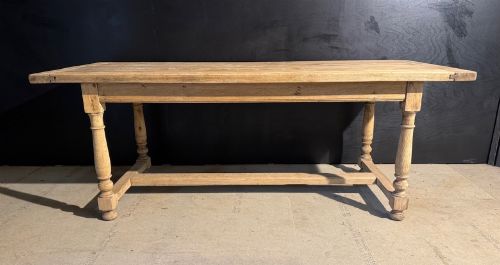
When you search for a provincial refectory table, you are looking at large communal dining furniture built for daily country life rather than formal urban reception rooms. The pieces gathered here span the eighteenth, nineteenth and early twentieth centuries, dominated by French provincial examples shaped by regional traditions.
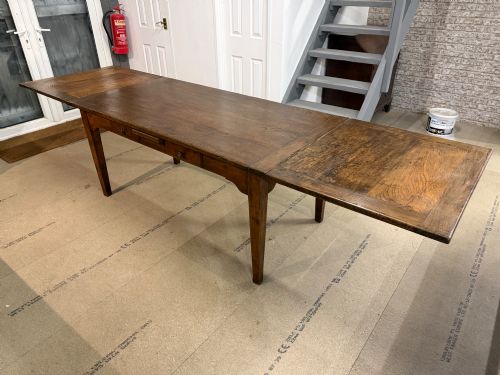
The forms range from long plank top refectory designs to double extending and draw leaf tables. These boards accommodated large households and gathered communities around a single domestic centre.
How they were made
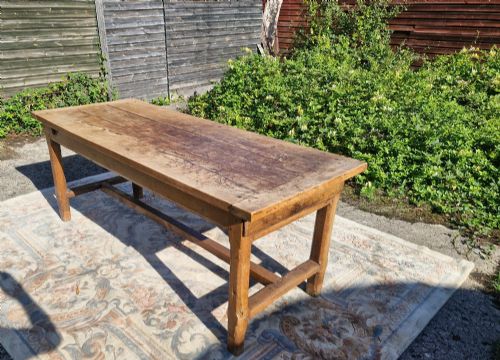
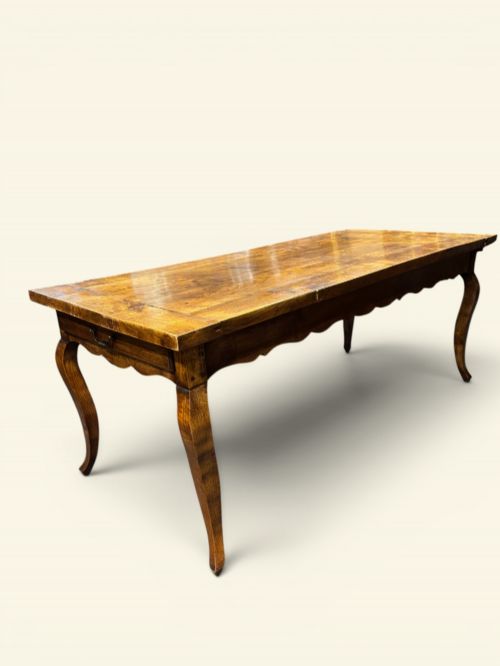
These tables rely on heavy solid timbers chosen for local availability and endurance, with oak and fruitwood providing structural integrity alongside softer pine and chestnut. Joinery prioritises thick plank tops secured across robust stretcher bases and sturdy legs, sometimes featuring cabriolet curves.
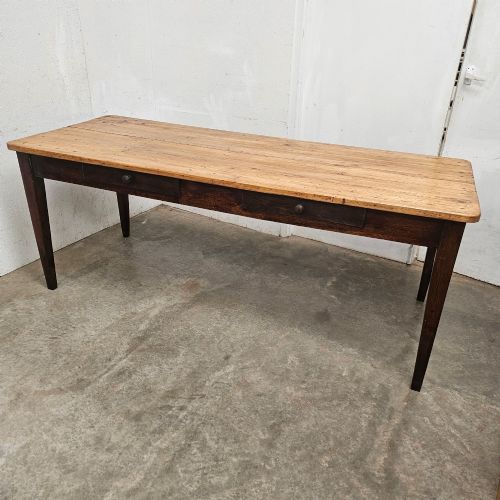
Working mechanisms were built directly into the frames, seen in draw leaf extensions, bread slides and inset storage drawers fitted with brass hardware. Surfaces display the marks of hand planning and sustained domestic use rather than industrial uniformity.
Several tables arrive with up to eight built-in drawers, proving that French cooks stored everything from linens to rolling pins within arm's reach.
What varies in quality
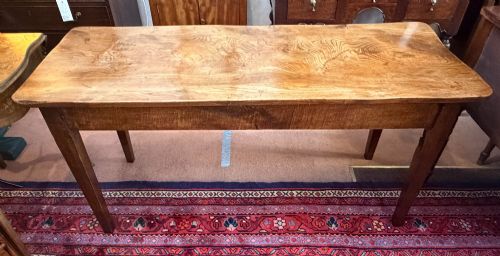
Quality rests primarily in the proportion of the timber and the integrity of the original top construction. Tables formed from wide, single-growth planks command attention over patched surfaces, while balanced proportions between length and leg thickness dictate visual weight.
The presence of working period mechanisms, such as smooth-running bread slides and integrated drawer boxes, separates practical country furniture from later adaptations. Timber selection also plays its part, with dense oak and well-figured cherrywood ageing into richer patinas than utility pine.
The Provincial Refectory Table Glossary
- Refectory table
- A long dining table originally built for monastic dining halls and later adopted in domestic farmhouse kitchens. These pieces provide substantial length and robust underframe bracing.
- Bread slide
- A pull-out wooden board mounted beneath the table top, historically used for slicing bread or cooling loaves. It slides away flush with the apron when not in use.
- Draw leaf table
- A dining table equipped with sliding leaves stored beneath the main top that pull out to extend the surface length. This mechanism accommodates extra guests without separate loose leaves.
- Plank top
- A table top constructed from multiple boards joined edge to edge rather than a single sheet of manufactured board. Early versions often feature wide individual planks showing natural grain variations.
- Cabriolet leg
- A furniture leg that curves outward in a convex arc and tapers inward in a concave arc, resembling an animal leg. This styling appears on selected nineteenth-century provincial tables.
Provincial Refectory Table: Frequently Asked Questions
How do I clean a wooden farmhouse table?
Wipe surfaces down using a damp cloth and mild soap, avoiding harsh chemical sprays that strip historic finishes. Dry the timber immediately to prevent moisture rings in the grain.
Nourish dry hardwood occasionally with natural wax to protect the patina built up over generations. Avoid placing these tables near direct heat sources that cause timber to split.
What is a bread slide used for?
The sliding shelf tucked beneath the tabletop served as an auxiliary preparation surface in busy kitchens. Bakers used the board to slice loaves close to the oven before carrying food to the hearth.
Today, the feature acts as a useful indicator of period provincial utility. It provides extra surface space during crowded dinner parties.
How do I date an antique table?
Examine the construction marks on the underside and drawer interiors to identify hand tools such as adzes and pit saws. Irregularities in the plank widths and hand-cut joinery point toward nineteenth-century or earlier craftsmanship.
Hardware styles, timber species and regional French design traits also help narrow down the decade. Compare the patina and wear patterns against documented examples from the same era.