


Traditional Flower Wall Artwork
Traditional flower wall artwork brings botanical canvases and watercolours into the room, offering layered floral studies for the wall.
Traditional Flower Wall Artwork
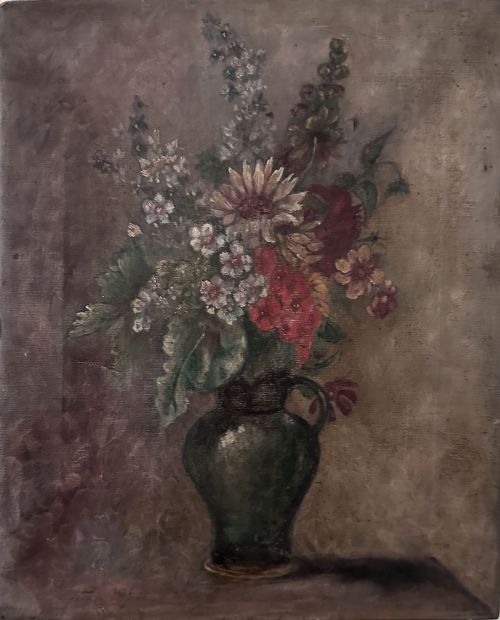
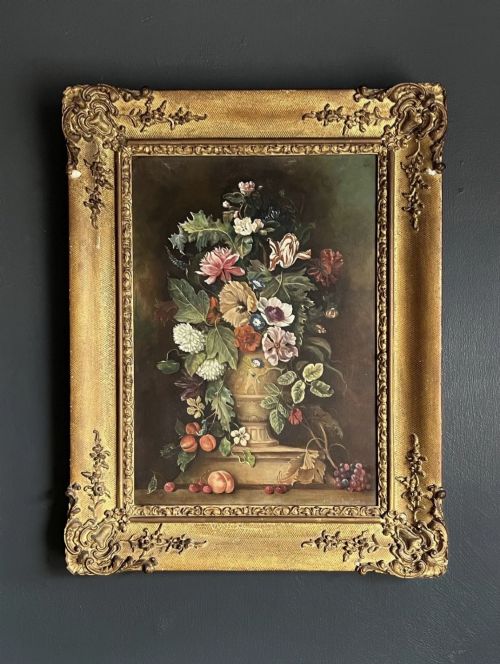
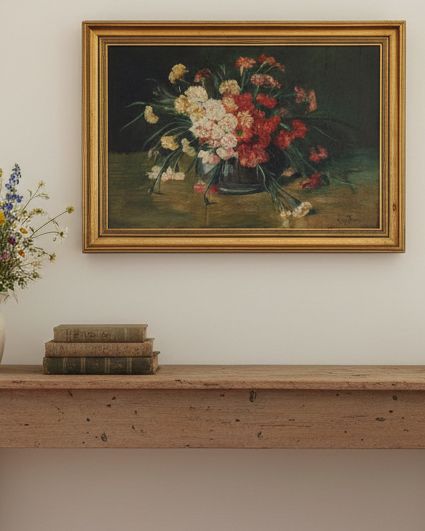
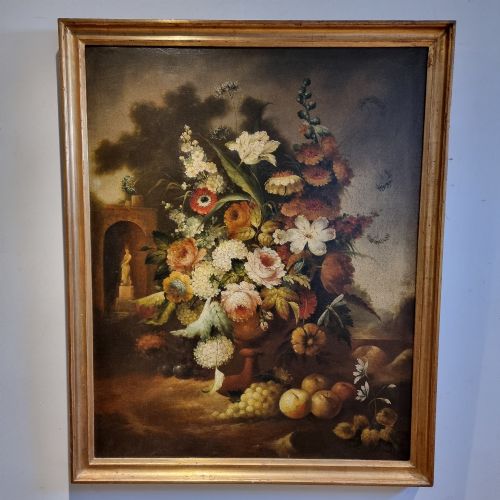
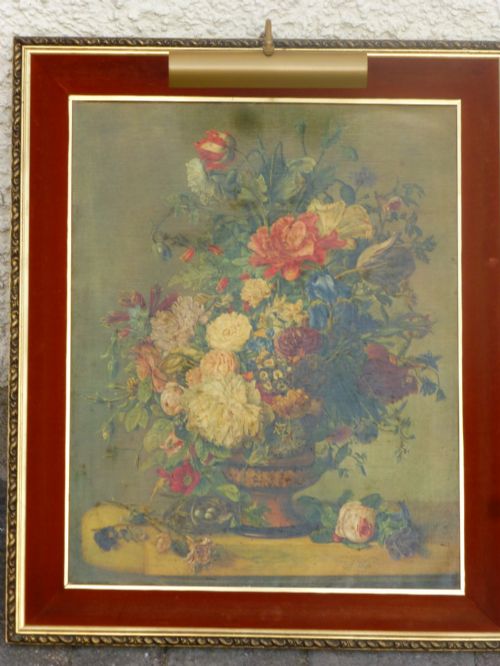
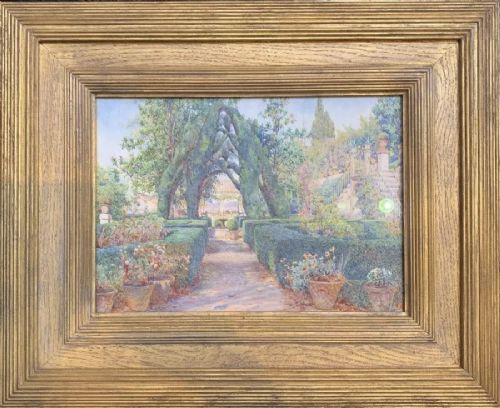
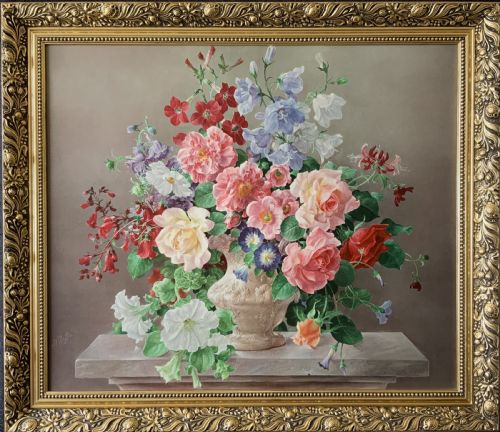
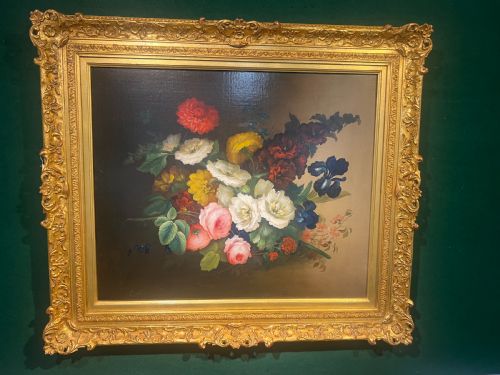
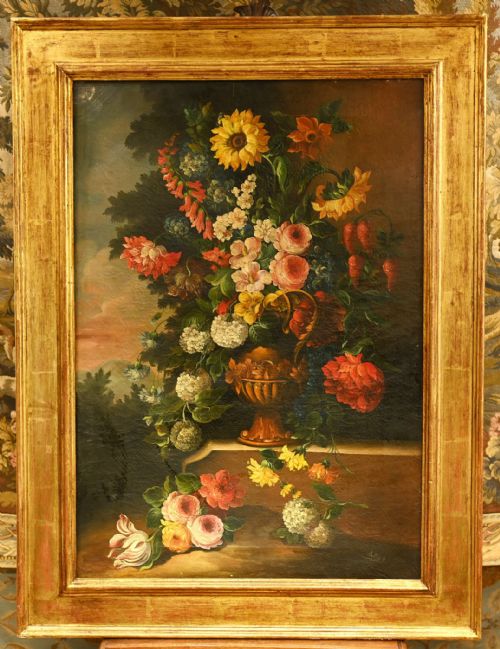
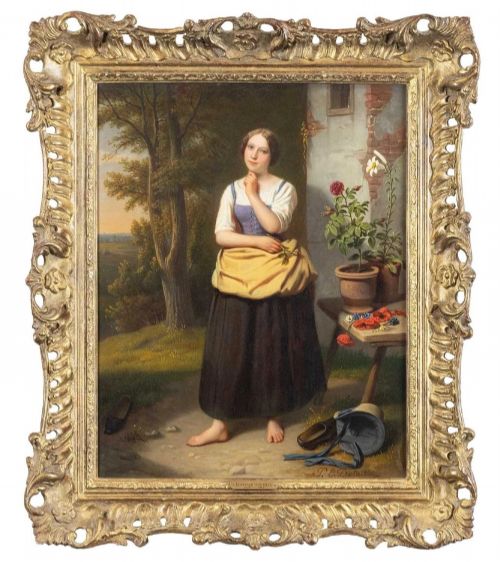
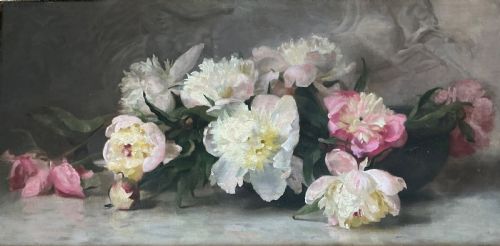
Traditional flower wall artwork encompasses oil paintings and watercolours depicting blooms, still lifes, and garden scenes. These pieces capture floral subjects ranging from Dutch style compositions to Victorian studies and mid-century arrangements.
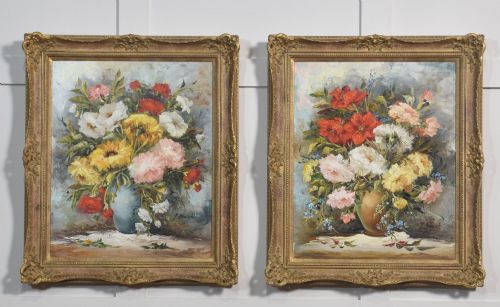
The selection on this page draws from the nineteenth and twentieth centuries, featuring framed canvases and paper works. Buyers encounter individual paintings and pairs created in British and continental European traditions.
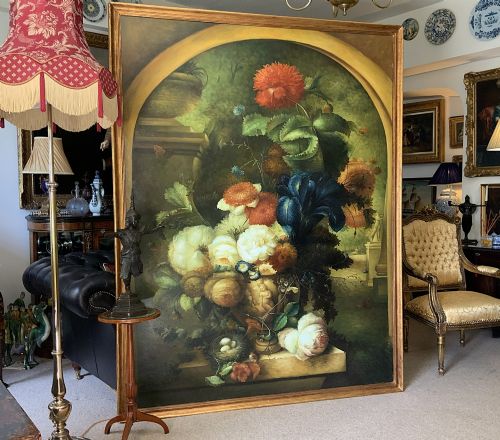
Subjects include carnations, peonies, chrysanthemums, and spring flowers arranged in vases, jugs, or garden settings. The scale varies from miniature studies to monumental canvases.
Materials and Techniques
Artists painted primarily in oil on canvas or applied watercolour on paper and silk, supported by wood stretchers and mounts. The physical construction relies on traditional stretched canvas and framed paper supports.
Gilt gesso frames and wooden mouldings house the artworks, adding structural depth and decorative weight to the display. Gold leaf accents frequently enhance the framing around oil paintings.
Brushwork ranges from detailed botanical observation in watercolour to textured impasto in oil paint, reflecting the varied handling of the medium across different decades.
Some paintings capture stubborn pigeons alongside traditional garden flora and fallen fruit.
Markers of Quality
Quality rests in the handling of light and pigment within the floral composition, distinguishing adept brushwork from routine decorative output. The execution of petals, stems, and foliage reveals the artist's control over tone and colour.
The integrity of the original canvas, paper, and frame contributes to the piece's standing. Period frames matching the age of the painting hold greater interest than later replacements.
Signed works and documented attributions carry distinct weight, providing a clear link to known painters working within regional traditions.
Ernest Arthur Rowe·Manuela Bonati·William Watt Milne·Gertrude Hayes·Owen Bowen·Calzolari·Robin MacKertich·Henry Schouten·Pierre-Joseph Redouté·Emily Selinger·Margaret Evangeline Wilson·Harold Edward Conway·Lilian Stannard·Kershaw Schofield·Minnie Smythe
The Traditional Flower Wall Artwork Glossary
- Still life
- An artwork depicting inanimate subject matter, typically everyday objects or botanical specimens arranged on a surface.
- Gesso
- A plaster-like mixture applied to wood frames as a base for gilding and ornamentation.
- Oleograph
- A mechanical colour print on canvas that simulates an oil painting.
- Impasto
- Paint applied thickly to a canvas, standing out from the surface to create texture.
- Watercolour
- A painting method in which the paints are made of pigments suspended in a water-based solution.
Traditional Flower Wall Artwork: Frequently Asked Questions
What periods do these floral paintings date from?
The works span from the nineteenth century through the mid-twentieth century, capturing shifting styles in botanical representation. Pieces reflect Victorian sensibilities alongside later Edwardian and post-war interpretations.
Datings draw upon recorded signatures, stylistic evidence, and period framing techniques associated with specific decades.
How should I hang a large floral canvas?
Large canvases require secure wall anchors suited to the weight of the wood stretcher and heavy gilt frame. Position the artwork at eye level to replicate gallery display standards.
Keep pieces away from direct sunlight to protect oil paint and watercolour pigments from fading over time.
Are these artworks supplied with frames?
Many listings include period gilt, wood, or gesso frames that complement the painting style. These housings range from simple mouldings to ornate decorative frames.
Frame materials and conditions vary, reflecting the age and history of each individual piece.