





Traditional Equine Wall Art
Traditional equine wall art captures the powerful presence of horses through historic oil paintings, watercolours and framed prints.
Traditional Equine Wall Art
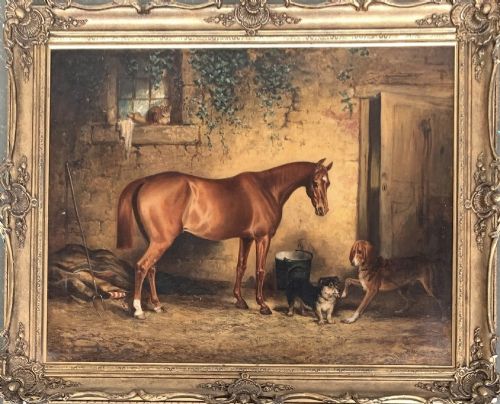
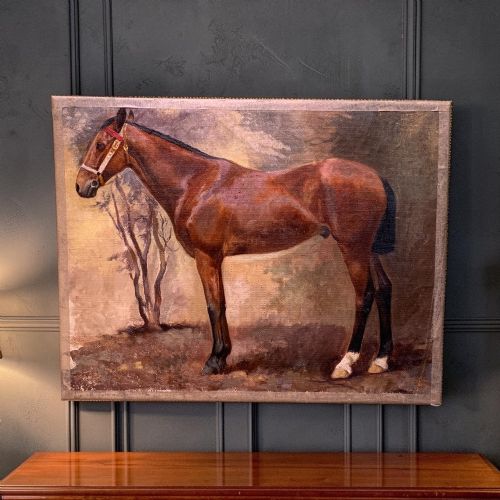
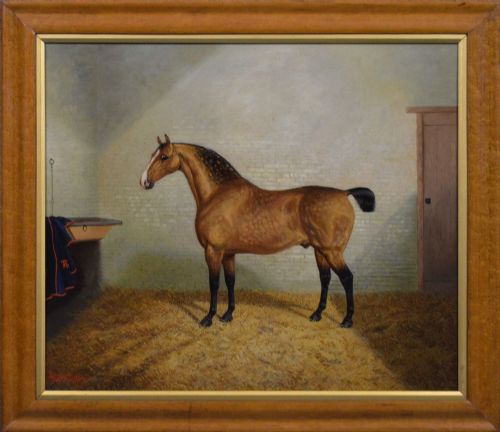
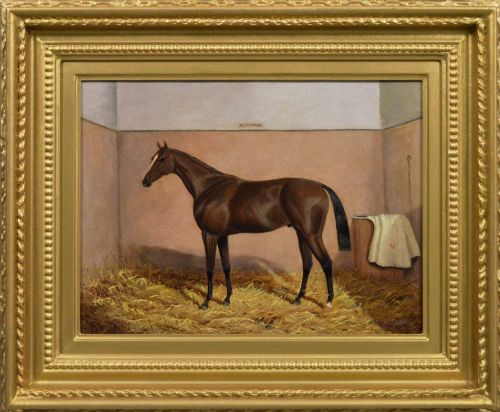
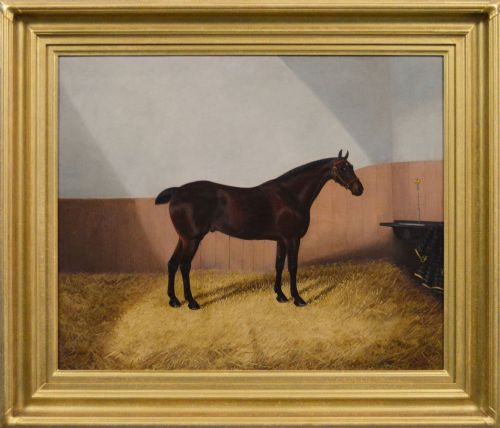
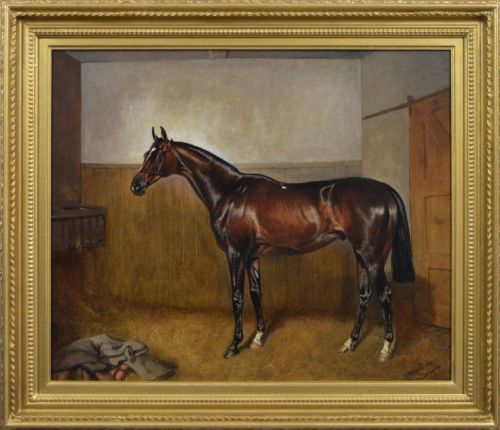
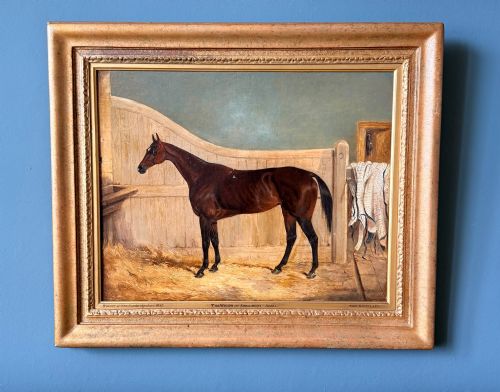
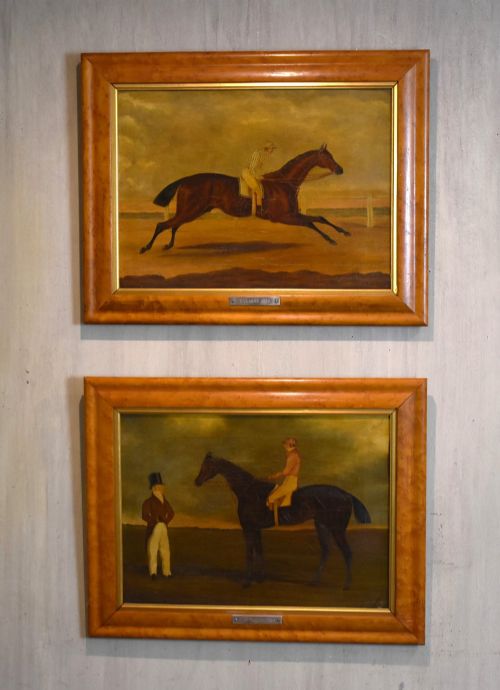
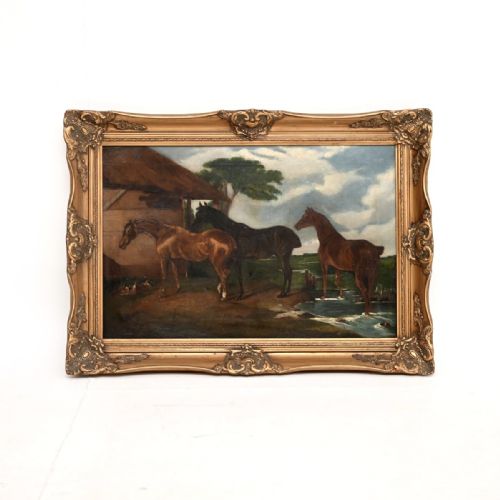
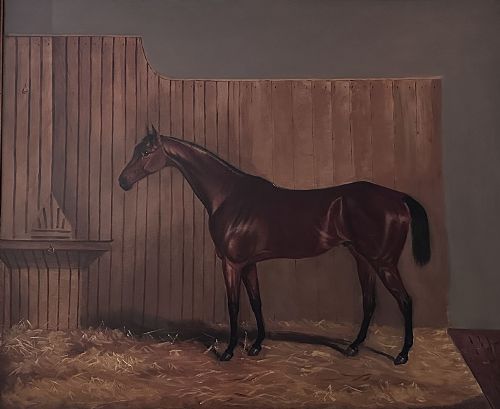
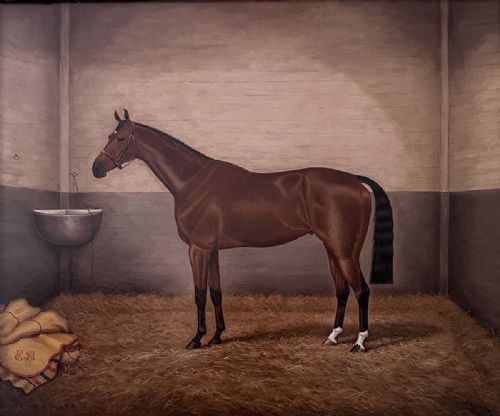
Traditional equine wall art encompasses oil paintings, watercolours and painted prints dedicated to horses, hunting scenes and rural life. These works capture specific animals, from renowned racehorses like Flying Fox to farm shires and bay hunters.
The pieces on this page span the eighteenth, nineteenth and early twentieth centuries, reflecting Victorian and Edwardian sporting art. Buyers encounter detailed portraits of individual animals in stables or landscapes, alongside broader rural scenes with hay wagons and ploughing teams.
Portraits of named champions and royal thoroughbreds sit alongside anonymous studies of horses on the road or in stable interiors. The selection leans heavily towards nineteenth-century canvas works framed in wood and gilt.
Materials and methods
Artists painted primarily in oil on canvas, though some works utilise wood panels or pine boards as a base. Pigments were applied with careful brushwork to render the sheen of a horse coat, the texture of a mane and the details of tack.
Many of the older works retain their original giltwood or wooden frames, which complement the depth of the oil paint. Watercolour paintings and printed reproductions offer alternative mediums from the period, often mounted behind glass.
The listings feature canvas, wood and pine panel supports painted in oil, alongside watercolours and printed works.
Distinctions in quality
Quality rests upon the artist ability to render the anatomy, muscle structure and alert expression of the horse correctly. Works by recorded painters display superior handling of light on a coat and perspective within a landscape.
Henry Barraud·Albert Clark·John Alfred Wheeler·Thomas Walker Bretland·John Frederick Herring Snr·William Williams·George E Sharpe·Benjamin Cam Norton·Clifton Tomson·Arthur Winter Shaw·Abraham Cooper RA·Charles Bilger Spalding RA·George Goodwin Kilburne·Edward Lloyd·John Parker Davis
The Traditional Equine Wall Art Glossary
- Oil on canvas
- A painting executed with pigment suspended in drying oil applied to a stretched cloth support. This technique allows for rich colour depth and subtle blending.
- Giltwood
- Wood carved and coated with gold leaf or a gold-coloured finish. This material is standard for period frames enclosing nineteenth-century canvases.
- Sporting art
- A genre of painting that depicts rural sports, hunting, racing and animal portraits. These works record prized livestock and equestrian events.
- Pine panel
- A rigid wooden support used by artists instead of fabric canvas. Panels provide a smooth, stable surface for early painted works.
Traditional Equine Wall Art: Frequently Asked Questions
What periods do these pieces come from?
The works originate largely from the nineteenth century, with examples extending back to the eighteenth century and forward into the early twentieth century.
Victorian and Edwardian stylistic influences dominate the selection, showing the era preference for detailed animal portraiture.
How were these artworks framed?
Many paintings are housed in period wooden frames, frequently finished with gilt leaf to highlight the imagery.
These surrounds often date from the same period as the canvas, though framing styles vary across the different decades represented.
Can I find named racehorses in the art?
Several pieces depict specific historical horses, including recorded racehorses, royal thoroughbreds and competition champions.
Inscriptions on the canvases or historical records frequently identify the animals and sometimes their jockeys or owners.
Where should I hang an equine oil painting?
These works suit traditional reception rooms, studies or hallways where historical art complements the interior.
Protecting the canvas from direct sunlight and excessive moisture helps preserve the oil paint and wood frames over time.