


Traditional Equine Portrait Art
Traditional equine portrait art captures horses on canvas and panel, offering direct connection to past equestrian life and notable animals.
Traditional Equine Portrait Art
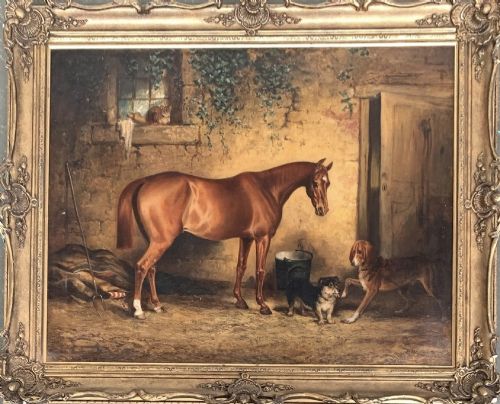
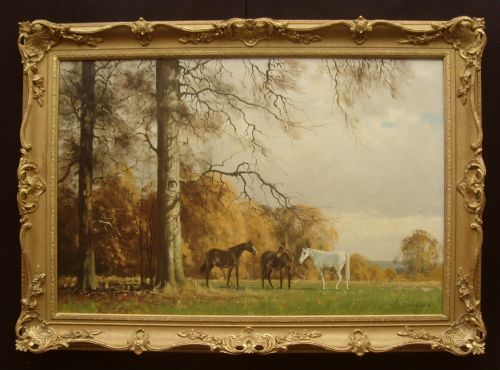
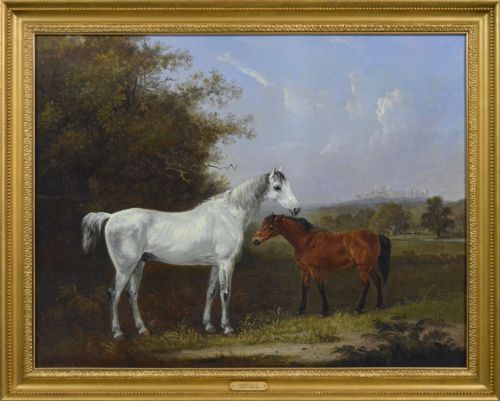
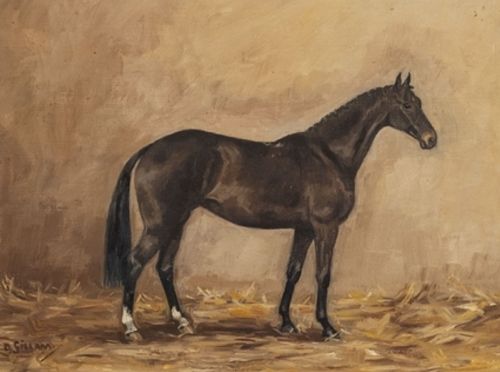
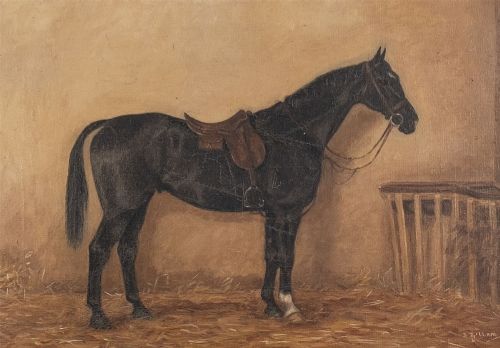
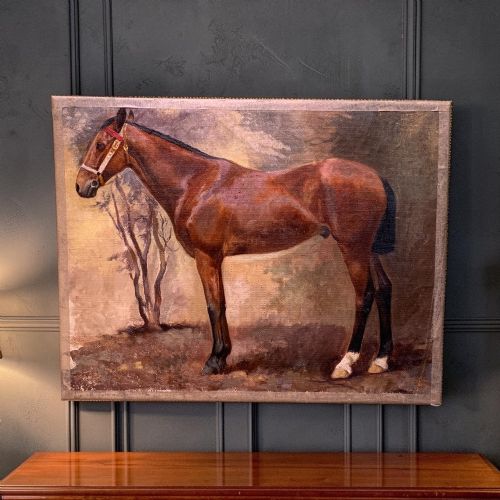
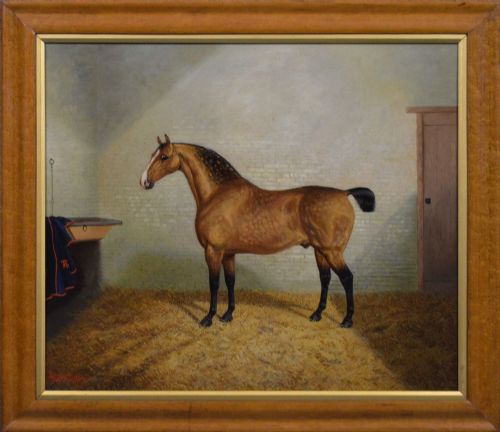
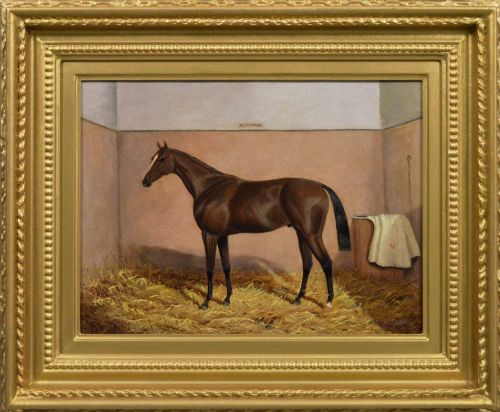
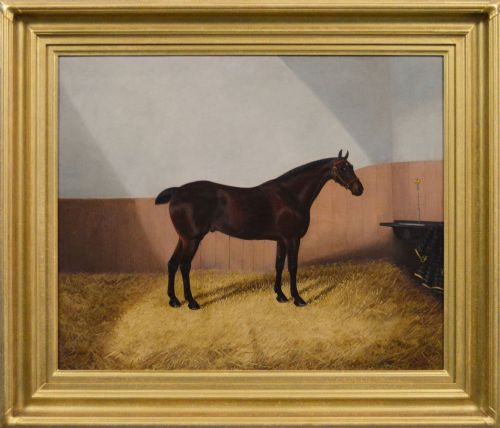
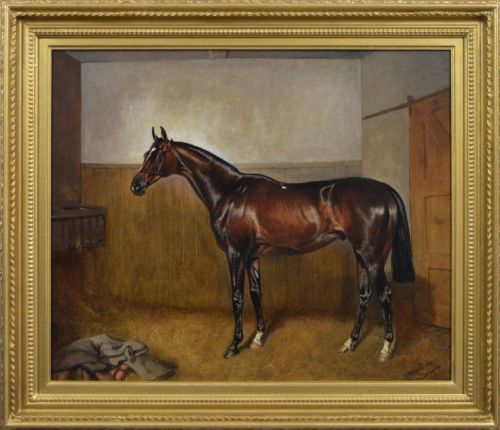
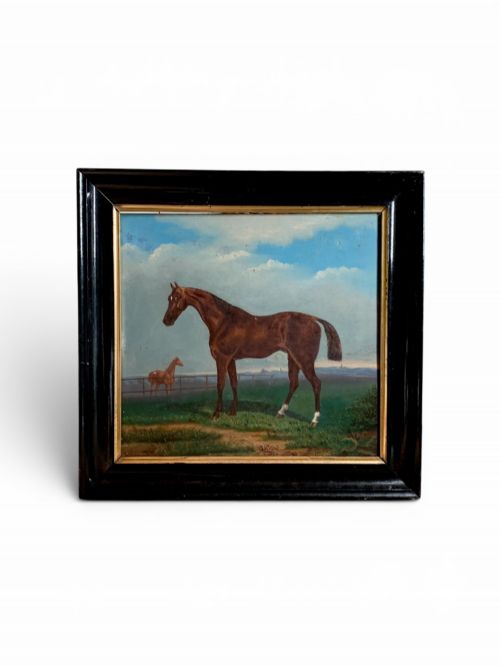
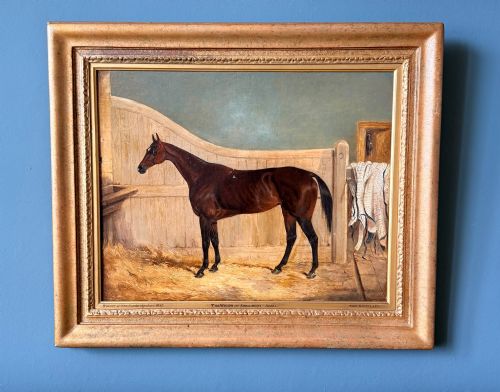
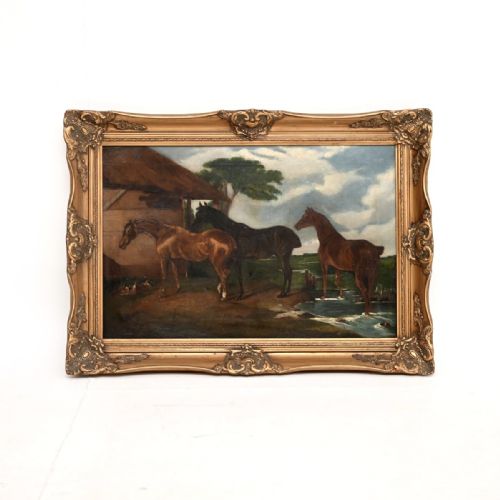
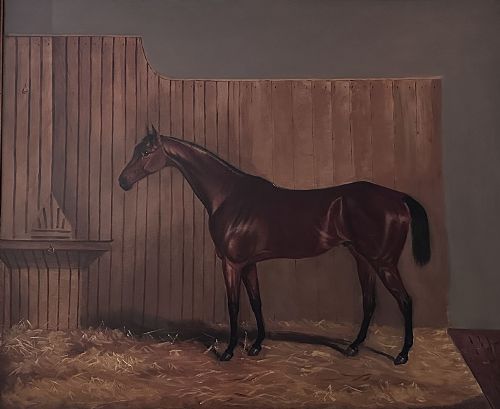
Traditional equine portrait art centres on depictions of horses, often rendered as individual studies of hunters, racehorses, mares, and stallions. These works record specific animals, sometimes alongside jockeys, grooms, or rural landscapes.
The pieces available here emerge from periods spanning the eighteenth century through the twentieth century. They include works created within the traditional English school and French school.
Most examples take the form of oil paintings on canvas or wood panels, alongside occasional watercolours. They reflect the historical importance of horses in sport, agriculture, and royal ownership.
How they were made
Artists applied oil paint to stretched canvas or wooden panels, sometimes employing gesso preparation for the ground. Frames frequently utilise giltwood to complement the finished painting.
Makers worked in studios or on location near estates, stables, and racecourses to record the precise conformation and markings of each subject. Pigments were brushed or layered to achieve depth in the coats of bay, chestnut, and black horses.
Current listings feature oil on canvas and wood panel supports, spanning periods from the Georgian era through the 1920s and beyond.
What varies in quality
Quality rests upon the artist's ability to render equine anatomy accurately, capturing bone structure, muscle tone, and posture rather than a generic silhouette. Finer works convey individual temperament and expression in the eye and head of the animal.
The handling of the surrounding environment also distinguishes the work, as superior paintings integrate the horse naturally into a stable interior, meadow, or racecourse background with balanced composition and brushwork.
Henry Barraud·Walter Robin Jennings·Edmund Bristow·Albert Clark·John Alfred Wheeler·Thomas Walker Bretland·William Williams·George E Sharpe·Benjamin Cam Norton·Clifton Tomson·Abraham Cooper RA·Charles Bilger Spalding RA·John Nost Sartorius
The Traditional Equine Portrait Art Glossary
- Canvas
- A heavy woven fabric stretched across a wooden frame to serve as a support for oil paint. It provides a flexible and durable surface historically favoured by portrait painters.
- Giltwood
- Wood carved and coated with a thin layer of gold leaf or metallic gilt. It commonly forms the decorative frames enclosing traditional paintings.
- Panel
- A flat piece of wood used as a rigid alternative to canvas for painting. Pine and other timbers received ground preparation before pigments were applied.
- Gesso
- A plaster-like mixture applied to wood panels or canvases to prepare a smooth surface for painting. It binds the paint layer to the support.
- Watercolour
- A paint consisting of pigment suspended in a water-based solution. Works executed in this medium on paper offer lighter, transparent qualities compared to oils.
Traditional Equine Portrait Art: Frequently Asked Questions
What is traditional equine portrait art?
Traditional equine portrait art comprises paintings of horses created across the eighteenth, nineteenth, and early twentieth centuries. These works document specific animals, from noted racehorses and royal thoroughbreds to hunters and farm horses.
Artists recorded the distinct physical traits and conformation of each subject, often placing them within stables, pastures, or racing settings. The pieces serve as historical records of equestrian culture and prized animals.
How were these horse portraits used?
Owners commissioned these portraits to celebrate successful racehorses, favoured hunters, and prized breeding stock. They hung primarily in country houses, estate offices, and stable blocks to display lineage and sporting achievements.
Over time, these paintings transitioned into domestic collections and galleries as appreciations for sporting art and social history evolved.
How do I live with equine art?
Equine portraits suit traditional and contemporary interiors alike, functioning effectively as focal points in reception rooms, studies, or hallways. Their dark varnishes and natural tones pair well with wooden furniture and neutral walls.
Displaying these works away from direct sunlight and excessive humidity protects the oil paint and giltwood frames from degradation.
How do I tell periods apart?
Periods are identified through a combination of painting style, framing, canvas preparation, and recorded artist signatures or dates. Eighteenth and early nineteenth-century works often feature distinct handling of landscape backgrounds and harness details specific to those eras.
Victorian and Edwardian pieces frequently display greater academic precision in anatomy and more elaborate giltwood framing. Examining the stretcher bars, canvas weave, and panel construction helps confirm the era of creation.