


Ochre Canvas Wall Art
Ochre canvas wall art brings together centuries of painted oil scenes and textured textile works designed to anchor a room.
Ochre Canvas Wall Art
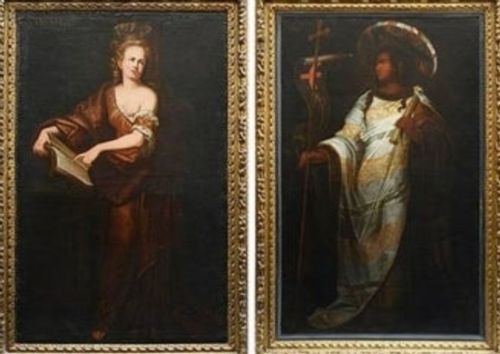
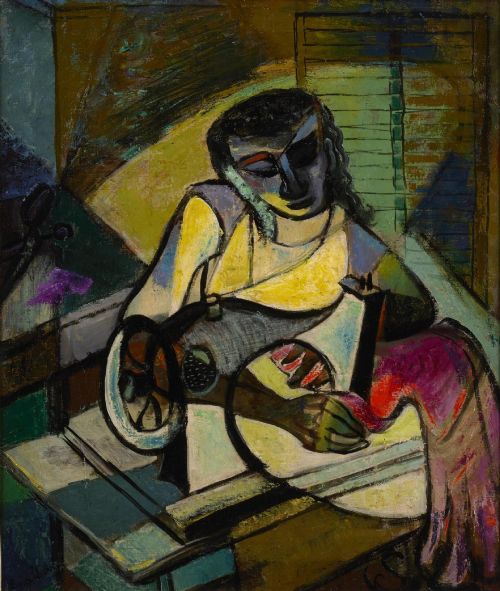
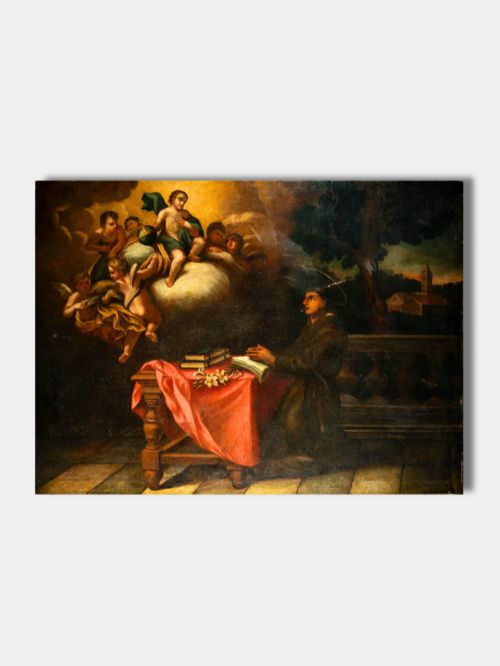
When searching for ochre canvas wall art, buyers encounter a diverse selection of oil paintings on canvas stretching from the eighteenth century through to the mid-twentieth century. These works range from classical religious and classical mythological depictions to rural landscapes, coastal scenes, and modernist interiors.
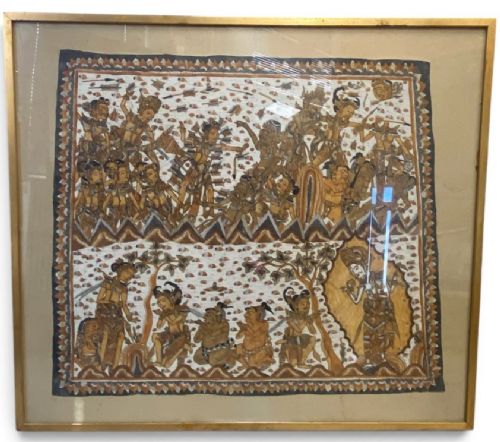
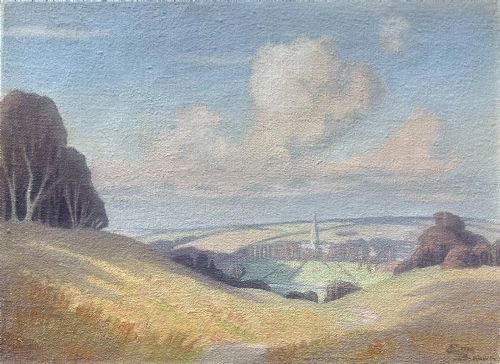
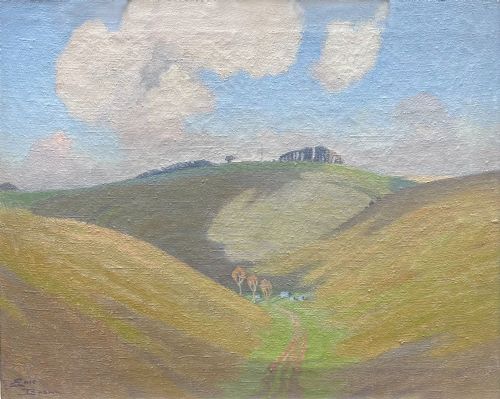
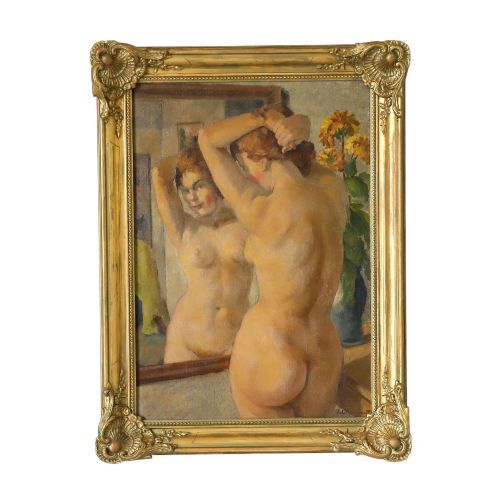
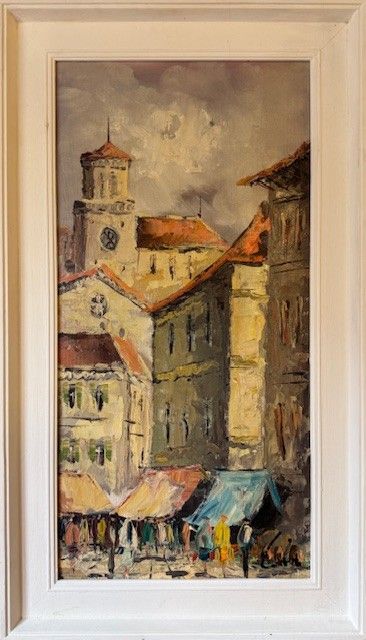
The inventory on this page spans distinct periods including eighteenth-century classical creations, nineteenth-century Victorian works, and twentieth-century British modernism, alongside mid-century European impressionism. Alongside traditional European oil paintings, pieces incorporate textile supports such as Balinese Kamasan works depicting warriors and deities.
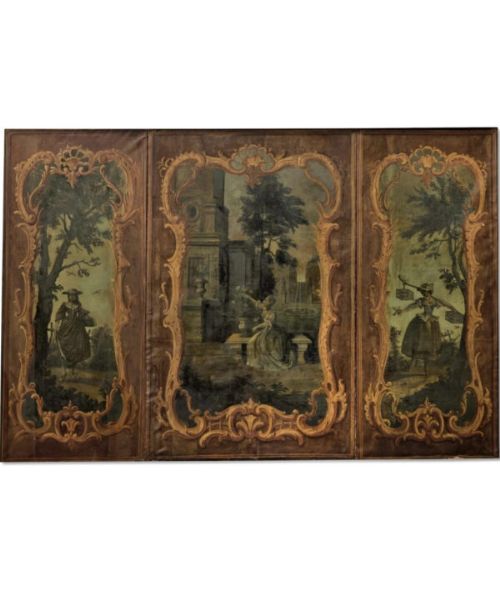
Subjects vary widely from grand grisaille triptychs and architectural views of abbeys to intimate household interiors, market squares, and desert landscapes featuring bedouin figures. Each piece utilises canvas or textile as the primary ground for layered pigments.
Materials and Techniques
The works rely upon oil paint applied directly to stretched canvas or textile surfaces, often combined with wooden stretcher frames or panel supports. Artists layered pigments to build depth in landscapes and figure studies.
Several pieces incorporate gilded elements, utilising gold leaf or gilt frames to enclose and elevate the painted surface. These traditional framing and mounting techniques protect the edges of the canvas while adding reflective warmth.
Camels traverse a desert landscape in one canvas, while nearby a solitary soup tureen anchors a cubist interior.
Distinctions in Quality
Quality in these painted works rests upon the confidence of the brushwork and the structural integrity of the canvas support. Superior pieces demonstrate deliberate handling of light and shadow, particularly in complex figural compositions or atmospheric landscapes.
The cohesion of the palette and the preservation of the original oil medium dictate the visual impact of each work. Retaining original stretcher frames and authentic historic framing further distinguishes higher-tier pieces within the collection.
Philippe de Rougemont·Cecil Rochfort Doyly John·Amile Coppieters·Ron Folland·Abdul Kadir Al Rassam
The Ochre Canvas Wall Art Glossary
- Grisaille
- A painting executed entirely in shades of grey or neutral monochromatic tones, often used to create the illusion of sculpture or stone relief.
- Impressionism
- A style of painting characterised by relatively small, thin yet visible brush strokes and an open composition emphasising accurate depiction of light.
- Triptych
- A picture or relief carving on three panels, typically hinged together side by side and used as an altarpiece or decorative wall hanging.
- Canvas
- A closely woven heavy cloth used as a support surface for oil paintings, stretched tightly across a wooden frame before application of ground and pigment.
Ochre Canvas Wall Art: Frequently Asked Questions
What periods do these paintings cover?
The selection spans from the mid-eighteenth century through the nineteenth-century Victorian era and into mid-twentieth-century modernism.
Pieces range from classical 1750 compositions to 1960s European impressionist canvases.
How should I hang a heavy oil painting?
Large oil paintings on canvas require secure wall fixings suited to the combined weight of the wooden stretcher and heavy gilt frame.
Ensure weight is distributed evenly across sturdy picture hooks fixed directly into wall studs or solid masonry.
Are all these works painted on canvas?
While the majority of pieces utilise oil paint on traditional woven canvas, the collection also includes works on textile supports.
Specific examples feature painted cotton or traditional fabric grounds rather than standard stretched canvas.
How do I identify a mid-century impressionist piece?
Mid-century impressionist works typically display looser brushwork and vibrant palettes focused on capturing atmospheric effects of light and landscape.
Signatures, framing styles, and mid-century canvas construction help confirm the era.