




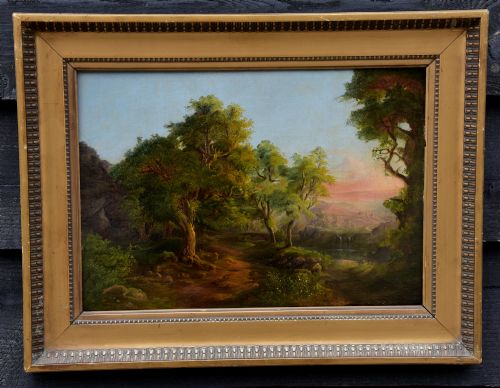
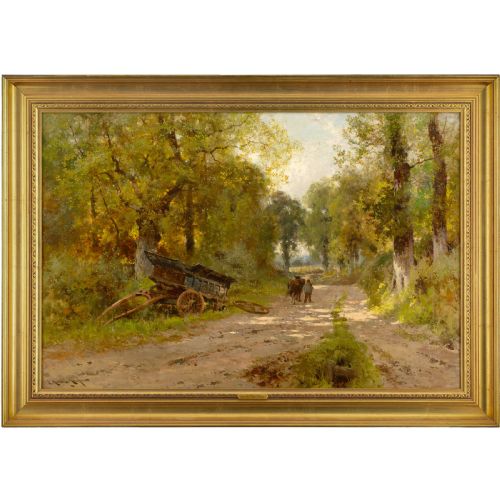
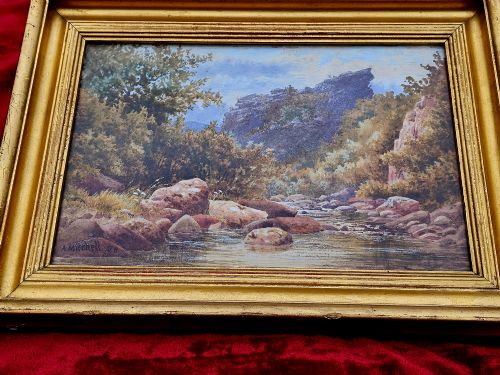
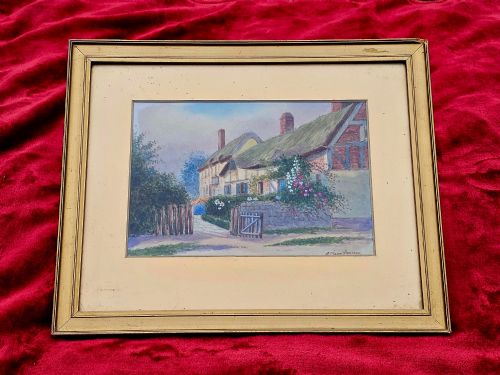
Green Framed Landscape Painting
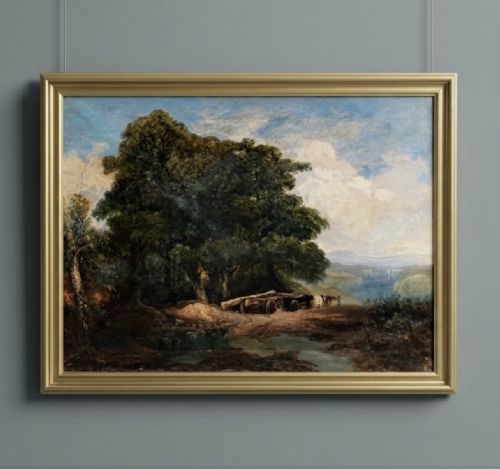
A green framed landscape painting brings pastoral scenery into an interior through pastoral watercolours and oils enclosed in painted or gilded wooden housings.
Green Framed Landscape Painting
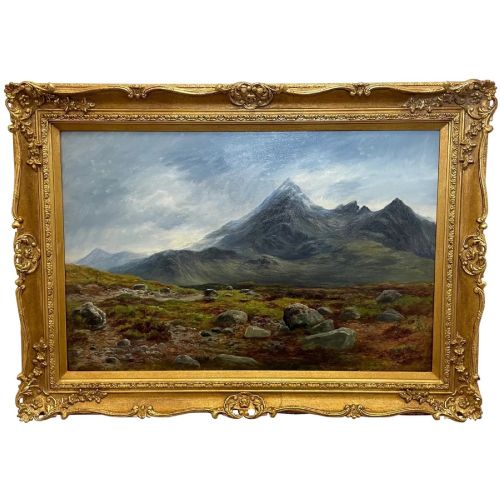
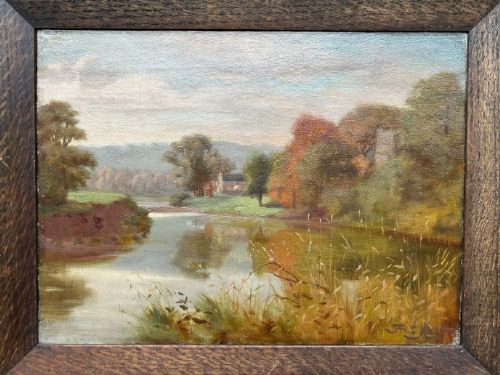
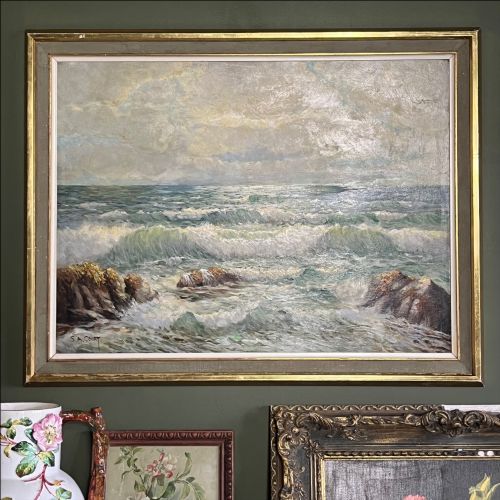
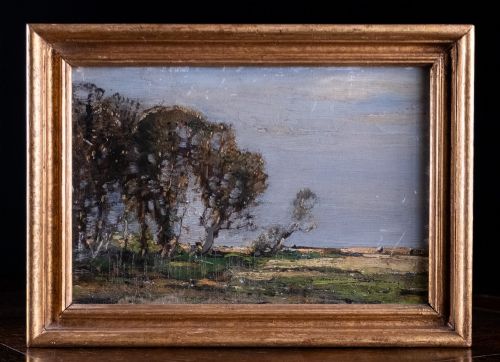
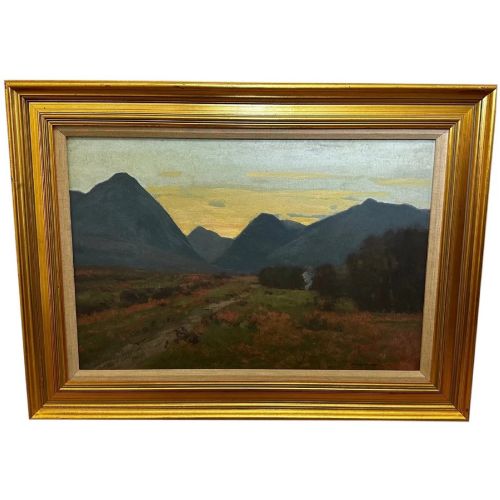
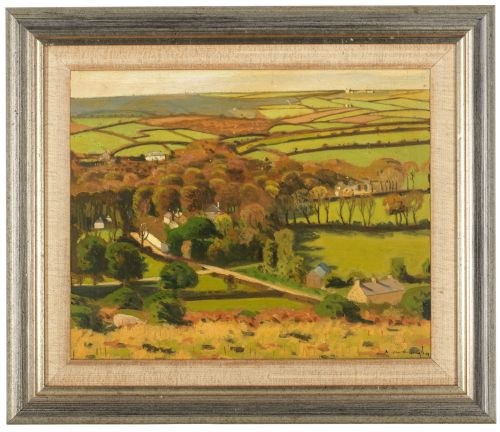
A green framed landscape painting unites pastoral scenery with a verdant enclosing border, capturing rural vistas, woodland scenes, and coastal views from the nineteenth and early twentieth centuries. These artworks emerge from British, European, and Scottish schools, portraying rivers, harvests, and country gardens through the mediums of oil and watercolour.
Collectors encounter works spanning the Victorian and Edwardian eras alongside later modernist interpretations. The subjects range from quiet farmyards and Scottish hills to Cornish coastal views, held within original or period frames that complement the natural hues of the canvas.
Materials and construction
Painters of these works utilised oil and watercolour applied to canvas, wood panels, paper, board, and card. Supports were prepared and worked en plein air or within the studio, capturing light across rural terrain.
Enclosing these works are frames fashioned from wood and giltwood, glazed with glass where watercolours or pastels require protection. The integration of paint and framing material establishes a unified visual boundary for each scene.
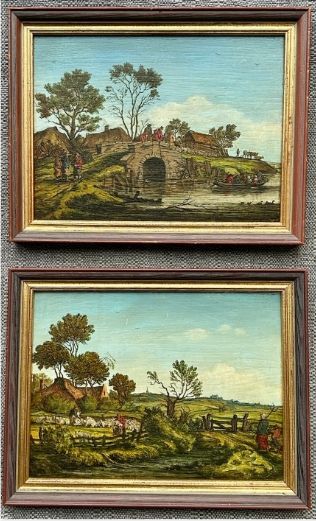
Several sheep and at least one dog share these landscapes with fishermen and wandering artists.
Distinctions in execution
Quality rests upon the artist's handling of pigment, light, and perspective within the landscape. Works by established Royal Academy exhibitors or signed regional masters display greater surety of brushwork and compositional depth than anonymous school pieces.
The harmony between the artwork and its housing influences the overall standard. Original period frames that suit the palette and period of the oil or watercolour elevate the piece above those housed in mismatched later surrounds.
Eugène Verboeckhoven·Richard Sebastian Bond·William Beattie Brown·George Fotherly Hargitt·William H Myers·George Graham·Frederick Marriott·John Horace Hooper·A Mitchell·A Marie Parsons·Sidney A Court·Kershaw Schofield·George Houston·Robert Morson Hughes·Thomas W Lascelles·Robert A Nottingham·William Joseph Boyes·Gabriel Mathieu·David Bates·Benjamin Barker of Bath·Charles Houben·Walter Heath Williams·Antonio DeVity·Raymond Booth·Ernest Arthur Rowe
The Green Framed Landscape Painting Glossary
- Oil paint
- A slow-drying medium composed of pigments suspended in a drying oil such as linseed. This technique allows artists to build rich textures and subtle tonal gradations across canvas and board.
- Watercolour
- A paint consisting of colour pigments suspended in a water-soluble vehicle, typically applied to paper. It produces translucent washes that capture natural light effectively.
- Giltwood
- Wood that has been treated with a thin layer of gold leaf or gilt composition. This finish is commonly found on traditional frames surrounding fine art.
- En plein air
- A French expression describing the act of painting outdoors. Artists utilise this method to capture direct observation of light and atmosphere in real time.
Green Framed Landscape Painting: Frequently Asked Questions
What periods do these landscape paintings represent?
The selection spans the nineteenth and twentieth centuries, encompassing Victorian, Edwardian, and later modernist periods.
Creators from these eras recorded rural scenes across Britain and Europe using traditional painting techniques.
How should I display a framed painting?
Position the artwork away from direct sunlight and damp environments to protect the canvas, paper, and wooden frame.
Ensure the wall fixings match the weight of the wood and glass housing for secure suspension.
Are these artworks signed by the artists?
Many pieces feature signatures, monograms, or dates inscribed by the painter upon the canvas, board, or paper.
Other works originate from specific regional schools and remain attributed through stylistic evidence and period framing.
What surfaces were used for these artworks?
Painters worked on stretched canvas, wooden panels, heavy paper, board, and card depending on the chosen medium.
Watercolours require glass protection, whereas oil paintings on canvas or panel remain open to the air.