




Traditional English Village Art
Traditional English village art captures rural life through Victorian and twentieth-century watercolours and oil paintings.
Traditional English Village Art
Traditional English village art encompasses landscape and genre scenes depicting rural settlements, country lanes, and local inns across England.
Buyers looking at this selection encounter works dating from the nineteenth century through the mid-twentieth century.
The most common formats on this page are framed watercolours on paper and oil paintings on canvas.
Materials and methods
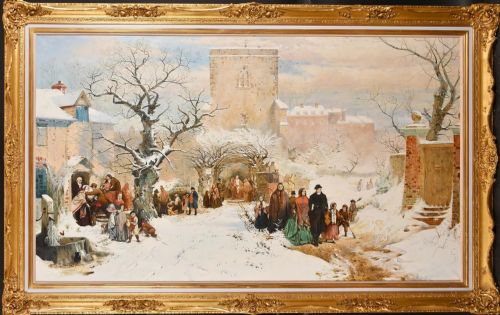
Painters utilised oil paint on canvas and watercolour pigment on paper, frequently housed within period gilt frames.
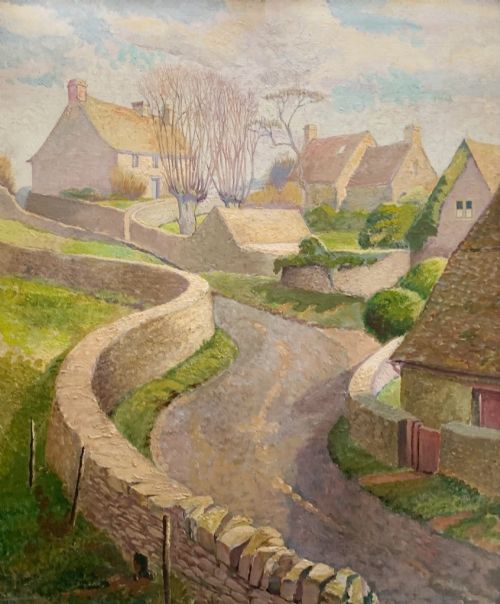
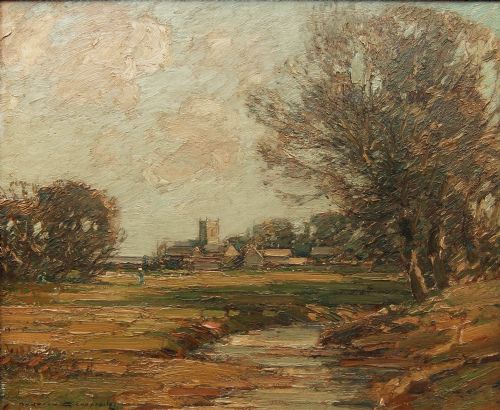
Techniques range from detailed realism documenting local stone architecture to impressionistic brushwork recording atmospheric rural light.
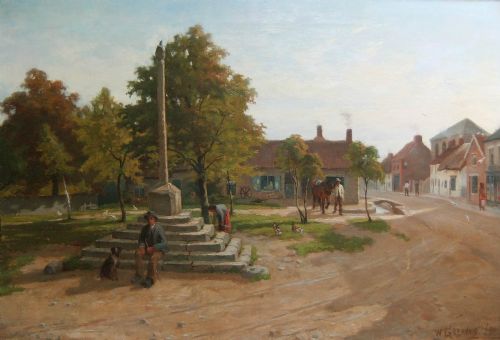
Several artists walked out with sketchbooks to record local inns, ensuring village taverns gained immortality in paint.
Judging the works
Quality rests upon the artist's handling of perspective, light, and the specific architectural details of the depicted village.
Stronger pieces demonstrate confident draughtsmanship in capturing figures, livestock, and traditional buildings.
William Greaves·Fred Lawson·Arthur Tucker·Charles Vickers·John Edward Bale·David Woodlock·Walter Henry Sweet·Herbert Royle·Stanley Orchart·Alfred Rimmer·David Heward·John Holland Snr·Alfred Leyman·Georgina Lara
The Traditional English Village Art Glossary
- Watercolour pigment
- A water-soluble painting medium applied in transparent washes on paper to create luminous effects.
- Oil on canvas
- Pigments bound in oil applied to a stretched woven fabric surface, allowing rich colour depth.
- Genre painting
- Artwork depicting scenes from everyday life, often including villagers and rustic tavern settings.
- Gilt frame
- A wooden picture surround coated with a thin layer of gold leaf or metallic gilt finish.
Traditional English Village Art: Frequently Asked Questions
What periods do these paintings cover?
The works span from the mid-nineteenth century through the mid-twentieth century, capturing changing rural landscapes over several decades.
Artisans and painters recorded village scenes during the Victorian, Edwardian, and post-impressionist eras.
How were these village scenes originally displayed?
Most pieces were framed for domestic interiors, often in matching gilt wood frames that suited period home decor.
They served as picturesque reminders of rural life and specific English counties.
What subjects appear most frequently?
Common subjects include village inns, country churches, rural cottages, and local characters engaged in daily activities.
Artists frequently documented specific named locations across Yorkshire, Devon, and other English counties.
How do I care for works on paper versus canvas?
Watercolours on paper require protection from direct sunlight to prevent fading of the pigments over time.
Oil paintings on canvas generally prove more resilient but benefit from stable indoor humidity and clean environments.