




English Country Landscape Drawing
An english country landscape drawing captures rural scenery on paper using ink, pencil, or watercolour.
English Country Landscape Drawing
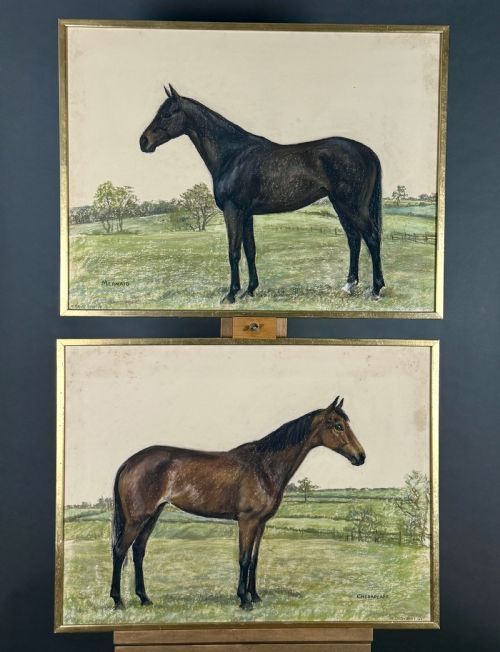
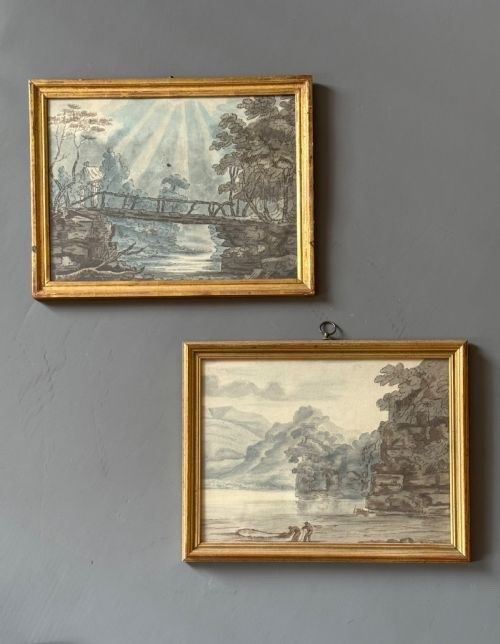
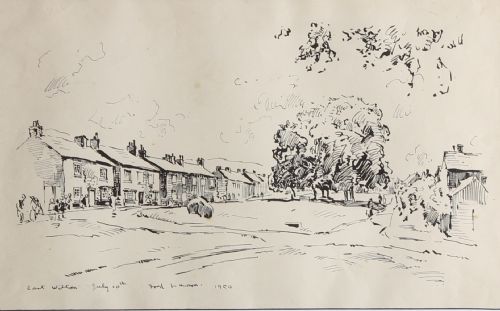
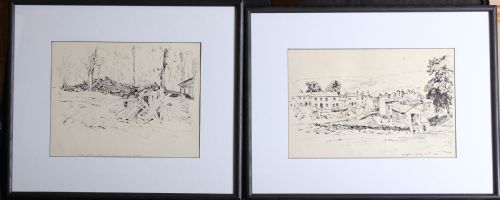
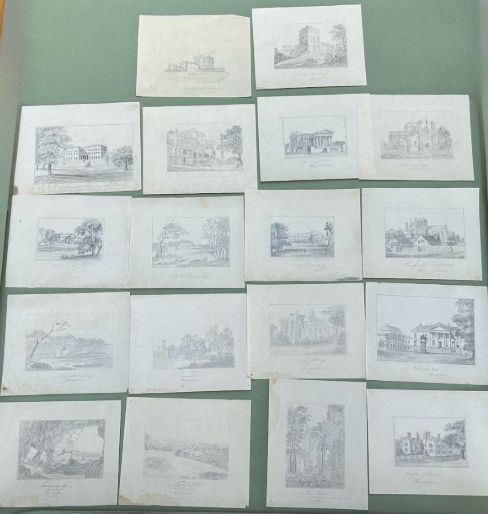
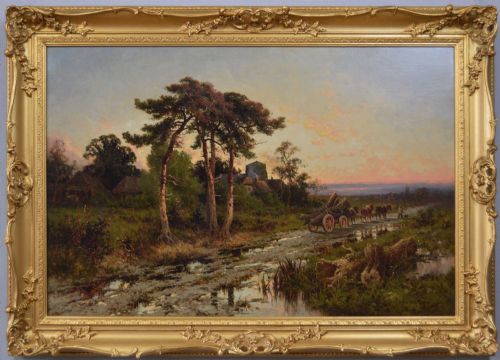
An english country landscape drawing brings together rural scenery and pastoral views captured by artists working across the nineteenth and twentieth centuries. These works record village scenes, farm buildings, and countryside views using media on paper such as ink, pencil, pastel, and watercolour. Pieces range from early nineteenth century pencil sketches to mid-century modernist interpretations by named British artists.
Materials and Techniques
Artists working on an english country landscape drawing relied primarily on paper supports combined with water-soluble pigments, ink, or graphite. Watercolour and ink applied with a pen allowed practitioners to build delicate washes alongside sharp linear details of farmsteads and village lanes. Pastels on paper offered a softer medium for rendering atmospheric skies and rural expanses.
Framing materials complete these works, utilising wood and gilt wood frames paired with protective glass. These traditional enclosures preserve delicate paper surfaces from atmospheric moisture and handling over decades.
Several drawings preserve intimate glimpses of rural life, from farmyards behind Yorkshire barns to horse-drawn coaches battling winter snow.
Markers of Quality
Quality in an english country landscape drawing rests on the confidence of the draughtsmanship and the artist's command of light and atmosphere. Stronger works demonstrate expressive pen work, controlled watercolour washes, and precise observation of topography and rural architecture. Weaker examples may show hesitant lines or muddy pigment handling that obscures the composition.
The preservation of the paper support and the clarity of the medium also influence distinction. Works that retain their original colour intensity without heavy foxing or fading represent the higher tier of surviving pieces.
Fred Lawson·Thomas Rowlandson·Amos Green·Henry H Parker·Samuel Henry Alken·John Richard Worsdale·Frank Saltfleet
The English Country Landscape Drawing Glossary
- Watercolour
- A paint consisting of pigment suspended in a water-based solution, applied to paper to create translucent washes of colour. It remains the dominant medium for British landscape works on paper.
- Ink
- A liquid containing pigments or dyes used with a pen to define outlines and create hatching in linear drawings. Artists often paired ink with watercolour washes.
- Pastel
- A dry painting medium in the form of a stick, made of powdered pigment and a binder. It produces velvety colour fields on paper supports.
- Gilt wood
- Wood carved and coated with a thin layer of gold leaf or gold-coloured metal powder. It is commonly found on traditional picture frames.
- English School
- A classification for works produced by artists trained or working within the British artistic tradition. It spans several centuries of landscape and figurative production.
English Country Landscape Drawing: Frequently Asked Questions
What is an english country landscape drawing?
An english country landscape drawing is a work on paper depicting rural British scenery, villages, and farmland.
Artists created these pieces using watercolour, ink, pencil, or pastel, capturing topographical views and pastoral life.
How should I frame and display my drawing?
These works require framing behind glass with appropriate mounts to prevent the paper from touching the glazing.
Keep them away from direct sunlight to protect watercolours and inks from fading over time.
How do I date an antique drawing?
Dating relies on stylistic markers, paper watermarks, artist signatures, and framing materials where original.
Pieces range from early nineteenth-century pencil sketches to mid-twentieth-century watercolour studies.
What subjects appear in these drawings?
Common subjects include farm buildings, village streets, castle ruins, and rural tracks with carts and horses.
Many works record specific named locations across English counties such as Yorkshire and Hampshire.