




Cream Paper Landscape Art
Cream paper landscape art comprises delicate works on paper capturing scenic views across various centuries and British schools.
Cream Paper Landscape Art
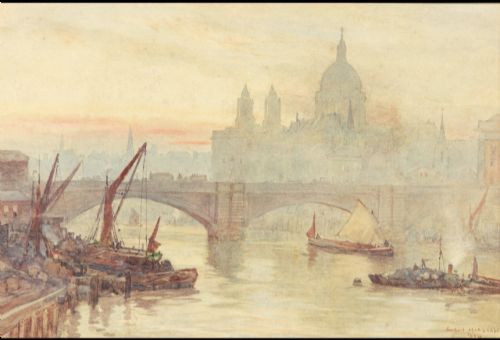
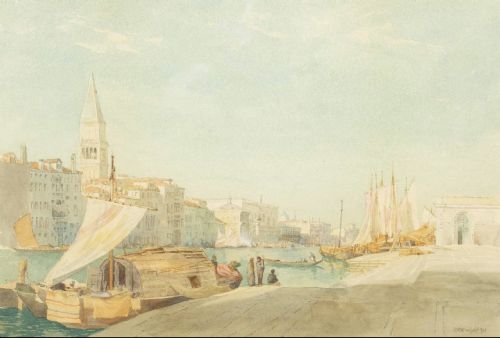
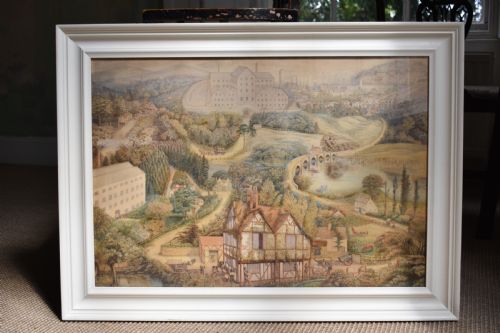
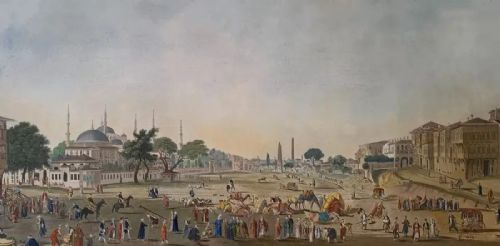
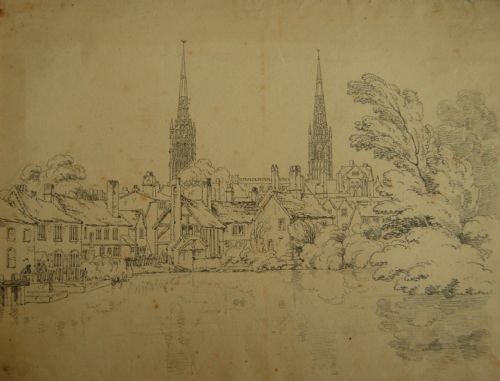
Cream paper landscape art encompasses watercolour paintings, pencil drawings, and fine art prints executed on cream-toned supports. These works range from Victorian genre scenes and Orientalist views to traditional British school landscapes and topographical landmarks.
Buyers will encounter framed artworks spanning the eighteenth, nineteenth, and twentieth centuries, including depictions of Welsh rivers, Venetian canals, Devon beaches, and Scottish lochs. The selection leans heavily towards nineteenth-century watercolours and architectural studies.
The assortment includes works by named artists such as Cornelius Pearson, Richard Henry Wright, and Fred Lawson, alongside anonymous British school paintings. Each piece presents a distinct geographical record captured through historical draughtsmanship.
Materials and Techniques
Artists utilised watercolour pigment and ink applied directly to paper or card mounts, often relying on the natural cream tone of the support to provide mid-tones and highlights. Pencil drawings employ graphite to establish fine architectural and topographical detail.
Finished works are typically housed behind glass within wooden frames, protecting the delicate paper supports from atmospheric damage and handling. Card mounts provide structural separation between the painting surface and the protective glazing.
Several artists clearly braved chilly Welsh riverbanks and pebble beaches just to capture ducks and fishermen on cream paper.
Judging Quality and Execution
Quality rests upon the precision of the brushwork and the confidence of the draughtsmanship, distinguishing hurried topographical sketches from accomplished compositions. The handling of light and atmospheric perspective across landscape and architectural elements dictates the visual success of the piece.
Condition plays a central role, with superior examples retaining the vibrancy of their original watercolour pigments and ink without excessive fading or paper discolouration. The integrity of the original framing and the preservation of the paper support complete the assessment.
Richard Henry Wright·Anton Ignaz Melling·Cornelius Pearson·James Hardy Junior·Stanley Orchart·Henry Wimbush·George Marks·Henry Edridge·Fred Lawson
The Cream Paper Landscape Art Glossary
- Watercolour painting
- A method of painting where water-soluble pigments are suspended in a water-based solution, typically applied to paper supports. This technique allows for translucent washes and delicate tonal gradations.
- Pencil drawing
- A monochromatic work executed with a graphite core encased in wood or held directly, valued for its linear precision. These drawings often serve as preliminary studies or finished topographical records.
- Card mount
- A protective paperboard border placed around a work on paper within the frame. It prevents the artwork from touching the glass directly.
- Grand Tour
- A cultural journey of Europe formerly undertaken by wealthy young men for educational purposes, inspiring architectural and landscape art. Many associated watercolours depict Italian landmarks and Mediterranean views.
Cream Paper Landscape Art: Frequently Asked Questions
What periods do these landscapes cover?
The available pieces span from the mid-eighteenth century through the Victorian era and into the mid-twentieth century.
Most examples originate from the nineteenth century, reflecting traditional British and European schooling.
How should I frame and display them?
These works on paper require protection behind glass to prevent atmospheric damage and fading from direct sunlight.
Display them away from moisture and direct heat sources to preserve the paper and pigment integrity.
Are these works signed by the artists?
Several pieces bear the names of notable nineteenth and twentieth-century painters, while others remain attributed to broader regional schools.
Signatures or inscriptions often provide specific locations and dates for the depicted scenes.
What subjects are typically depicted?
Common subjects include Welsh river estuaries, Venetian canals, Devon beaches, Scottish lochs, and rural farm scenes.
Topographical landmarks and architectural studies from Grand Tour travels also feature prominently.